Moving from New Jersey to North Carolina (2026): Leaving the Nation’s Highest Property Taxes

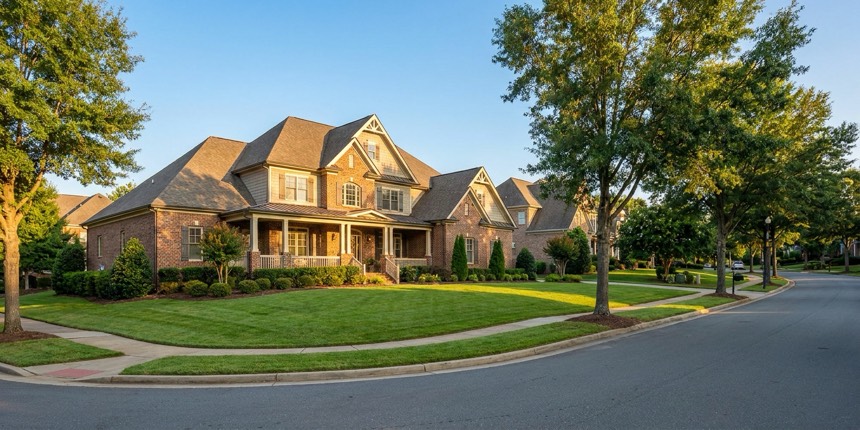
New Jersey has led all fifty states in outbound migration for eight straight years, and once you look at the property-tax bill, it isn’t hard to see why. The Garden State carries the highest effective property-tax rate in the nation — about 2.23%, translating to an average homeowner bill near $9,500 a year — stacked on top of an income tax that tops out at 10.75%, the third-highest in the country, and one of the few remaining state inheritance taxes. North Carolina, meanwhile, has ranked among the nation’s top destinations for inbound migration, offering property taxes a fraction of New Jersey’s, a flat income tax of 3.99%, no estate or inheritance tax, and home prices that buy nearly twice the house. For a New Jersey household, the combined annual savings can run from thousands to tens of thousands of dollars. For the full origin and destination context, see our New Jersey moving guide and our North Carolina moving guide. This guide covers the corridor between them.
Here’s what you need to know at a glance:
Quick Answers
- Distance: ~470 miles (NJ to Raleigh) to ~620 miles (NJ to Charlotte), 7–10 hours of driving
- Average move cost: $4,000 – $10,500 (2–4 bedroom home, full-service)
- State income tax: New Jersey up to 10.75% → North Carolina 3.99% flat (falling to 3.49% in 2027)
- Property tax: New Jersey ~2.23% (highest in U.S.) → North Carolina ~0.7–0.8% — the headline saving
- Best for: Homeowners escaping NJ property taxes, finance and tech professionals, families, and retirees
This guide takes a practical approach to the New Jersey-to-North-Carolina move — why so many are making it, the tax math that drives it (where the property-tax difference alone can be transformative), what your money buys in housing, the choice between Charlotte and the Research Triangle, the job market drawing the migration, and how to plan a long-distance move that arrives smoothly. It pairs naturally with our Illinois-to-North-Carolina route guide, which covers the same destination state from the Midwest.
Why New Jersey Residents Are Moving to North Carolina
The exodus from New Jersey is, more than in almost any other corridor, a tax story. New Jersey has held the unwelcome distinction of leading the country in outbound migration year after year, with the majority of its interstate moves being people leaving rather than arriving, and the property-tax burden is the most-cited reason. An average annual property-tax bill near $9,500 — and far higher in the desirable suburbs — represents a relentless cost that climbs with assessments and never ends, regardless of income or life stage. Add the third-highest income tax in the nation, a high overall cost of living, and an inheritance tax that few states still impose, and the financial case for leaving has grown overwhelming for many households.
North Carolina has become one of the prime beneficiaries. The state has ranked near the top of the nation for inbound migration, gaining tens of thousands of income-tax filers from other states in recent years, and the appeal to a New Jersey family is almost a mirror image of what they’re leaving: property taxes roughly a third of New Jersey’s, a flat income tax less than half the top New Jersey rate and still falling, no estate or inheritance tax, home prices that buy dramatically more space, and a milder climate. The two anchor metros — Charlotte and the Research Triangle — offer deep, diversifying job markets, so the move doesn’t require sacrificing career opportunity.
The migration skews toward working-age professionals, families, and retirees, with homeowners especially motivated because the property-tax difference compounds year after year on the home they own. These are finance and healthcare professionals, technology workers, and families trading a cramped, high-cost New Jersey existence for space, lower taxes, and a gentler climate. Accelerated by remote work, which has let Northeast professionals carry their salaries south, the New Jersey-to-North-Carolina corridor has become one of the most financially rewarding relocations in the country — and for owners of high-value homes, one of the most consequential.
The Tax Math: New Jersey vs. North Carolina
The tax comparison is the financial heart of this move, and on nearly every axis it favors North Carolina dramatically. Start with property tax, the headline. New Jersey’s effective property-tax rate of about 2.23% is the highest of any state; North Carolina’s runs roughly 0.7% to 0.8%, with Charlotte’s Mecklenburg County around 0.66% — a reduction of roughly 70%. The dollar impact is enormous and recurs every year: on a $1.5 million home, the property-tax difference alone can approach $23,000 a year, which compounds to nearly a quarter of a million dollars over a decade. Even on a more typical home, the annual saving runs into the thousands.
Income tax tells the same story. New Jersey’s graduated income tax tops out at 10.75% — the third-highest in the nation — while North Carolina levies a flat 3.99%, scheduled to fall to 3.49% in 2027. For a high-earning household, that gap of nearly seven percentage points translates into tens of thousands of dollars a year. Tax analyses of the corridor find that a household earning $500,000 with a $1.5 million home can save roughly $24,000 in income tax and $24,000 in property tax — close to $47,000 a year combined — before accounting for the lower cost of living, which pushes the total annual advantage past $80,000 for that profile. New Jersey also imposes an inheritance tax with rates up to 16% on certain transfers, one of only a handful of states that still does; North Carolina has no estate or inheritance tax at all, a meaningful consideration for families thinking about wealth transfer.
The honest framing is that, unlike some relocations where one tax saving is clawed back by another, the New Jersey-to-North-Carolina move improves the household’s position on essentially every tax: lower property tax, lower income tax, no inheritance tax, and a lower overall cost of living. The savings scale with income and home value, so they are largest for owners of high-value homes — but even middle-income families come out clearly ahead. This is one of the few corridors where the tax case alone, before any lifestyle considerations, justifies the move for most households.
Cost of Living: What $500,000 Buys in NJ vs. NC
Beyond taxes, the broader cost of living in North Carolina runs roughly 15% to 20% below New Jersey, and the difference is most vivid in housing. The table below sets the picture side by side.
| Metric | New Jersey | Charlotte | Raleigh / Triangle |
|---|---|---|---|
| Top income tax rate | 10.75% (graduated) | 3.99% (flat, falling) | 3.99% (flat, falling) |
| Effective property tax | ~2.23% (highest in U.S.) | ~0.66% | ~0.8% |
| What ~$500K buys | ~1,500 sq ft townhouse | ~2,800 sq ft house + yard | comparable house + yard |
| Inheritance/estate tax | Inheritance tax up to 16% | None | None |
Data: cost-of-living indices, state tax agencies, NJ and NC real estate reports, 2025–2026.
The housing comparison captures the move better than any index: the same roughly $500,000 that buys a 1,500-square-foot townhouse in much of New Jersey buys a 2,800-square-foot single-family home with a yard in the Charlotte or Raleigh area. For a New Jersey family squeezed into a high-priced, high-tax home, that is a transformation in daily life — more space, lower carrying costs, and a yard the kids can actually use. Layer in lower everyday expenses across groceries, utilities, and services, and a New Jersey household’s budget stretches far further in North Carolina. The one nuance, as in any Northeast-to-Sun-Belt move, is that the savings are concentrated in property tax, income tax, and housing rather than spread evenly across every category — but those happen to be the largest line items in most family budgets, which is exactly why the move pencils out so strongly.
Charlotte or the Triangle? Where New Jersey Transplants Land
The central destination choice is between North Carolina’s two anchor metros, and they suit different careers. Charlotte is the larger, more corporate city — the second-largest banking center in the United States, home to Bank of America’s and Truist’s headquarters and a major Wells Fargo operation, with a skyline, professional sports, and the energy of a finance-driven metro. For a New Jersey professional in banking, finance, fintech, insurance, or professional services — fields well represented in the New York–New Jersey economy — Charlotte offers the most natural career transfer, and its growing tech and healthcare sectors broaden the options. Our Charlotte moving guide covers it in depth.
The Research Triangle — Raleigh, Durham, and Chapel Hill — is the state’s technology, pharmaceutical, and research hub, anchored by Research Triangle Park and three major universities, with billion-dollar investments from Apple, Google, and Microsoft fueling a tech boom, and family suburbs like Cary and Apex that consistently rank among the best places to live in the country. It is also somewhat closer to New Jersey than Charlotte, which matters for families who want to drive back for holidays and visits. Our Raleigh-Durham moving guide covers it fully. For a New Jersey transplant, the deciding factor is usually industry — finance points to Charlotte, tech and life sciences to the Triangle — though both deliver the same dramatic tax-and-cost advantage over New Jersey and a strong family environment.
The North Carolina Job Market
North Carolina gives New Jersey transplants a deep economy to land in, well-matched to the kinds of careers common in the New York metro. Charlotte is a financial powerhouse — Bank of America and Truist are headquartered there, Wells Fargo runs one of its largest operations in the city, and firms like JPMorgan Chase have been expanding, with average banking salaries north of $105,000. For a New Jersey professional in finance, banking, or insurance — industries that loom large in the state’s economy and its New York commuter base — Charlotte often represents a direct career parallel in a far cheaper city. A growing technology and fintech sector, major healthcare systems, and energy (Duke Energy’s headquarters) round out the economy.
The Research Triangle has become one of the country’s premier technology and life-sciences clusters, with Research Triangle Park anchoring more than 300 companies, the universities (Duke, UNC, NC State) supplying talent, and billion-dollar commitments from Apple, Google, and Microsoft accelerating growth. The pharmaceutical and biotech presence is deep, supporting high-paying careers in research, software, and life sciences. For a New Jersey professional — particularly one in pharma, a major New Jersey industry — the Triangle can be a natural landing spot, offering comparable work at a fraction of the cost of living. Across both metros, North Carolina’s combination of strong employment and dramatically lower costs is precisely why it has drawn so many Northeast transplants.
Where New Jersey Transplants Are Landing
Where you settle depends on the metro and your stage of life, and both Charlotte and the Triangle offer a familiar range from urban core to family suburb. In Charlotte, professionals and younger transplants favor the walkable, light-rail-connected South End and the eclectic NoDa and Plaza Midwood neighborhoods, while families chase the schools of Ballantyne in south Charlotte, the Union County suburbs like Weddington and Marvin, or Fort Mill just across the South Carolina line for its well-funded schools and even lower taxes. The contrast with a New Jersey suburb is stark — comparable or better space and schools at a fraction of the property-tax bill.
In the Triangle, the family suburbs are the headline: Cary, Apex, and Holly Springs around Raleigh, and the communities near Chapel Hill and Durham, all consistently ranked among the nation’s best for schools and quality of life, with downtown Raleigh and Durham offering revitalized urban cores for younger professionals. For a New Jersey family accustomed to weighing Bergen, Morris, or Monmouth County suburbs against their property-tax bills, the North Carolina calculus will feel familiar but far gentler: the best districts still command premiums, but even the premium North Carolina suburb carries a property-tax rate New Jersey homeowners can scarcely believe. Both metros are detailed in our Charlotte and Raleigh-Durham guides.
The Housing Trade: From Garden State Prices to Carolina Space
For homeowners, the housing math is where this move delivers its most dramatic and immediate payoff. New Jersey combines high home prices with the nation’s highest property taxes, so a family selling a typical New Jersey home arrives in North Carolina with strong equity and lands in a market where both the purchase price and the carrying cost are far lower. The space difference is the part families feel first: trading a tight townhouse or an older, expensive suburban home for a larger, newer house with a yard, often while reducing the mortgage and slashing the annual tax bill.
The compounding effect on property tax is the quiet wealth-builder. A New Jersey homeowner paying $15,000 or $20,000 a year in property taxes on a desirable suburban home who moves to an equivalent or nicer North Carolina home paying $4,000 or $5,000 is saving over $10,000 every single year — money that, redirected to savings or quality of life, fundamentally changes the household’s financial trajectory. For owners of higher-value properties, the annual savings can be far larger still. The practical guidance is to think in total cost of ownership and to recognize that, unlike most Sun Belt corridors where home prices are merely lower, the New Jersey-to-North-Carolina move usually delivers both a lower purchase price and a radically lower tax bill. A local agent who knows the specific Charlotte or Triangle submarkets and school districts helps turn that New Jersey equity into the right home and the maximum advantage.
Schools and Family Life
For families, schools frequently determine the suburb, and North Carolina’s metros offer strong options that map neatly onto the suburban thinking New Jersey families already know. Around Charlotte, the most sought-after public schools sit in the surrounding counties — Union County’s Weddington and Marvin communities rank among North Carolina’s best, and Fort Mill, South Carolina draws Charlotte-area families for its well-funded schools and low taxes — while within the city, Ballantyne (Ardrey Kell High) and the Myers Park schools are among the strongest options. In the Triangle, the suburbs are the story: Cary, Apex, and Holly Springs are nationally recognized for their schools, and the Chapel Hill–Carrboro district is among the most prestigious in the state.
The trade-offs will feel familiar to a New Jersey family: the best districts command higher home prices, the suburbs offer space and newer schools, and families research feeder patterns carefully before committing. The transformative difference is the cost structure — strong, often excellent schools funded by property taxes a fraction of New Jersey’s, paired with a mild climate that lengthens the outdoor school year and puts the Blue Ridge Mountains and the Carolina coast within weekend reach. For relocating New Jersey families, the combination of credible suburban districts, major universities anchoring higher education, far lower carrying costs, and more space is a genuine and immediate quality-of-life upgrade.
Climate and Lifestyle: From the Northeast to the Carolinas
The climate shift is welcome and not jarring. New Jersey’s winters are cold and snowy, with the full four-season Northeast experience; North Carolina’s are mild, with occasional light snow in the Piedmont but nothing resembling a New Jersey winter, and the spring and fall are long and pleasant. Summers are warm and humid, with highs often in the upper 80s and low 90s — comparable to or slightly warmer than a New Jersey summer, but stretched across a longer warm season. For a household tired of Northeast winters and the costs that come with them, the milder Carolina climate is a recurring daily benefit.
The lifestyle blends a more relaxed Southern pace with real big-city amenities, and the geography is a quiet luxury after landlocked or shore-bound New Jersey. Charlotte offers professional sports, a booming dining and brewery scene, and one of the best-connected airports in the Southeast; the Triangle offers a university-flavored cultural life and a deep restaurant scene. Both put the Blue Ridge Mountains roughly two to three hours west and the Carolina beaches three to four hours east, so mountain and coastal weekends are genuinely accessible. Daily life is more car-oriented than the transit-served parts of northern New Jersey, though Charlotte’s light rail offers an option along its corridor. The proximity to New Jersey — a day’s drive or a short flight — means transplants can get back for holidays and family more easily than from the Sun Belt’s farther reaches. For most New Jersey families, the move trades a dense, expensive, cold-winter state for a more spacious, affordable, milder one with the mountains and ocean within reach.
The Move Itself: New Jersey to North Carolina Logistics
One advantage of this corridor is that it’s relatively short for a major relocation — roughly 470 miles from New Jersey to the Raleigh area and about 620 miles to Charlotte, a drive of seven to ten hours. That keeps transit times down and often keeps costs more moderate than a cross-country move, while still being firmly in long-distance territory that rewards professional handling. The route runs south through Pennsylvania, Maryland, and Virginia, and into North Carolina along the I-95 or I-77 corridors, with belongings typically in transit for a couple of days.
Moving out of New Jersey carries its own logistics, particularly from the denser northern suburbs and any apartment or condo buildings, where elevator reservations, parking, and access can require coordination. Timing is worth planning around: summer is peak moving season nationally, when demand and pricing rise, so a household with flexibility often does better in spring or fall. Booking six to eight weeks ahead secures better availability and rates, and gives time to declutter, which directly lowers cost since weight is the largest price driver on a long-haul move. Our guide to planning an interstate move walks through the full sequence, and our guide to choosing a white-glove moving company explains what separates a premium long-distance mover from a budget one.
What a New Jersey-to-North-Carolina Move Costs
A full-service interstate move of a two-to-four-bedroom home from New Jersey to North Carolina generally runs $4,000 to $10,500, shaped by shipment weight, the exact services chosen, and the time of year — and tending toward the lower part of the range for the shorter haul to the Raleigh area. Weight is the single largest cost driver, so decluttering before the move directly lowers the bill, and a family upsizing from a tight New Jersey home to a larger North Carolina one may find some older furniture isn’t worth shipping. A smaller one-bedroom move may fall below this range, while a large home with extensive packing, specialty items, or storage needs can run higher.
Timing also moves the number. A move scheduled for the fall or winter, mid-week, is typically less expensive than the same shipment in the peak summer window, when demand is highest. The most reliable budget comes from a survey-based, in-home or virtual estimate built on your actual belongings and your specific access conditions rather than a generic online figure. Our moving cost calculator provides an early ballpark before you book, and a professional estimate refines it into a firm number you can plan around.
Timing Your Move and the First 90 Days
The strongest interstate moves start six to eight weeks ahead, which gives you time to secure a reputable mover before peak-season calendars fill, arrange any building or access logistics at the New Jersey end, declutter so you aren’t paying to ship what you won’t keep, and handle the administrative side without a scramble. New North Carolina residents have 60 days to obtain a North Carolina driver’s license and register a vehicle after establishing residency, and you’ll file a state income tax return the following year at the flat 3.99% rate — a dramatically simpler and lighter obligation than the New Jersey return you’re leaving.
In the first weeks, plan to transfer or establish utilities before move-in, update your address with the USPS along with your bank and employer, register to vote, and — for families — handle school enrollment early, since North Carolina districts require proof of residency and the most desirable suburban schools fill their boundaries. Beyond the paperwork, the early weeks are when the payoff becomes tangible: a property-tax bill a fraction of what you paid in New Jersey, more living space, a milder winter ahead, and mountains and beaches within reach. Households that plan the logistics in advance get to enjoy that payoff rather than scramble through it.
What to Know Before You Commit
The trade-offs are worth naming honestly, though they are fewer in this corridor than most. North Carolina’s flat income tax, while less than half New Jersey’s top rate, is still an income tax — high earners weighing North Carolina against no-income-tax states like Tennessee or Florida should run the full comparison, though North Carolina’s far lower home prices and the absence of New Jersey’s burdens usually make it the easy winner over the home state regardless. Summers are warm and humid, a real if manageable adjustment, and the broader region sees occasional severe weather. Both Charlotte and the Triangle are growing fast, which has brought rising traffic and home prices, so the most desirable school districts command premiums — though premiums that still look modest to a New Jersey homeowner.
The cultural and pace shift from a dense, fast, Northeast environment to a more relaxed Southern one suits most New Jersey transplants but not all; some miss the food density, the proximity to New York City, the transit, and the particular character of New Jersey life. The car-dependence is greater than in transit-served parts of northern New Jersey. None of these outweigh the case for the overwhelming majority of movers making this corridor — for most New Jersey households, especially homeowners, the tax and cost advantages are simply too large to ignore — but knowing them in advance is the difference between a smooth transition and an expensive surprise.
Planning Your Move from New Jersey to North Carolina
A move from New Jersey to North Carolina is a long-distance relocation of 470 to 620 miles, and the quality of your moving company shapes the entire experience. When a furnished family home travels across several states — often from a denser New Jersey suburb with its own access and parking constraints — professional packing, an accurate inventory, transit visibility, and a single accountable point of contact are what separate a smooth arrival from weeks of recovering from damage and delay.
This is the work Nelson Westerberg was built for. As one of Atlas Van Lines’ top agents, we handle full-service interstate relocations from the Northeast to the Carolinas regularly — including the finance and banking moves Charlotte attracts, the technology and pharmaceutical relocations the Triangle draws, and the family moves motivated by North Carolina’s schools, space, and tax advantages. We understand the expectations of both the relocating professional and the corporate relocation programs that frequently coordinate these moves. Our guide to choosing a white-glove moving company explains what to look for in a long-distance mover, and our guide to planning an interstate move walks through the full sequence. Start six to eight weeks ahead, and the most demanding part of the move — getting your household safely from the Garden State to the Carolinas — becomes the part you worry about least.
Frequently Asked Questions
How much does it cost to move from New Jersey to North Carolina?
A full-service, long-distance move from New Jersey to North Carolina typically costs between $4,000 and $10,500 for a two-to-four-bedroom home, tending toward the lower end for the shorter haul to the Raleigh area. The figure depends on shipment weight, time of year, add-on services such as packing or storage, and access conditions at the New Jersey origin. A survey-based estimate gives the most accurate number.
How far is North Carolina from New Jersey?
It’s a relatively short major move: roughly 470 miles from New Jersey to the Raleigh area and about 620 miles to Charlotte, a drive of seven to ten hours. The route runs south through Pennsylvania, Maryland, and Virginia along the I-95 or I-77 corridors. For a full-service move, belongings are typically in transit for a couple of days, with timing depending on the season and the mover’s schedule.
How much do you save on taxes moving from New Jersey to North Carolina?
The savings can be very large, especially for homeowners. New Jersey has the nation’s highest effective property tax (~2.23%) versus North Carolina’s roughly 0.7%–0.8%, and a top income tax of 10.75% versus North Carolina’s flat 3.99%. A household earning $500,000 with a $1.5 million home can save close to $47,000 a year in income and property tax combined, and the total annual advantage exceeds $80,000 once the lower cost of living is included. North Carolina also has no inheritance or estate tax.
What does $500,000 buy in North Carolina versus New Jersey?
The difference is dramatic. The same roughly $500,000 that buys a 1,500-square-foot townhouse in much of New Jersey buys a 2,800-square-foot single-family home with a yard in the Charlotte or Raleigh area — and at a property-tax rate roughly a third of New Jersey’s. For families upsizing from tight, expensive New Jersey housing, the gain in space and the drop in carrying cost are the most immediately felt benefits of the move.
Should I move to Charlotte or the Research Triangle?
It depends on your career. Charlotte is the larger, more corporate metro — the second-largest U.S. banking center, a natural fit for finance, banking, insurance, and fintech professionals common in the New York–New Jersey economy. The Research Triangle (Raleigh, Durham, Chapel Hill) is the technology, pharmaceutical, and research hub, anchored by Research Triangle Park and investments from Apple, Google, and Microsoft, and is a strong fit for pharma professionals leaving New Jersey’s life-sciences sector. Both share the same favorable tax picture.
Is the cost of living lower in North Carolina than New Jersey?
Yes, by roughly 15% to 20% overall, with the biggest savings in housing and property taxes. Home prices are lower, property taxes are roughly a third of New Jersey’s, the income tax is less than half the top New Jersey rate, and everyday costs run lower. For most New Jersey households, particularly homeowners, the move delivers a substantial and recurring improvement in their financial position alongside more living space.
When is the best time to move from New Jersey to North Carolina?
Spring and fall are ideal, offering milder weather at both ends and avoiding the peak-summer pricing surge. Summer is the busiest moving season nationally, when demand and rates are highest. A mid-week, off-season move secures better availability and pricing. Booking six to eight weeks ahead is recommended to lock in a reputable mover and coordinate any access logistics at the New Jersey origin.
Why are so many people leaving New Jersey?
New Jersey has led the nation in outbound migration for eight consecutive years, with the majority of its interstate moves being departures. The most-cited reasons are the highest property taxes in the country (averaging around $9,500 a year), the third-highest income tax, a high overall cost of living, and one of the few remaining state inheritance taxes. North Carolina, with far lower taxes and home prices, has been a leading destination for those leaving.
Conclusion
The New Jersey-to-North-Carolina corridor offers one of the clearest financial cases in American migration, and the numbers explain why New Jersey has led the nation in outbound moves for eight straight years. Trading the country’s highest property taxes, third-highest income tax, and a lingering inheritance tax for North Carolina’s low flat income tax, property taxes a third as high, and no estate tax can save a household anywhere from thousands to well over $80,000 a year, depending on income and home value — all while gaining living space and a milder climate. With two booming metros offering deep job markets, the move rarely requires sacrificing career opportunity.
The move itself is what you control, and at 470 to 620 miles it’s a manageable long-distance relocation in the right hands. A move handled by a full-service professional partner — rather than improvised — is what turns a major transition into a smooth one. Whether you’re a finance professional headed for Charlotte, a pharmaceutical or tech worker bound for the Triangle, or a family simply done with New Jersey’s property-tax bills, the right preparation makes the difference between a stressful month and a confident new start. With the right planning and the right partner, getting from the Garden State to the Carolinas can be the easy part of your move to North Carolina.
Related Articles
New York City vs. Austin (2026): What Your Paycheck Really Buys
Few city comparisons produce a gap as wide as New York City versus Austin. By one widely cited 2026 estimate, it takes roughly $11,500 a month in New York to sustain the same standard of living that $6,900 buys in Austin — a difference so large it reshapes not just a budget but a life. […]
Read MoreChicago vs. Charlotte (2026): The Queen City at a Fraction of the Cost
For a Chicago household weighing a move south, Charlotte presents an unusually clean comparison: a real city, with a genuine corporate economy and four mild seasons, at a fraction of Chicago’s cost — and, most strikingly, a fraction of its property-tax burden. A Chicago homeowner paying the metro’s effective property-tax rate near 1.98% on a […]
Read More

Table of Contents

Atlas Van Lines, Inc. U.S. DOT No. 125550 (TM & © 2026 AWGI LLC.) | G.P.S.C. 4917 | IL C.C. 4246 | NJPC 00104 | Cal-T 110193
© 2026 Nelson Westerberg, Inc. All Rights Reserved Worldwide.