Moving Guide to Arkansas (2026): Where Fortune 500 Money Meets the Ozarks

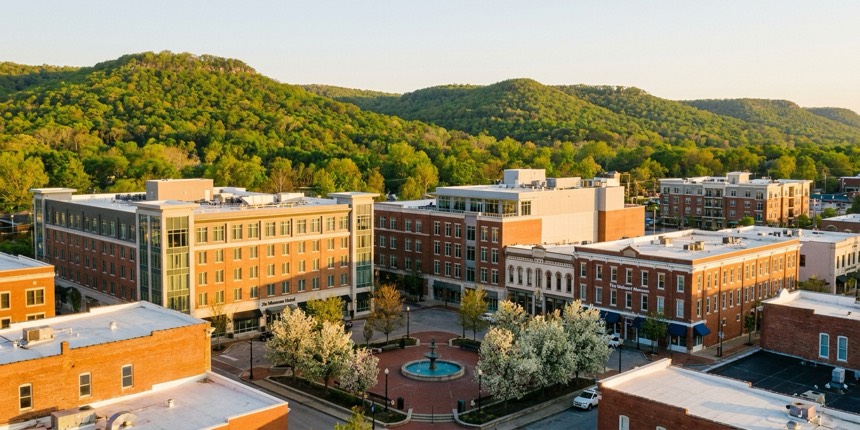
Arkansas spent 2025 at the very top of the nation’s inbound-migration rankings — reported as the number-one state for people moving in — and the reason sits in plain sight in the state’s northwest corner. Bentonville is home to Walmart, the largest company on earth; nearby Springdale and Lowell anchor Tyson Foods and J.B. Hunt; and the roughly 400 Fortune 500 vendors who keep offices near Walmart’s headquarters have turned a once-quiet stretch of the Ozarks into one of the fastest-growing regional economies in the country. Layer that corporate gravity over some of the lowest housing costs in America, a state income tax that has been cut nearly in half in five years, and a Natural State landscape of mountains, rivers, and world-class bike trails, and the migration starts to make obvious sense. If you’re weighing the move, this guide covers what you need to know to do it well.
Here’s what you need to know at a glance:
Quick Answers
- Median home price: ~$200,000 statewide (Little Rock ~$250K, Bentonville ~$420K, much of the state below $200K)
- Average long-distance move cost: $4,500 – $13,000 (2–4 bedroom home, from out of state)
- State income tax: Arkansas top rate 4.4% in 2026 (down from 5.9%, falling toward a 3.5% target)
- Anchor industries: Retail and logistics (Walmart, J.B. Hunt), food production (Tyson), the Walmart vendor economy, healthcare, government
- Best for: Corporate transferees and Walmart-ecosystem professionals, families seeking maximum affordability, remote workers, and outdoor-oriented households
This guide takes a practical approach to relocating to Arkansas — why the migration is happening, how Northwest Arkansas differs from the capital region, the corporate job market that drives it all, what your housing dollar actually buys in one of the country’s most affordable states, cost of living and the falling income tax, the honest trade-offs, and how to plan a long-distance move that arrives smoothly. Because many people move to Arkansas for a corporate role from a more expensive metro, it helps to read this alongside our guides to planning an interstate move and long-distance relocation.
Why People Are Moving to Arkansas
Arkansas’s appeal rests on a combination that has become genuinely scarce: real corporate jobs paired with the lowest cost of living almost anywhere in the country. The state’s overall cost of living runs roughly 7% below the national average, and Arkansas consistently ranks among the five most affordable states in the union. Pair that with a statewide median home price near $200,000 — a fraction of the coastal and even most Sun Belt markets — and a household relocating for a Walmart-ecosystem job often finds it can buy a substantially larger home, eliminate a punishing commute, and bank the difference, all in the same move.
The migration is concentrated and corporate. Northwest Arkansas — the Fayetteville–Springdale–Rogers metro — is the thirteenth-fastest-growing metropolitan area in the United States, adding an estimated thirty-six new residents every single day and now home to more than 620,000 people. Bentonville alone grew nearly 10% in a recent three-year span and is on a trajectory that local planners expect to push it toward 200,000 residents by mid-century. These are not retirees; they are the engineers, merchandisers, supply-chain analysts, and vendor-team professionals who follow the gravity of the world’s largest retailer and its suppliers. The central region around Little Rock draws a steadier flow tied to state government, healthcare, and a lower-still cost of living.
Beyond economics, Arkansas sells a way of life that surprises newcomers. The Walton family’s investment has transformed Bentonville into an unlikely cultural and recreational destination — the Crystal Bridges Museum of American Art, a nationally recognized network of mountain-biking trails that has earned the region a reputation as a biking capital, and a dining scene that has grown up alongside the corporate influx. Statewide, the “Natural State” lives up to the nickname: the Ozark and Ouachita mountains, the lakes and rivers of the interior, Hot Springs National Park, and a four-season climate milder than the Midwest. For many movers, the combination of opportunity, extreme affordability, and access to the outdoors is simply unavailable anywhere they could previously afford.
Northwest Arkansas: Bentonville, Rogers, Springdale, and Fayetteville
For most people moving to Arkansas for a career, the destination is Northwest Arkansas — the contiguous metro running north to south through Bentonville, Rogers, Springdale, and Fayetteville. This is where the corporate headquarters, the airport, the flagship university, and the bulk of the high-paying jobs sit, and it is where the growth is most intense and the housing most expensive by Arkansas standards.
Bentonville is the epicenter — Walmart’s hometown, now a polished small city with a thriving downtown square, the Crystal Bridges museum, and a median home price around $420,000 that, while high for Arkansas, still undercuts comparable corporate markets elsewhere by a wide margin. Rogers, immediately to the south, offers a mix of established neighborhoods, newer construction, and major retail, and tends to run somewhat more affordable than Bentonville. Springdale, the metro’s blue-collar and food-industry heart, anchors Tyson Foods and offers the most accessible home prices of the four. Fayetteville, home to the University of Arkansas and its roughly 30,000 students, brings a college-town energy, a lively downtown, and a younger demographic, along with the metro’s most walkable core. A relocating household’s Northwest Arkansas decision usually comes down to Bentonville’s corporate polish and price, Rogers’s balance, Springdale’s value, or Fayetteville’s university-town character — all within a short drive of one another along the I-49 spine.
Central Arkansas: Little Rock, Conway, and the Capital Region
The state’s other population center is Central Arkansas, anchored by Little Rock, the capital, and its surrounding ring of fast-growing suburbs. This region offers a different value proposition than the northwest: still-strong employment in government, healthcare, and finance, paired with home prices that are dramatically lower even than Northwest Arkansas. Little Rock’s median home price sits around $250,000, and the surrounding communities run lower still.
Little Rock itself is a real mid-sized city, with a revitalized River Market district downtown, the University of Arkansas for Medical Sciences (UAMS) as a major employer and economic anchor, and established residential neighborhoods like the Heights and Hillcrest prized for their character. Across the river, North Little Rock offers its own downtown and waterfront revival. The suburban ring is where much of the region’s growth concentrates: Conway, a college town to the northwest with three universities and a tech-startup streak; Benton and Bryant to the southwest, popular with families for their schools and value; and Cabot to the northeast. For a household whose job sits in healthcare, state government, or a Central Arkansas employer — or for a remote worker chasing the absolute lowest cost of living — the capital region offers metro amenities at small-town prices.
Arkansas’s Other Markets: Fort Smith, Jonesboro, and Hot Springs
Arkansas is larger and more varied than its two main hubs, and a meaningful share of newcomers land elsewhere for a specific job, an even lower price point, or a particular landscape. Fort Smith, on the Oklahoma border in the west, is the state’s third-largest city — a historic river town with a manufacturing and healthcare base and some of the most affordable housing of any city its size in the country. Jonesboro, in the northeast Delta region, anchors agriculture, healthcare, and Arkansas State University, serving as the commercial hub for a wide rural area. Hot Springs, in the Ouachita Mountains southwest of Little Rock, is the state’s resort and retiree market — built around Hot Springs National Park, the thermal baths, lakes, and a historic downtown, and increasingly popular with remote workers and second-home buyers drawn to the scenery. Each of these markets offers a real discount even to Little Rock, and for buyers who can work remotely or whose career fits the local economy, they can be the smarter financial move.
The Job Market: Walmart, Tyson, J.B. Hunt, and the Vendor Economy
Arkansas’s economy is unusual for a state its size: it is anchored by three Fortune 500 corporations headquartered within a short drive of one another. Walmart, the largest company in the world by revenue, is headquartered in Bentonville and employs roughly 54,700 people across Arkansas, with a gleaming new corporate campus that has reshaped the region. Tyson Foods, the food-production giant, is headquartered in Springdale and employs more than 25,000 statewide. J.B. Hunt Transport Services, one of the nation’s largest trucking and logistics firms, is headquartered in Lowell with around 16,000 Arkansas workers. Together they form the backbone of a regional economy that has grown for two decades.
What makes Northwest Arkansas distinctive, though, is the vendor ecosystem. Nearly 400 Fortune 500 companies maintain a presence in the region — most of them Walmart suppliers who keep teams on the ground to manage the world’s most important retail relationship. That concentration means a professional in merchandising, supply chain, data, marketing, or e-commerce can build an entire career within the metro, moving between the retailer, its suppliers, and the startups that have sprung up around them. Beyond the northwest, healthcare is a statewide employment pillar — UAMS and Baptist Health anchor Central Arkansas, and regional systems serve every metro — and state government, education, and agriculture round out a diversified base. Salaries in Arkansas trail the largest coastal metros in absolute terms, but adjusted for the state’s rock-bottom housing costs and falling income tax, take-home buying power for a corporate professional is frequently higher than in the city they left.
Cost of Living and the Tax Picture
Affordability is Arkansas’s defining feature. The state’s overall cost of living runs about 7% below the national average, placing it consistently among the five cheapest states in the country, and housing is the biggest driver of that gap — median home prices statewide hover around $200,000, with large parts of the state well below that. Groceries, utilities, and transportation also track below national norms, and Arkansas eliminated its state sales tax on groceries in 2023, a change that puts real money back in households’ monthly budgets.
The tax trajectory is a genuine and improving draw. Arkansas has cut its top marginal income tax rate from 6.9% in 2020 to 4.4% for 2026, with a stated target of 3.5% by 2027 — one of the most aggressive rate-reduction paths of any state in the country. Property taxes are low, and the combination of falling income taxes, modest property taxes, and no grocery sales tax means a relocating household’s total tax burden is among the lightest in the nation. For a professional moving from a high-tax state like California, New York, or Illinois, the layered savings — on housing, on income tax, and on everyday costs — frequently add up to tens of thousands of dollars a year.
The one place where the affordability story narrows is Bentonville and the Northwest Arkansas core, where the corporate influx has pushed home prices and rents up sharply over the past several years. The region remains a strong value relative to comparable corporate markets in other states, but newcomers expecting bargain-basement Arkansas prices in Bentonville specifically will need to recalibrate. Elsewhere in the state, the affordability is as advertised.
The Housing Market: What Your Money Buys
Housing is where the Arkansas decision is really made, and the range across the state is enormous relative to the prices involved. In Bentonville, the corporate premium pushes the median near $420,000 — high for Arkansas, but a striking value for a household relocating from a market where that figure barely buys a starter home. Rogers and the rest of the Northwest Arkansas metro run somewhat lower, and Springdale lower still, so families willing to commute a few minutes farther from the Walmart campus can stretch their budget meaningfully.
The value deepens dramatically outside the northwest. In Little Rock, a median near $250,000 buys an established home in a real city; in the capital’s suburbs — Conway, Benton, Bryant, Cabot — and in Fort Smith and Jonesboro, the same family budget that buys a condo on the coast buys a large, newer single-family home with a yard. For remote workers and households whose jobs aren’t tied to the Bentonville campus, the rest of Arkansas offers some of the most house-for-the-money value in the United States. The broad rule for newcomers is that proximity to the Walmart corporate core carries the steepest premium, and that the largest dollar savings come from buying in the capital region or a smaller market. As anywhere, working with an agent who knows the local micro-markets pays for itself.
Best Places to Live in Arkansas for Your Situation
Because Arkansas’s markets differ so much in price and character, the right landing spot depends heavily on who you are and what your move is for. The following table maps the major options to the households they suit best.
| Area | Character | Typical home price | Best for |
|---|---|---|---|
| Bentonville | Corporate, polished, growing | $380K–$700K+ | Walmart/vendor professionals, executives |
| Rogers | Balanced, established + new | $300K–$500K | Families wanting NWA value |
| Springdale | Value, food-industry hub | $250K–$400K | Budget-focused NWA households |
| Fayetteville | University town, walkable | $300K–$550K | Students, academics, young professionals |
| Little Rock | Mid-sized city, capital | $200K–$400K | Healthcare, government, urban value |
| Conway / Benton / Bryant | Suburban, family, low-cost | $200K–$350K | Families chasing schools + value |
| Fort Smith / Jonesboro | Affordable, regional hubs | $150K–$280K | Maximum affordability, regional jobs |
| Hot Springs | Resort, mountains, lakes | $200K–$450K | Remote workers, retirees, recreation |
Data: Arkansas real estate market reports, Redfin, Zillow, early 2026.
A professional moving for a Walmart, Tyson, or J.B. Hunt role almost always lands in Northwest Arkansas, with the Bentonville-versus-Springdale choice coming down to corporate proximity versus value. A family prioritizing schools and space at the lowest possible cost gravitates to the Little Rock suburbs or Rogers. A remote worker chasing lifestyle and scenery often chooses Fayetteville or Hot Springs. And a household whose primary goal is maximum affordability finds it in Fort Smith, Jonesboro, or the capital’s outer ring. There is no single “best” Arkansas — there is the right Arkansas for your job, your budget, and your appetite for commute and city size.
Schools and Higher Education
For families, schools frequently determine the neighborhood, and Arkansas’s options have strengthened alongside the northwest’s growth. In Northwest Arkansas, the Bentonville and Rogers school districts are among the most sought-after in the state, well-funded by the region’s corporate tax base, which is a major reason families compete for homes within their boundaries. The Fayetteville district benefits from its university-town setting. In Central Arkansas, suburban districts in Bryant, Benton, Conway, and Cabot are popular family choices, generally outperforming the urban Little Rock district, which — as in many cities — varies meaningfully by school. As everywhere, families typically research feeder patterns and attendance boundaries carefully before committing to a home.
On the higher-education side, the University of Arkansas in Fayetteville is the flagship — a major research institution and SEC university that anchors the northwest’s talent pipeline and feeds the corporate economy directly. The University of Arkansas for Medical Sciences (UAMS) in Little Rock is the state’s only academic medical center and a major employer. Arkansas State University in Jonesboro, the University of Central Arkansas in Conway, and a network of regional campuses round out a credible state system. For relocating families, the combination of well-funded northwest districts, strong suburban options in the capital region, and a flagship university removes one of the common hesitations about moving to a smaller state.
Climate, the Outdoors, and Daily Life
Arkansas is a four-season state with a humid subtropical climate — hot, humid summers with highs often in the low 90s, mild winters with only occasional snow, and long, pleasant springs and falls. The “Natural State” nickname is earned: the Ozark Mountains in the north and the Ouachita Mountains in the west and center give the state genuine topography, and it is laced with lakes, rivers, and streams. Newcomers from the arid West will need to adjust to the humidity, but those from the Midwest or Northeast generally find Arkansas winters a welcome relief.
The outdoors is woven into daily life, and Northwest Arkansas in particular has become an unexpected recreation destination. The Walton family’s investment has built one of the most extensive mountain-biking trail networks in the country, drawing riders nationally and giving the region a youthful, active culture; the same investment produced the Crystal Bridges Museum of American Art, a world-class institution that anchors Bentonville’s cultural life. Statewide, Hot Springs National Park, the Buffalo National River, the lakes of the interior, and the hiking of the Ozarks put weekend recreation within easy reach of every metro. Daily life is car-oriented, as in most of the South, but Arkansas commutes are dramatically shorter than the big-metro gridlock newcomers leave behind — a fifteen-to-twenty-five-minute drive is typical even in the fast-growing northwest. For households leaving congested coastal or Midwestern cities, the recovered hours and the easy access to nature are frequently cited as the biggest quality-of-life upgrades.
How Arkansas Compares to the States People Leave
Most people don’t move to Arkansas in a vacuum — they move from somewhere more expensive, often following a corporate role, and the comparison is what makes the decision. The table below sets Arkansas against three states that commonly send it residents.
| Metric | Arkansas | California | Illinois | Texas |
|---|---|---|---|---|
| Top income tax rate | 4.4% (falling to 3.5%) | 13.3% (graduated) | 4.95% (flat) | 0% (no income tax) |
| Median home price (early 2026) | ~$200K | ~$870K+ | ~$280K | ~$340K |
| Cost-of-living index | ~93 | ~138 | ~95 | ~93 |
| Grocery sales tax | 0% (eliminated 2023) | varies | varies | exempt |
Data: state tax agencies, Zillow, cost-of-living indices, 2025–2026.
The pattern is consistent: Arkansas’s housing costs a fraction of California’s and meaningfully less than most Sun Belt alternatives, its income tax is falling toward one of the lowest rates of any state that levies one, and everyday costs run below the national norm. Texas’s lack of an income tax is the one place the comparison narrows — but Texas’s higher home prices and notably higher property taxes mean a household’s total cost of ownership is often lower in Arkansas, particularly outside Bentonville. The deeper point is that for a professional whose career fits the Walmart ecosystem or the capital region, Arkansas frequently delivers a higher standard of living on the same salary than almost anywhere else they could take the job.
What a Move to Arkansas Costs and How to Budget
A full-service interstate move of a two-to-four-bedroom home to Arkansas generally runs $4,500 to $13,000, shaped by distance, shipment weight, time of year, and the services you choose. Geography matters: Bentonville sits roughly 350 miles from Dallas, 550 from Chicago, 350 from Memphis, and well over 1,500 from either coast — and because so many corporate transfers originate in distant headquarters cities, transportation distance can be a real line item. Weight is the single largest cost driver, so decluttering before the move directly lowers the bill; a household that sheds accumulated belongings before loading can save meaningfully on a long-haul move.
Timing matters too. Summer is peak moving season across the industry, when demand and pricing rise because of school schedules and weather, so a move scheduled for the fall or winter, mid-week, is typically less expensive for the identical shipment. The most reliable budget comes from a survey-based estimate built on your actual belongings rather than a generic online figure, and our moving cost calculator provides an early ballpark before you book. For households relocating from Texas — a common Arkansas origin given the corporate and logistics ties — our guide on where to move from Texas puts the Natural State in context against the other common landing options.
Timing Your Arkansas Move and the First 90 Days
The strongest interstate moves start six to eight weeks ahead, which gives you time to secure a reputable mover before peak-season calendars fill, declutter so you aren’t paying to ship what you won’t keep, and handle the administrative side without a scramble. New Arkansas residents have 30 days to obtain an Arkansas driver’s license and register a vehicle after establishing residency, and you’ll file a state income tax return the following year at the state’s falling rate. If you’re buying in Northwest Arkansas, line up a local agent early — the better Bentonville and Rogers listings move quickly in a market absorbing dozens of new households a day, and out-of-state buyers who arrive without representation often lose homes to faster, better-prepared offers.
In the first weeks, plan to transfer or establish utilities before move-in, update your address with the USPS along with your bank and employer, register to vote, and — for families — handle school enrollment early, since Arkansas districts require proof of residency and the most popular northwest schools fill their boundaries. Beyond the paperwork, the early weeks are when the payoff becomes tangible: a far lower cost of living than the metro you left, more home for the money, a falling state income tax, and the mountains and trails of the Natural State a few minutes away. Households that plan the logistics in advance get to enjoy that payoff rather than scramble through it.
What to Know Before You Commit
The trade-offs are worth naming honestly. Arkansas is a smaller, more rural state than the large metros many newcomers leave, and even its biggest cities are modest by national standards — those craving the scale, diversity, and nightlife of a major coastal metro should set expectations accordingly. Public transit is minimal statewide, so Arkansas is firmly car-dependent. And while Northwest Arkansas has become a genuine corporate and cultural hub, it remains geographically isolated; the regional airport has expanded substantially but offers fewer nonstop options than a major-hub city, which matters for professionals who travel frequently.
The climate is a real adjustment for some: hot, humid summers and the occasional severe-weather season, including spring tornadoes that the region takes seriously. Bentonville’s rapid growth has pushed its housing costs well above the rest of the state, narrowing the affordability advantage for that specific market, and the same growth has begun to strain roads and schools in the northwest. The job market, while anchored by three Fortune 500 employers and a deep vendor ecosystem, is concentrated — a professional whose specialty doesn’t fit the retail, logistics, food, or healthcare economy should confirm their field has depth here before relocating. None of these outweigh the case for most movers, but knowing them in advance is the difference between a smooth transition and an expensive surprise.
Planning Your Move to Arkansas
A move to Arkansas from out of state is a long-distance relocation — frequently a corporate transfer from a distant headquarters city — and the quality of your moving company shapes the entire experience. When a furnished family home travels hundreds or thousands of miles, professional packing, an accurate inventory, transit visibility, and a single accountable point of contact are what separate a smooth arrival from weeks of recovering from damage and delay.
This is the work Nelson Westerberg was built for. As one of Atlas Van Lines’ top agents, we handle full-service interstate relocations regularly — including the corporate moves that the Walmart, Tyson, and J.B. Hunt ecosystems generate, the vendor-team transfers that follow a new account, and the family relocations Arkansas’s affordability and lifestyle attract. We understand the expectations of both the relocating professional and the corporate relocation programs that frequently coordinate these moves. Our guide to choosing a white-glove moving company explains what to look for in a long-distance mover, and our guide to planning an interstate move walks through the full sequence from first survey to final delivery. Start six to eight weeks ahead, and the most demanding part of the move — getting your household safely across the country — becomes the part you worry about least.
Frequently Asked Questions
How much does it cost to move to Arkansas?
A full-service, long-distance move to Arkansas typically costs between $4,500 and $13,000 for a two-to-four-bedroom home from out of state. The final figure depends on the weight of your shipment, the distance, the time of year, and add-on services such as professional packing, vehicle shipping, or temporary storage. Moves from the coasts fall at the higher end of the range, while a shorter haul from Dallas, Memphis, or the Midwest costs less.
What is the cost of living in Arkansas?
Arkansas has one of the lowest costs of living in the country, running roughly 7% below the national average and consistently ranking among the five most affordable states. Housing is the biggest driver — the statewide median home price is around $200,000 — and groceries, utilities, and transportation also track below national norms. Arkansas eliminated its state sales tax on groceries in 2023, further lowering everyday costs. Bentonville is the one notably more expensive market.
Does Arkansas have a low income tax?
Arkansas has been cutting its income tax aggressively. The top marginal rate fell from 6.9% in 2020 to 4.4% for 2026, with a stated target of 3.5% by 2027 — one of the fastest reduction paths of any state. Combined with low property taxes and no sales tax on groceries, Arkansas’s total tax burden is among the lightest in the nation, which is a meaningful draw for households relocating from high-tax states.
What are the best places to live in Arkansas?
For corporate professionals, Bentonville and Rogers lead Northwest Arkansas, with Springdale offering more value and Fayetteville a university-town feel. In Central Arkansas, Little Rock offers mid-sized-city amenities while suburbs like Conway, Benton, Bryant, and Cabot draw families for their schools and low prices. Fort Smith and Jonesboro offer the maximum affordability, and Hot Springs is the state’s resort and retiree market in the Ouachita Mountains.
What is the job market like in Arkansas?
Arkansas’s economy is anchored by three Fortune 500 companies headquartered within a short drive of each other: Walmart in Bentonville (about 54,700 Arkansas employees), Tyson Foods in Springdale (more than 25,000), and J.B. Hunt in Lowell (around 16,000). Roughly 400 Fortune 500 vendors keep offices in Northwest Arkansas to manage their Walmart relationships, creating deep careers in merchandising, supply chain, and e-commerce. Healthcare, led by UAMS, and state government round out a diversified base.
When is the cheapest time to move to Arkansas?
The most affordable time to move is during the fall and winter, roughly October through April. Summer — June through August — is peak moving season nationally, when demand and pricing rise because of school schedules and weather. Booking several weeks ahead and choosing a mid-week, off-season date typically secures the best rates, and it also avoids moving in the worst of Arkansas’s summer heat and humidity.
What salary do you need to live comfortably in Arkansas?
A single professional can generally live comfortably in Arkansas on $50,000–$65,000, while a family of four typically needs $90,000–$120,000 depending on the market. Bentonville and the Northwest Arkansas core sit at the higher end, while Little Rock, the capital suburbs, Fort Smith, and Jonesboro require considerably less. Arkansas’s falling income tax and rock-bottom home prices stretch those salaries further than in nearly any other state.
Is Northwest Arkansas a good place to live?
Yes — Northwest Arkansas has become one of the most dynamic small metros in the country. Anchored by Walmart, Tyson, and J.B. Hunt and roughly 400 Fortune 500 vendor offices, it offers deep corporate career opportunity, well-funded schools in Bentonville and Rogers, the Crystal Bridges museum, and a nationally recognized mountain-biking trail network. Home prices have risen with the growth, especially in Bentonville, but the region remains a strong value relative to comparable corporate markets elsewhere.
Conclusion
Arkansas’s run to the top of the nation’s migration rankings is no accident: three Fortune 500 headquarters and a 400-company vendor economy concentrated in one fast-growing corner of the state, an income tax falling toward one of the lowest rates in the country, home prices among the most affordable in America, and a Natural State landscape that turns weekends into something people build their lives around. The state has become an unlikely magnet for relocating corporate professionals and value-seeking families alike — and while Bentonville is no longer the bargain it once was, the broader Arkansas value proposition remains among the strongest in the country.
The move itself is what you control. A long-distance relocation to Arkansas, handled by a full-service professional partner rather than improvised, is what turns a major transition — often a corporate transfer across half the country — into a smooth one. Whether you’re a merchandiser relocating for a role in the Walmart ecosystem, a family chasing the schools and affordability of the capital suburbs, or a remote worker drawn to the trails and lakes of the Ozarks, the right preparation makes the difference between a stressful month and a confident new start. With the right planning and the right partner, getting to Arkansas can be the easy part of your move to the Natural State.
Related Articles
New York City vs. Austin (2026): What Your Paycheck Really Buys
Few city comparisons produce a gap as wide as New York City versus Austin. By one widely cited 2026 estimate, it takes roughly $11,500 a month in New York to sustain the same standard of living that $6,900 buys in Austin — a difference so large it reshapes not just a budget but a life. […]
Read MoreChicago vs. Charlotte (2026): The Queen City at a Fraction of the Cost
For a Chicago household weighing a move south, Charlotte presents an unusually clean comparison: a real city, with a genuine corporate economy and four mild seasons, at a fraction of Chicago’s cost — and, most strikingly, a fraction of its property-tax burden. A Chicago homeowner paying the metro’s effective property-tax rate near 1.98% on a […]
Read More

Table of Contents

Atlas Van Lines, Inc. U.S. DOT No. 125550 (TM & © 2026 AWGI LLC.) | G.P.S.C. 4917 | IL C.C. 4246 | NJPC 00104 | Cal-T 110193
© 2026 Nelson Westerberg, Inc. All Rights Reserved Worldwide.