Moving Guide to Hawaii (2026): What an Island Move Really Takes

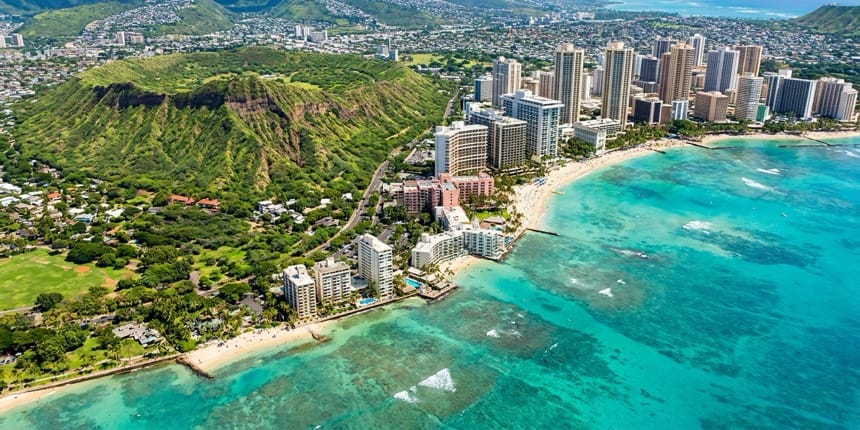
A move to Hawaii is unlike any other relocation in the United States, and the reason is simple: you cannot drive there. Every household that crosses the Pacific does so by ocean freight, in a steel container loaded onto a Matson or Pasha ship, often after a cross-country truck haul to a West Coast port. That single fact reshapes the entire move — the timeline, the budget, the packing, and the level of coordination required. Hawaii also carries the highest cost of living of any state, a median single-family home price near a million dollars, and an income tax that tops out at 11%. None of that has slowed the dream; people continue to relocate for the climate, the lifestyle, family ties, military orders, and careers in healthcare, tourism, and shipping. But Hawaii rewards preparation more than almost anywhere else you could move. If you’re weighing the move, this guide covers what you need to know to do it well.
Here’s what you need to know at a glance:
Quick Answers
- Median single-family home: ~$950,000 statewide (Oahu single-family $1M+, the Big Island most affordable)
- Average move cost: $10,000 – $25,000+ (2–4 bedroom home, including ocean freight and mainland trucking)
- State income tax: Progressive 1.4%–11% (the 11% top rate is the second-highest in the nation)
- Anchor industries: Tourism and hospitality, healthcare, the federal government and military, shipping and logistics
- Best for: Households relocating for a specific job, military families, those with island ties, and financially prepared movers committed to the lifestyle
This guide takes a practical approach to relocating to Hawaii — why people make the move and who it really suits, how the islands differ, the job market that supports a permanent move, the genuinely high cost of living and the tax picture, and — most importantly — the ocean-freight logistics that define a Hawaii move and set it apart from any mainland relocation. Because an island move has more moving parts than a typical interstate one, it helps to read this alongside our guides to planning an interstate move and long-distance relocation.
Why People Are Moving to Hawaii — and Who It Really Suits
Hawaii’s draw needs little explanation: a tropical climate that holds in the 80s nearly year-round, an unmatched natural setting of beaches, mountains, and rainforest, and a culture built around the outdoors and the ocean. What deserves honest treatment is who the move actually suits, because Hawaii is the one state where the lifestyle and the logistics pull hardest in opposite directions. The people who relocate successfully tend to fall into clear groups: those moving for a specific job or transfer, military families arriving on orders, residents with existing family or cultural ties to the islands, retirees with the means to absorb the cost, and remote workers who have run the numbers and committed to the lifestyle with eyes open.
Unlike the migration into low-cost Sun Belt states, a move to Hawaii is rarely about saving money — it is about choosing a way of life and being financially prepared for what it costs. The state’s cost of living is the highest in the nation by a wide margin, and housing in particular requires either substantial income, significant equity from a mainland sale, or both. The households that thrive are the ones who treat the move as a deliberate, well-funded decision rather than an impulse, and who understand going in that nearly everything — groceries, fuel, electricity, and the move itself — costs meaningfully more than it did wherever they came from.
For those who fit the profile, the rewards are real and difficult to replicate anywhere else: a daily rhythm organized around the water and the trade winds, a genuinely multicultural society, mild weather that erases the concept of a “moving season” tied to harsh winters, and a quality of life that residents consistently rate among the highest in the country despite the costs. The key is matching expectations to reality before the container is loaded, not after.
The Islands: Oahu, Maui, the Big Island, and Kauai
Choosing the island is the first and most consequential decision of a Hawaii move, because each of the four major islands offers a fundamentally different life. They share a climate and a culture, but they differ enormously in economy, cost, pace, and the kind of daily existence they support.
Oahu is the center of everything. Home to Honolulu and roughly 70% of the state’s population, it is the only island with a true urban core — high-rises, an interstate highway system, the state’s main airport, the bulk of the jobs, the University of Hawaii’s flagship campus, and the largest concentration of military installations. For most people relocating for work, Oahu is the practical choice, offering the deepest job market and the most amenities, at the trade-off of traffic, density, and the state’s highest home prices outside the Maui resort areas. Maui is the resort island — stunningly beautiful, tourism-driven, and the most expensive overall, with communities like Wailea and Lahaina commanding premium prices and a smaller, less diversified job market. Hawaii Island, the Big Island, is the largest and most affordable, with the towns of Hilo on the wet windward side and Kailua-Kona on the dry leeward side; it offers genuine value by Hawaii standards, dramatic volcanic landscapes, and a more rural, spread-out life. Kauai, the “Garden Isle,” is the lushest and most rural of the four — small, expensive, and prized by those seeking quiet and nature over career or convenience. The right island depends almost entirely on what your move is for: a career generally points to Oahu, a resort-industry or lifestyle move may point to Maui, value and space point to the Big Island, and seclusion points to Kauai.
The Honolulu Metro and Where People Actually Live
For the majority of newcomers who land on Oahu, the next decision is where on the island to live, and the choices range from urban high-rise to rural windward valley. Honolulu proper — including the high-rise districts of Ala Moana, Kakaako, and Waikiki — offers true city living, walkability rare for Hawaii, and proximity to downtown jobs, at condo prices that rival major mainland metros. East Honolulu neighborhoods like Hawaii Kai, Kahala, and Manoa are among the most desirable and expensive residential areas, prized for schools, scenery, and established communities.
Beyond the urban core, the island opens up. Kailua and Kaneohe on the windward (eastern) side offer a beach-town and suburban feel with a wetter, greener climate, popular with families and military households, separated from Honolulu by the Pali and Likelike highways through the mountains. Central Oahu communities like Mililani and the growing master-planned developments around Kapolei — the island’s designated “second city” on the dry leeward west side — offer comparatively more home for the money and have absorbed much of the island’s newer construction, at the cost of a longer commute into Honolulu along an often-congested H-1 freeway. The practical reality of Oahu is that the island is small but the traffic is real, so — as in any constrained metro — choosing a home relative to where you work matters enormously.
The Job Market: Tourism, Healthcare, the Military, and Shipping
A permanent move to Hawaii works best when it is anchored by a job, and the state’s economy rests on four main pillars. Tourism and hospitality is the largest, accounting for roughly 22% of the state’s GDP and employing on the order of 200,000 people across hotels, restaurants, tour operators, and related services; major employers include Marriott, Hilton, Prince Resorts, and Disney’s Aulani. The sector offers abundant employment but is concentrated in service roles and is sensitive to economic and travel cycles, as the islands have learned in past downturns.
Healthcare is the fastest-growing sector and a major source of stable, well-paid careers — projected to grow strongly and to account for nearly a quarter of new job creation, anchored by systems like Queen’s Health Systems, whose flagship Queen’s Medical Center in Honolulu is one of the state’s largest private employers. The federal government and military form another enormous pillar: Hawaii hosts major Army, Navy, Air Force, and Marine installations, and federal defense spending and employment are central to the Oahu economy in particular, which is why so many relocating households arrive on military orders. Finally, shipping and logistics are uniquely important to an island state — Matson, headquartered in Honolulu with more than 2,000 local employees, is the backbone of the supply chain, and the recently merged Alaska–Hawaiian Airlines operation employs thousands more. For a relocating professional, the honest guidance is to secure the job before the move: outside these core sectors, the job market is smaller and more competitive than a comparable mainland metro, and the cost of relocating speculatively is far too high to risk.
Cost of Living and the Tax Picture
There is no softening this: Hawaii is the most expensive state in the country to live in, with a cost-of-living index around 193 — nearly double the national average. The premium touches everything. Groceries arrive by ship and cost substantially more than on the mainland; electricity rates are among the highest in the nation; fuel is expensive; and even routine goods carry an island markup. A household’s monthly budget in Hawaii bears little resemblance to the same household’s budget in a typical mainland city, and newcomers consistently underestimate the everyday costs beyond housing.
The tax picture compounds the cost for high earners. Hawaii levies a progressive income tax ranging from 1.4% up to 11%, with the top rate — the second-highest of any state — applying to higher incomes. There is a general excise tax that functions like a broad sales tax and applies to nearly all transactions, including services, which adds up over a year. The one area of relative relief is property tax: Hawaii’s effective property-tax rates are actually among the lowest in the nation, a partial offset to the high home values, though the sheer price of the homes means the dollar amounts are still significant. The median household income of roughly $95,000 reflects the high-cost environment, and most analyses suggest a single person needs $70,000 to $105,000 a year to live comfortably, with families needing considerably more.
The takeaway is not that Hawaii is unaffordable — hundreds of thousands of households live well there — but that it requires a clear-eyed budget. The move makes financial sense for those with strong island incomes, mainland home equity to deploy, or military and federal compensation that includes cost-of-living adjustments. It rarely makes sense as a money-saving move, and treating it as one is the most common and most expensive mistake newcomers make.
The Housing Market: What Your Money Buys
Housing is the single largest factor in the Hawaii decision, and the numbers are sobering by mainland standards. The statewide median single-family home price sat around $950,000 in 2025, and on Oahu — where most jobs and people are — single-family homes routinely exceed a million dollars, with the most desirable East Honolulu and beach communities running well into the multimillions. Condominiums are the more accessible entry point on Oahu, particularly in the urban Honolulu high-rises, though even those command prices comparable to major mainland metros, and buyers must factor in maintenance fees that can be substantial.
Value, such as it exists in Hawaii, is found off Oahu. The Big Island offers the most attainable prices in the state, with Hilo and the Puna district on the windward side among the few places where a middle-income household can realistically buy a single-family home, and Kailua-Kona offering more at a premium. Maui and Kauai are both expensive, driven by resort demand and severely limited inventory. The state’s chronic housing shortage — the supply of homes has not kept pace with demand for decades — is the root of the affordability challenge, and it means bidding is competitive and inventory moves quickly across all islands. For most relocating households, the realistic path is either to arrive with significant equity from a mainland sale, to rent first and buy later once established, or to choose the Big Island for genuine ownership value. Working with a local agent who understands the specific island and district is not optional here; it is essential.
The Logistics of an Island Move: Ocean Freight, Containers, and Timing
This is the section that makes a Hawaii move different from every other relocation, and it deserves the most attention. Your household goods cannot be trucked to Hawaii — they must cross the Pacific by ocean container on one of two carriers, Matson or Pasha, sailing primarily from West Coast ports. That single constraint introduces several decisions that don’t exist in a mainland move.
The first is the route. If you’re moving from the West Coast, your goods can go straight to a port — Oakland, Long Beach, Seattle, or Tacoma — and onto a ship. If you’re moving from the Midwest or East Coast, your belongings must first be trucked across the country to a West Coast port, which adds both cost and time before the ocean leg even begins. The second decision is container size and service level: carriers offer containers commonly from 20 to 45 feet, and you can choose port-to-port service (you arrange trucking to and from the ports yourself) or full door-to-door service, which is more expensive but far simpler. The third is timing: the ocean transit itself takes several days, but the full door-to-door timeline — origin packing, cross-country trucking if applicable, port handling, the sailing, and final island delivery — commonly runs two to four weeks or more, so households must plan for a gap during which they’re living without their belongings.
This complexity is precisely where a full-service interstate mover earns its keep. Coordinating professional origin packing, the cross-country truck leg, the handoff to the ocean carrier, customs and agricultural inspections, and final delivery on the island — all under a single accountable point of contact — is dramatically less stressful than stitching those legs together yourself across multiple vendors and a 2,500-mile ocean gap. It is also where things most often go wrong for movers who try to manage it piecemeal: a missed port cutoff, an unprotected load, or a coordination failure between truck and ship can cost weeks. The complexity of the island move is the strongest argument for professional, end-to-end coordination.
Best Island and Community for Your Situation
Because the islands differ so completely, the right destination depends heavily on who you are and what your move is for. The following table maps the major options to the households they suit best.
| Island / Area | Character | Typical home price | Best for |
|---|---|---|---|
| Oahu — Urban Honolulu | High-rise, walkable, job-dense | $600K–$1.5M+ (condos) | Career movers wanting city life |
| Oahu — East Honolulu | Established, scenic, top schools | $1.2M–$5M+ | High earners, families |
| Oahu — Kailua / Kaneohe | Windward, beach-town, family | $1M–$2.5M | Families, military households |
| Oahu — Kapolei / Central | Newer, master-planned, value | $700K–$1.1M | Families wanting more home |
| Maui | Resort, scenic, expensive | $1M–$3M+ | Resort-industry, lifestyle movers |
| Big Island (Hilo / Kona) | Affordable, rural, volcanic | $450K–$900K | Value buyers, space, ownership |
| Kauai | Lush, rural, secluded | $900K–$2M+ | Quiet-seekers, nature, retirees |
Data: Hawaii real estate market reports, statewide MLS, 2025–2026.
A professional relocating for a healthcare, federal, or shipping role almost always lands on Oahu, with the choice among urban Honolulu, the windward side, and the more affordable central and leeward communities coming down to budget and commute tolerance. A military family typically lives near their installation, often on the windward side or in central Oahu. A household whose primary goal is genuine home ownership at a Hawaii-feasible price looks to the Big Island. And those chasing seclusion and nature over career gravitate to Kauai or rural Maui. There is no single “best” Hawaii — there is the right island for your job, your budget, and the life you’re actually moving for.
Schools and Higher Education
For families, schools factor into both the island and the neighborhood choice. Hawaii is unusual in operating a single statewide public school system — the Hawaii State Department of Education is the only fully statewide district in the country — so school quality is determined more by individual school and complex area than by separate municipal districts. On Oahu, the East Honolulu and certain windward and central schools are among the most sought-after, and families research specific schools carefully. Hawaii also has a strong and unusually prominent private-school tradition; institutions like Punahou and Iolani are nationally known, and a larger share of families use private education than in most states, which is a budget factor worth planning for.
On the higher-education side, the University of Hawaii at Manoa in Honolulu is the flagship research campus and a major employer, with a statewide system of campuses across the islands including UH Hilo on the Big Island. For relocating families, the key planning points are to identify the specific school complex serving a prospective home, to weigh the private-school option realistically against the budget, and — for military families — to understand the support systems available through the installations. As with everything in Hawaii, early research prevents expensive surprises.
Climate, Lifestyle, and Daily Life
Hawaii’s climate is its signature draw: warm and remarkably consistent, with temperatures generally in the high 70s to mid-80s year-round, cooled by reliable trade winds. There is no winter to organize a “moving season” around, which is part of why island moves happen evenly throughout the year. The islands have microclimates that change over short distances — the windward sides are wetter and greener, the leeward sides drier and sunnier — so two homes a few miles apart can have genuinely different weather, something newcomers should factor into where they choose to live. Hurricane season and occasional volcanic “vog” on the Big Island are real but manageable considerations.
Daily life runs on what residents affectionately call “island time” — a slower, more relaxed pace that newcomers from fast mainland cities find either liberating or frustrating, and usually both at first. The culture is deeply multicultural, shaped by Native Hawaiian, Asian, and Pacific traditions, and newcomers are expected to approach it with humility and respect; understanding and honoring local culture is a meaningful part of settling in well. Life is oriented around the outdoors and the ocean — surfing, hiking, diving, and beach culture are woven into ordinary weeks. The trade-offs of island living are equally real: a sense of isolation from the mainland that residents call “rock fever,” expensive and time-consuming travel to see far-flung family, and the logistical friction of living where everything arrives by ship. For those who embrace the lifestyle and respect the place, the daily quality of life is among the highest anywhere; for those who don’t, the isolation and cost wear thin. Knowing which camp you’re in before you move is the most important self-assessment of all.
How Hawaii Compares to West Coast Origins
Most people moving to Hawaii come from the West Coast or the mainland generally, and the comparison clarifies what the move actually changes. The table below sets Hawaii against three common origin states.
| Metric | Hawaii | California | Washington | Texas |
|---|---|---|---|---|
| Top income tax rate | 11% (graduated) | 13.3% (graduated) | 0% (no income tax) | 0% (no income tax) |
| Median home price (2025–26) | ~$950K (single-family) | ~$870K+ | ~$620K | ~$340K |
| Cost-of-living index | ~193 | ~138 | ~115 | ~93 |
| Can you drive your goods there? | No — ocean freight only | Yes | Yes | Yes |
Data: state tax agencies, Zillow, cost-of-living indices, 2025–2026.
The comparison makes the central point plainly: Hawaii is the most expensive option on nearly every axis, and it is the only one where your belongings cannot travel by road. Even relative to high-cost California, Hawaii’s overall cost of living is dramatically higher once groceries, utilities, and the move itself are included. The reason people still choose it is not financial — it is the climate, the setting, and the lifestyle, which simply do not exist on the mainland at any price. The honest framing for a relocating household is that Hawaii is a lifestyle purchase, and the move should be budgeted and planned as the significant, deliberate undertaking it is.
What a Move to Hawaii Costs and How to Budget
A full-service move to Hawaii is the most expensive type of domestic relocation, and the budget reflects the ocean leg. A two-to-four-bedroom household move commonly runs $10,000 to $25,000 or more, depending on the volume of goods, the origin, the container size, and the service level. The ocean freight alone is substantial: a single container from a West Coast port to the islands can run several thousand dollars — real-world examples include roughly $5,900 for a 20-foot container and $6,800 for a 40-foot container from Seattle, with the figure rising for service to neighbor islands. If you’re moving from the Midwest or East Coast, cross-country trucking to a West Coast port adds an estimated $1,500 to $4,000 before the ocean leg, and choosing full door-to-door service over port-to-port commonly adds another $1,500 to $4,000 for the convenience of not arranging your own port trucking.
Several factors move the number. Volume is the largest lever, so decluttering aggressively before a Hawaii move pays off more than for any other relocation — every cubic foot crosses the Pacific at a premium, and many movers find it cheaper to sell and rebuy bulky, inexpensive furniture than to ship it. Shipping a vehicle is a separate line item, typically routed through Matson, and pets require advance planning because Hawaii is rabies-free and enforces strict animal-import and quarantine rules that demand months of preparation. The most reliable budget comes from a detailed, survey-based estimate that accounts for every leg of the journey, and our moving cost calculator can provide an early ballpark before you commit. Given the stakes and the complexity, this is a move where professional planning is not a luxury but a safeguard.
Timing Your Hawaii Move and the First 90 Days
A Hawaii move needs a longer runway than a mainland one. Start planning at least eight to twelve weeks ahead — earlier if you’re shipping a vehicle or moving pets, since the rabies-free quarantine rules require months of advance veterinary work to avoid a lengthy quarantine on arrival. The longer timeline also gives you room to declutter thoroughly, secure container space, coordinate the truck and ocean legs, and arrange housing, all of which take longer for an island move. Build in a realistic gap between your departure and the arrival of your goods, since the full door-to-door transit commonly runs two to four weeks or more, and plan for interim essentials during that window.
On arrival, new Hawaii residents should obtain a Hawaii driver’s license and register a vehicle within the required window after establishing residency, and you’ll file a state income tax return the following year under the progressive rate structure. In the first weeks, plan to establish utilities — budgeting for Hawaii’s high electricity rates — update your address with the USPS along with your bank and employer, register to vote, and, for families, handle school enrollment within the statewide system early. The early period is also when the lifestyle adjustment begins in earnest: learning the rhythms of island time, the local culture, and the practical realities of living where everything arrives by ship. Households that plan the logistics carefully get to spend those first weeks settling into the lifestyle they came for rather than scrambling through a move gone sideways.
What to Know Before You Commit
The trade-offs are significant and worth naming honestly. Cost is the first: Hawaii’s everyday expenses, not just its housing, are the highest in the nation, and households that don’t budget realistically for groceries, utilities, fuel, and the move itself can find themselves financially squeezed quickly. Isolation is the second: the islands are 2,500 miles from the mainland, travel to see family is expensive and time-consuming, and the sense of distance that residents call “rock fever” is real, particularly in the first year. The job market outside tourism, healthcare, the military, and shipping is smaller and more competitive than a mainland metro, so relocating without a secured income is genuinely risky given the cost.
The practical logistics carry their own friction: shipping a car takes time and money, pets require months of preparation to satisfy the rabies-free import rules, and the multi-leg ocean move is more complex than any mainland relocation. Housing is scarce and competitive across all islands, so buyers and renters alike should expect a tight market. And the cultural adjustment is real — Hawaii has a strong local identity, and newcomers who arrive without humility and a willingness to learn and respect the culture tend not to settle well. None of these should deter a household that genuinely fits the move and plans for it; they are simply the realities that separate a successful island relocation from an expensive disappointment.
Planning Your Move to Hawaii
A move to Hawaii is the most logistically demanding relocation in the country, and the quality and coordination of your moving company matters more here than anywhere else. When a furnished household must be professionally packed, trucked across the country, handed to an ocean carrier, cleared through agricultural inspection, and delivered on an island 2,500 miles from the mainland, the difference between a single accountable partner and a patchwork of separate vendors is the difference between a smooth arrival and a multi-week ordeal.
This is exactly the kind of complex, full-service move Nelson Westerberg was built to handle. As one of Atlas Van Lines’ top agents, we coordinate the entire journey — origin packing, the mainland truck leg, the handoff to Matson or Pasha, the ocean transit, and final delivery on Oahu, Maui, the Big Island, or Kauai — under one point of contact, so you’re not stitching together truckers, ocean carriers, and island delivery agents yourself across a Pacific gap. We understand the expectations of both the relocating professional and the corporate and military relocation programs that frequently coordinate Hawaii moves. Our guide to choosing a white-glove moving company explains what to look for, and our guide to planning an interstate move walks through the sequence. For a move this complex, start early and lean on professional coordination — it is the single best protection for your belongings and your timeline.
Frequently Asked Questions
How much does it cost to move to Hawaii?
A full-service move to Hawaii typically costs between $10,000 and $25,000 or more for a two-to-four-bedroom home, making it the most expensive type of domestic relocation. The ocean-freight container is a major component — several thousand dollars from a West Coast port — and moving from the Midwest or East Coast adds $1,500 to $4,000 for cross-country trucking to the port. Door-to-door service, vehicle shipping, and the volume of goods all affect the final figure.
How do you ship household goods to Hawaii?
Household goods travel to Hawaii by ocean container on one of two carriers, Matson or Pasha, sailing from West Coast ports. You can choose port-to-port service, arranging your own trucking to and from the ports, or full door-to-door service, which is more expensive but far simpler. From the East Coast or Midwest, goods are first trucked to a West Coast port. The full door-to-door timeline commonly runs two to four weeks or more, so plan for a gap without your belongings.
What is the cost of living in Hawaii?
Hawaii has the highest cost of living of any U.S. state, with an index around 193 — nearly double the national average. Groceries, electricity, and fuel all carry a significant island premium because most goods arrive by ship. The median household income is about $95,000, and most analyses suggest a single person needs $70,000 to $105,000 a year to live comfortably, with families needing considerably more. Hawaii is rarely a money-saving move.
Does Hawaii have a high income tax?
Yes. Hawaii’s income tax is progressive, ranging from 1.4% up to 11%, with the top rate the second-highest of any state. There is also a general excise tax that applies broadly to transactions, including services. The one area of relative relief is property tax, where Hawaii’s effective rates are among the lowest in the nation — though the high home values mean the dollar amounts are still significant.
Which Hawaiian island should I move to?
It depends on your purpose. Oahu, home to Honolulu and about 70% of the population, has the deepest job market and most amenities and is the practical choice for most career relocations. Maui is the resort island, scenic and expensive. The Big Island is the most affordable and the best option for genuine home ownership value, with a more rural feel. Kauai is the lushest and most secluded, suited to those prioritizing nature and quiet over career.
What is the job market like in Hawaii?
Hawaii’s economy rests on four pillars: tourism and hospitality (about 22% of GDP and roughly 200,000 jobs), healthcare (the fastest-growing sector, anchored by Queen’s Health Systems), the federal government and military (a major presence across the islands), and shipping and logistics (led by Matson). Outside these sectors, the job market is smaller and more competitive than a comparable mainland metro, so securing a job before relocating is strongly advised given the high cost of living.
When is the best time to move to Hawaii?
Because Hawaii’s climate is mild year-round, there is no weather-driven moving season, and moves happen evenly throughout the year. The bigger timing factor is the logistics: start planning eight to twelve weeks ahead, and earlier if you’re shipping a vehicle or moving pets, since the rabies-free quarantine rules require months of advance veterinary preparation. Off-peak booking and aggressive decluttering will do more to control cost than the calendar month.
Can I bring my pets and car to Hawaii?
Yes, but both require planning. Hawaii is rabies-free and enforces strict animal-import rules, so pets need months of advance veterinary work — vaccinations, testing, and documentation — to qualify for the expedited program and avoid a lengthy quarantine on arrival. Vehicles are typically shipped through Matson from a West Coast port as a separate line item from your household goods. Both should be arranged early in the planning process, not at the last minute.
Conclusion
A move to Hawaii is unlike any other relocation in America, and that is the throughline of this guide. The climate, the setting, and the lifestyle are unmatched, and for the right household — those moving for a secured job, military families, those with island ties, and financially prepared movers committed to the way of life — the islands deliver a quality of life that simply doesn’t exist on the mainland. But Hawaii is the most expensive state to live in, its housing requires real income or equity, and its defining logistical reality is that everything, including your household, must cross the Pacific by ship. The successful move is the well-planned, well-funded, clear-eyed one.
The move itself is the part you can control, and on an island relocation it is also the part most likely to go wrong without expert help. Coordinating professional packing, cross-country trucking, ocean freight, and island delivery under a single accountable partner — rather than improvising it across separate vendors — is what turns the most complex domestic move into a manageable one. Whether you’re a healthcare professional relocating to Oahu, a family chasing the Big Island’s relative value, or a household finally making the island dream real, the right preparation and the right partner make the difference between a stressful, costly ordeal and a confident new beginning. With careful planning, getting your household safely across the Pacific can be the part you worry about least.
Related Articles
New York City vs. Austin (2026): What Your Paycheck Really Buys
Few city comparisons produce a gap as wide as New York City versus Austin. By one widely cited 2026 estimate, it takes roughly $11,500 a month in New York to sustain the same standard of living that $6,900 buys in Austin — a difference so large it reshapes not just a budget but a life. […]
Read MoreChicago vs. Charlotte (2026): The Queen City at a Fraction of the Cost
For a Chicago household weighing a move south, Charlotte presents an unusually clean comparison: a real city, with a genuine corporate economy and four mild seasons, at a fraction of Chicago’s cost — and, most strikingly, a fraction of its property-tax burden. A Chicago homeowner paying the metro’s effective property-tax rate near 1.98% on a […]
Read More

Table of Contents

Atlas Van Lines, Inc. U.S. DOT No. 125550 (TM & © 2026 AWGI LLC.) | G.P.S.C. 4917 | IL C.C. 4246 | NJPC 00104 | Cal-T 110193
© 2026 Nelson Westerberg, Inc. All Rights Reserved Worldwide.