Moving Guide to Salt Lake City (2026): Landing in Silicon Slopes

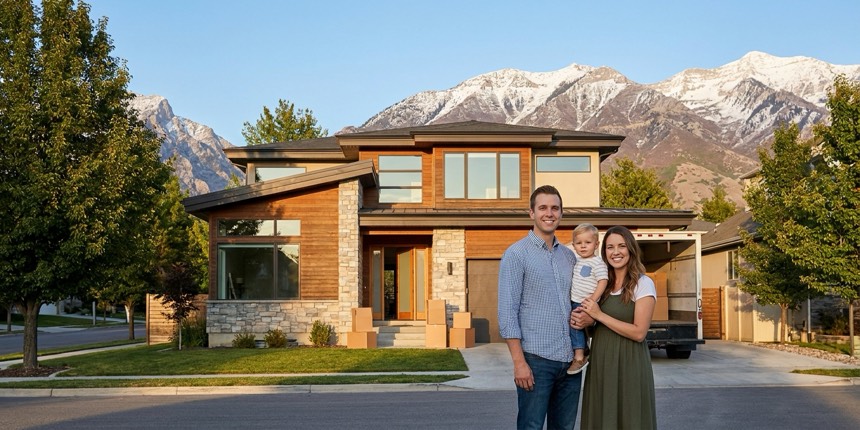
For most of the last century, the talent map of American technology had one center of gravity, and it sat on the California coast. That map is being redrawn along a 40-mile stretch of Interstate 15 in northern Utah. The corridor that runs from Salt Lake City south through Lehi and Provo — what locals and recruiters alike now call Silicon Slopes — has grown into the densest concentration of technology jobs per capita anywhere in the country outside California itself. More than 5,000 technology companies operate here, Adobe employs over 2,000 people at its Lehi campus, and Meta, Google, and Microsoft are collectively pouring billions of dollars into data-center infrastructure along the same freeway. Utah is projected to add more than 50,000 new technology jobs by the close of 2026.
If you are reading this guide, there is a good chance you are part of that migration — relocating for a role at one of those companies, following a spouse who is, or moving a household toward a metro where a serious career and a serious mountain are forty minutes apart. Salt Lake City rewards that decision in ways the coastal cities it draws from often cannot. But a move to the Wasatch Front is also shaped by a geography, a tax structure, and a housing market that behave nothing like the place you are likely leaving. Understanding those differences is the first step toward a relocation that lands well.
Here’s what you need to know at a glance:
Quick Answers
- Median home price: ~$585,000 in the city, ~$550,000 across Salt Lake County (early 2026, up ~3.5% year over year)
- Median rent (2BR): roughly $1,600–$1,900/month depending on neighborhood
- State income tax: flat 4.45% — Utah’s sixth rate cut in six years
- Effective property tax: ~0.48%, among the lowest in the country
- Defining industry: technology (Silicon Slopes) — highest per-capita tech-job concentration outside California
- Full-service move cost: ~$4,500–$14,000 for a 2–3 bedroom home, depending on origin distance and weight
- Best for: technology and finance professionals, relocating families, outdoor-oriented households trading coastal cost for mountain access
This guide takes a practical approach to a move that is often more nuanced than newcomers expect. Salt Lake City is not simply a cheaper version of San Francisco or Seattle. It is a distinct place with its own logic — a compact valley pinned between mountain ranges, a culture that prizes the outdoors, and an economy that has quietly matured from regional curiosity into a national hub. Below, we cover why people are moving here, who is hiring, what it actually costs to live and to relocate, where to plant yourself, and how to plan a long-distance move to a city whose canyons, elevation, and winters introduce logistics that a cross-town mover never has to think about.
Why People Are Moving to Salt Lake City
The headline reason is work, but the deeper reason is arithmetic. For a software engineer, a product manager, or a finance professional weighing an offer in Lehi against one in the Bay Area, the comparison rarely turns on base salary alone. It turns on what that salary buys after housing and taxes — and on what the surrounding hours of life look like.
Start with the cost arbitrage, because it is the single most powerful force pulling people inland. A household relocating from California, Seattle, or the Northeast typically finds that a comparable home in the Salt Lake Valley costs a fraction of what it left behind, while the state takes a far smaller bite of income. Utah’s flat 4.45% income tax stands against California’s top marginal rates above 13%, and the state’s effective property-tax rate of roughly 0.48% is among the gentlest in the nation. For a two-earner technology household, the combined annual difference in tax and housing carrying cost can run well into five figures — money that, in practical terms, is the difference between renting indefinitely on the coast and owning a home with a yard in Utah within a year or two.
Then there is the quality-of-life equation, which in Salt Lake City is not marketing language but daily reality. Four world-class ski resorts — Alta, Snowbird, Brighton, and Solitude — sit within roughly forty minutes of downtown, close enough that residents genuinely ski before work in the season. The Wasatch and Uinta mountains put alpine hiking, climbing, and trail running inside an after-work window. Five national parks lie within a half-day’s drive. For households leaving cities where the nearest real wilderness is a three-hour traffic ordeal away, the proximity is transformative.
The third driver is the maturing of the economy itself. A decade ago, moving to Salt Lake City for technology work meant betting on a promising but thin job market. That bet is no longer speculative. With thousands of technology firms, several publicly traded companies headquartered or heavily staffed here, and the major cloud and AI players building physical infrastructure along I-15, the corridor now offers the thing relocating professionals most need: optionality. If a role does not work out, the next one is down the freeway rather than across the country. That depth is what turns a one-time relocation into a durable place to build a career.
For many newcomers, the move is also a deliberate exit from a high-cost origin. If you are weighing Utah against other escape valves, our guide on where to move from California covers how Salt Lake City compares to Texas, Arizona, Nevada, and Tennessee on tax, housing, and lifestyle — useful context if the Mountain West is one of several options on your list.
The Silicon Slopes Economy and Who Is Hiring
The phrase “Silicon Slopes” began as a regional nickname and has hardened into an accurate description of one of the country’s most important secondary technology markets. The corridor traces I-15 from Salt Lake City proper south through Draper, Lehi, American Fork, Lindon, and Provo — a roughly 40-mile ribbon where the bulk of Utah’s technology employment concentrates. Understanding where the jobs are within that ribbon matters a great deal when you choose where to live, because a fifteen-minute commute from the right suburb can become a punishing one from the wrong one.
Adobe anchors the corridor from Lehi, where it has grown past 2,000 employees with room to expand toward 3,000, and where much of its generative-AI work — the Firefly family of products among it — is staffed. Qualtrics, the experience-management company, remains one of the region’s signature homegrown success stories and a major employer of engineers, designers, and data professionals. Around these anchors sits a dense ecosystem of enterprise-software and SaaS companies, several of which have reached unicorn valuations, plus a deep bench of cybersecurity, cloud, and data firms.
The newest and arguably most consequential development is infrastructure. Meta, Google, and Microsoft are investing billions into data-center campuses along the I-15 corridor, and the Economic Development Corporation of Utah projects those facilities alone will generate between 800 and 1,200 permanent operational roles by the end of 2026 — a category of work, from facilities engineering to network operations, that did not meaningfully exist in the state a few years ago. Layered on top is the broader hiring boom: software developers and engineers, data scientists, machine-learning specialists, DevOps and cloud engineers, and cybersecurity professionals remain in sustained demand, with senior AI engineering compensation in the region now averaging around $200,000.
It would be a mistake, though, to read Salt Lake City as a one-industry town. The economy rests on more than technology. Finance has a substantial footprint, with Goldman Sachs operating one of its largest offices outside New York here. Health care, anchored by Intermountain Health and the University of Utah’s medical system, is a major employer. The University of Utah itself feeds the talent pipeline and drives research. The presence of these stable, large institutions alongside the technology boom is part of what makes the market resilient — and part of why relocating households can feel confident planting roots rather than treating Utah as a temporary posting.
For the HR and global-mobility teams who manage relocations into this corridor at scale, the practical questions are the same ones individual movers face, multiplied: how to get employees and their families settled quickly, how to handle the logistics of a mountain-valley destination, and how to do it without the move itself becoming the reason a new hire’s first ninety days go badly. A relocation handled by a full-service partner is, in that light, less a perk than a retention investment.
Cost of Living and the Utah Tax Picture
Salt Lake City is more affordable than the coastal markets that feed it, but it is no longer cheap, and anyone moving here should calibrate expectations to 2026 reality rather than to the bargain reputation the city carried a decade ago. Housing is the variable that drives nearly everything.
As of early 2026, the median sale price within Salt Lake City sits around $585,000, up roughly 3.5% over the prior year, while the broader Salt Lake County median runs closer to $550,000. The market is genuinely competitive: well-priced homes attract multiple offers and sell in under a month on average, a tempo that surprises newcomers from slower markets and one that makes pre-approval and decisive timing essential. Renters have somewhat more breathing room, with two-bedroom apartments generally ranging from about $1,600 to $1,900 per month depending on neighborhood and finish, though the most desirable close-in areas push higher.
A useful way to think about the monthly math: for a median-priced home purchased with 20% down, a household should plan on roughly $4,200 to $5,500 per month to cover the mortgage, taxes, insurance, utilities, groceries, and transportation. Beyond housing, the cost of living runs only modestly above the national average — the premium is concentrated in real estate, not in everyday expenses.
Where Salt Lake City decisively wins is taxes, and this is where the relocation math from high-tax states becomes compelling. Utah levies a flat income tax of 4.45%, the result of the state’s sixth consecutive annual rate cut, down from 5% in 2018. Property taxes are similarly restrained, with an effective rate of about 0.48% on owner-occupied homes — a figure that keeps the carrying cost of even a $600,000 home meaningfully below what the same assessed value would cost in much of the country.
The contrast with the markets most newcomers leave is stark:
| Metric | Salt Lake City, UT | San Francisco Bay Area, CA | Seattle, WA |
|---|---|---|---|
| Median home price | ~$585,000 | ~$1,300,000+ | ~$850,000 |
| State income tax (top) | 4.45% (flat) | 13.3% | 0% (state) |
| Effective property tax | ~0.48% | ~0.71% | ~0.92% |
| Cost of living vs. national avg | Modestly above | Far above | Well above |
Data: Redfin, Zillow, Tax Foundation, Utah State Tax Commission — 2026.
For a household earning $250,000, the swing in income tax alone between California and Utah can approach $20,000 a year, before accounting for the difference in housing cost. That is the engine behind Silicon Slopes’ talent in-migration, and it is why a relocation that looks lateral on the offer letter often feels like a raise once you are living it. To model your own numbers against a specific origin, our moving cost calculator is a useful starting point for the relocation expense itself.
Your Salt Lake City Neighborhood Map
Few relocation decisions matter more than where in the valley you land, and Salt Lake City’s geography makes that choice unusually consequential. The metro is a compact valley hemmed by the Wasatch Range to the east and the Oquirrh Mountains to the west, with neighborhoods stacked from the valley floor up onto the foothills — locally called “the benches” — and a long string of suburbs running south along I-15 toward the Silicon Slopes employers. Where you sit determines your commute, your access to the mountains, and the character of your daily life. Here is how the major options break down.
The Avenues is one of the most sought-after close-in neighborhoods, a grid of tree-lined streets climbing the foothills just north of downtown. Its historic homes, walkability, and sweeping views of the valley and the Wasatch make it a perennial favorite, and it consistently ranks among the safest parts of the city with hiking trails accessible practically from the doorstep. It suits professionals and families who want character and proximity over square footage.
Sugar House is the city’s vibrant, slightly bohemian heart for young professionals — a mix of historic bungalows, modern apartments, independent restaurants, and the green expanse of Sugar House Park. It offers an urban-suburban blend that appeals to newcomers who want a neighborhood with its own identity and an easy connection to downtown without living in a high-rise.
Federal Heights and the East Bench neighborhoods, set on the slopes near the University of Utah, draw academics, physicians, and established professionals with larger lots, mature trees, and some of the best valley views in the metro. They trade the energy of Sugar House for quiet and space.
Holladay, Millcreek, and Cottonwood Heights form the established southeast suburbs — leafy, family-oriented communities that put residents closest of all to the four Cottonwood Canyon ski resorts. For a household whose center of gravity is the mountains, this corridor is hard to beat, and it remains within a reasonable commute of both downtown and the southern tech campuses.
Draper, Sandy, and Lehi are the Silicon Slopes-proximate suburbs, strung along the southern end of the valley near the Adobe and data-center campuses. These communities offer newer construction, strong schools, and the shortest commutes to the corridor’s biggest employers — the natural choice for a technology professional who wants to minimize time on I-15. Daybreak, a large master-planned community in South Jordan, deserves a specific mention: it is purpose-built for families, with its own lake, extensive trails, and a town center, and it has become a default landing spot for relocating households who want a turnkey suburban life near the tech corridor.
A note on commuting, because it shapes everything: I-15 is the spine of the valley and it carries the full weight of the corridor’s growth. A home in Holladay and a home in Draper may look equidistant from a Lehi office on a map, but rush-hour reality can differ by half an hour. The TRAX light-rail system and FrontRunner commuter rail offer genuine alternatives along the corridor, and proximity to a station is worth weighting heavily in your decision. If you are relocating from a city where you had given up on transit, it is worth a fresh look here.
| Neighborhood / Area | Best for | Character |
|---|---|---|
| The Avenues | Professionals, families wanting walkable charm | Historic, foothill views, safe |
| Sugar House | Young professionals | Urban-suburban, lively, independent |
| Federal Heights / East Bench | Academics, physicians, established buyers | Quiet, spacious, scenic |
| Holladay / Cottonwood Heights | Outdoor-focused families | Leafy, closest to ski canyons |
| Draper / Lehi / Sandy | Tech professionals | Newer build, shortest corridor commute |
| Daybreak (South Jordan) | Relocating families | Master-planned, turnkey, amenity-rich |
Climate, Lifestyle, and the Outdoors
Salt Lake City’s lifestyle pitch is genuine, and for many newcomers it is the deciding factor once the financial case is made. The city sells four distinct seasons and an outdoor culture that is woven into ordinary life rather than reserved for vacations.
Winters bring the snow that built the region’s reputation — the Wasatch’s light, dry powder is the basis of Utah’s “Greatest Snow on Earth” license-plate claim, and it is not idle boasting. The four Cottonwood Canyon resorts within forty minutes of downtown mean that skiing and snowboarding are weeknight activities, not annual pilgrimages. Summers are warm and dry, ideal for the hiking, mountain biking, climbing, and trail running that fill residents’ calendars, with the high Uintas and five national parks within driving reach for longer trips. Spring and fall are short but lovely transitional seasons.
Honesty about the downsides builds trust, and Salt Lake City has one worth naming plainly: winter air quality. The same valley geography that makes the metro compact and the mountains close also traps cold air during temperature inversions, and on bad winter days the valley can hold polluted air for stretches at a time. It is a real consideration, particularly for households with respiratory sensitivities, and it is one reason the foothill and bench neighborhoods — which sit above the worst of the inversion layer — command a premium. It is a manageable trade-off for most residents, but it should be a known one rather than a surprise.
Beyond the outdoors, the city has shed much of its old reputation for sleepiness. Downtown has a growing dining and arts scene, professional sports in the NBA’s Utah Jazz and the NHL’s recently arrived franchise, and a cultural life that has broadened considerably with the influx of newcomers. The population skews young, educated, and active, and the civic culture is notably family-friendly. Newcomers from larger metros often describe the adjustment as trading a measure of big-city intensity for a measure of accessibility — shorter commutes, easier logistics, and a natural environment that is genuinely part of daily life.
Schools and Higher Education
For relocating families, the education picture is a meaningful part of the decision, and Utah’s strengths here are real. The University of Utah, a major public research university and academic medical center, anchors higher education in the city and is a significant economic and cultural force in its own right. Brigham Young University in nearby Provo and Utah State further north round out a strong state system, and the steady supply of graduates is part of what feeds the Silicon Slopes talent pipeline.
At the K–12 level, the quality of public schools varies by district and neighborhood, as it does everywhere, and it tends to track with the established suburban communities. The southeast suburbs — Holladay, Cottonwood Heights — and the southern tech-corridor communities like Draper and the Daybreak area are generally regarded as having strong schools, which is part of why relocating families gravitate toward them. As with any move, the prudent step is to evaluate specific schools against your children’s needs rather than relying on district-wide reputation, but the broad picture is favorable.
What Your Move Will Cost and How to Plan It
A long-distance move to Salt Lake City costs what any cross-country relocation costs — which is to say it depends heavily on how far your belongings travel, how much they weigh, and what level of service you choose. For a full-service move of a two-to-three-bedroom home, most households should plan on a range of roughly $4,500 to $14,000, with the specific figure driven primarily by origin distance and shipment weight.
Origin shapes the number more than anything else. A move from the West Coast — Los Angeles, the Bay Area, Seattle — covers a shorter distance to Utah and tends to land at the lower-to-middle end of that range for a given home size. Moves from the Midwest, the Northeast, or the Southeast travel farther and weigh in higher, both because of the mileage and because larger homes in those regions ship more belongings. Whatever the origin, a premium full-service move bundles professional packing, loading, transport, and unloading into a single coordinated process, and for households relocating for a new job — where time and bandwidth are scarce in the weeks around a start date — that coordination is usually worth far more than its marginal cost over a self-managed move. Our breakdown of what it costs to move a three-bedroom home cross-country walks through the line items in detail.
Salt Lake City also introduces logistics that flatter-terrain destinations do not, and a mover who knows the territory plans for them. The valley’s elevation sits above 4,200 feet, and the foothill and canyon neighborhoods climb considerably higher — narrow, winding access roads in the benches and the Cottonwood corridors can complicate the approach of a full-size moving van and occasionally call for a shuttle. Winter weather is the other variable: a January move into a bench neighborhood is a different operation than a June one, and timing, equipment, and contingency planning matter. These are precisely the details that separate a relocation handled by an experienced long-distance partner from one that improvises on arrival day.
Timing your move thoughtfully can also save money and stress. The summer months are peak season for the entire industry, which means higher rates and tighter scheduling; if your start date allows flexibility, a shoulder-season move can be both more economical and easier to book. For a fuller treatment of sequencing — when to book, how long transit takes, what to do first — our guides on planning an interstate move and how long a move actually takes are built for exactly this stage of the process.
Professional Moving Services for Your Wasatch Front Relocation
A move to Salt Lake City is, for most people reading this, a high-stakes relocation tied to a career change, a family transition, or both at once. It is the kind of move where the cost of something going wrong — a delayed shipment during a new-job onboarding, damaged belongings, an access problem at a canyon-adjacent home — is measured in far more than dollars. That is the case for a true full-service partner rather than a budget option.
Nelson Westerberg has built its reputation on exactly these moves: long-distance, high-value relocations where reliability and care are not negotiable. As a top Atlas Van Lines agent, the company brings national logistics capacity to bear on the specifics of a Wasatch Front move — the elevation, the canyon access, the winter timing, the coordination of packing and transport around a hard start date. For households relocating from the high-cost coasts that feed Silicon Slopes, the firm’s experience with long-distance moving and white-glove service means the relocation itself becomes the smoothest part of an otherwise major life change.
For the corporate HR and global-mobility teams managing employee moves into the corridor, the same standard applies at scale. A relocation that gets a new hire and their family settled cleanly and quickly is an investment in that hire’s first ninety days — and a partner who handles the full process, from packing the origin home to placing the last box in the destination, is what makes that outcome dependable.
Frequently Asked Questions
How much does it cost to move to Salt Lake City?
A full-service move of a two-to-three-bedroom home to Salt Lake City typically costs between $4,500 and $14,000. The largest factors are the distance from your origin and the weight of your shipment: moves from the West Coast cover less ground and tend toward the lower end, while moves from the Midwest, Northeast, or Southeast travel farther and cost more. Service level, time of year, and add-ons such as vehicle shipping or storage also affect the final figure.
What salary do you need to live comfortably in Salt Lake City?
A single professional can live comfortably in Salt Lake City on roughly $75,000 to $90,000 per year, while a family of four generally needs $130,000 or more to own a median-priced home and cover expenses without strain. Housing is the main driver of cost, since everyday expenses run only modestly above the national average. Utah’s low flat income tax of 4.45% stretches a given salary further than the same figure would in California or New York.
Why are so many people moving to Salt Lake City?
People are relocating to Salt Lake City primarily for the Silicon Slopes technology economy and the cost arbitrage it offers. The I-15 corridor has the highest concentration of technology jobs per capita outside California, anchored by employers like Adobe and Qualtrics and major data-center investment from Meta, Google, and Microsoft. Combined with Utah’s flat 4.45% income tax, low property taxes, and world-class outdoor access within forty minutes of downtown, the city offers professionals a career and a lifestyle that high-cost coastal metros struggle to match.
What are the best neighborhoods in Salt Lake City for newcomers?
The best neighborhood depends on your priorities. The Avenues and Sugar House are favorites for professionals who want walkable, characterful close-in living. Holladay and Cottonwood Heights suit outdoor-focused families with the closest access to the ski canyons. Draper, Lehi, and the Daybreak community in South Jordan offer newer construction, strong schools, and the shortest commutes to the Silicon Slopes tech campuses, making them popular with relocating technology families.
Is Salt Lake City a good place to raise a family?
Yes. Salt Lake City is widely regarded as family-friendly, with strong suburban school districts, abundant outdoor recreation, a relatively low cost of living compared with coastal metros, and master-planned communities like Daybreak built specifically around family life. The University of Utah and a strong state higher-education system round out the long-term picture. The main consideration for families is winter air quality during valley inversions, which makes foothill and bench neighborhoods particularly desirable.
How is the job market in Salt Lake City beyond technology?
While Silicon Slopes drives the headlines, Salt Lake City’s economy is broad. Finance has a major presence, including one of Goldman Sachs’s largest offices outside New York. Health care is anchored by Intermountain Health and the University of Utah’s medical system, and higher education and research add further stability. This diversity is part of why relocating households can feel confident putting down roots rather than treating the move as temporary.
When is the best time of year to move to Salt Lake City?
Late spring and early fall are generally the best times to move to Salt Lake City. Summer is peak moving season industry-wide, bringing higher rates and tighter scheduling, while winter introduces snow and ice that complicate moves into the higher foothill and canyon neighborhoods. A shoulder-season move is typically more economical and easier to schedule, though an experienced long-distance mover can manage a winter relocation safely with the right planning and equipment.
Final Thoughts on Your Move to Salt Lake City
Salt Lake City has become one of the most compelling relocation destinations in the country for a clear reason: it offers a genuine career market and a genuine outdoor life in the same place, at a cost that the coastal cities feeding it can no longer match. The Silicon Slopes corridor gives technology and finance professionals the depth and optionality that make a move worth committing to, Utah’s tax structure turns a comparable salary into measurably more take-home and home-owning power, and the Wasatch puts world-class mountains inside an after-work window.
A move here rewards planning. The valley’s geography, the competitive housing market, the elevation and winter logistics, and the meaningful differences between neighborhoods all reward newcomers who arrive informed and well-prepared. Understanding the corridor’s employers, the cost and tax picture, and where in the valley your life will actually work is the foundation of a relocation that starts your Utah chapter on the right footing. A trusted partner like Nelson Westerberg handles the logistical details of getting you there — so that the move itself is the easiest part of the opportunity that brought you to the Wasatch Front.
Related Articles
New York City vs. Austin (2026): What Your Paycheck Really Buys
Few city comparisons produce a gap as wide as New York City versus Austin. By one widely cited 2026 estimate, it takes roughly $11,500 a month in New York to sustain the same standard of living that $6,900 buys in Austin — a difference so large it reshapes not just a budget but a life. […]
Read MoreChicago vs. Charlotte (2026): The Queen City at a Fraction of the Cost

For a Chicago household weighing a move south, Charlotte presents an unusually clean comparison: a real city, with a genuine corporate economy and four mild seasons, at a fraction of Chicago’s cost — and, most strikingly, a fraction of its property-tax burden. A Chicago homeowner paying the metro’s effective property-tax rate near 1.98% on a […]
Read More

Table of Contents

Atlas Van Lines, Inc. U.S. DOT No. 125550 (TM & © 2026 AWGI LLC.) | G.P.S.C. 4917 | IL C.C. 4246 | NJPC 00104 | Cal-T 110193
© 2026 Nelson Westerberg, Inc. All Rights Reserved Worldwide.