Moving Guide to West Palm Beach (2026): A Comprehensive Guide for New Residents

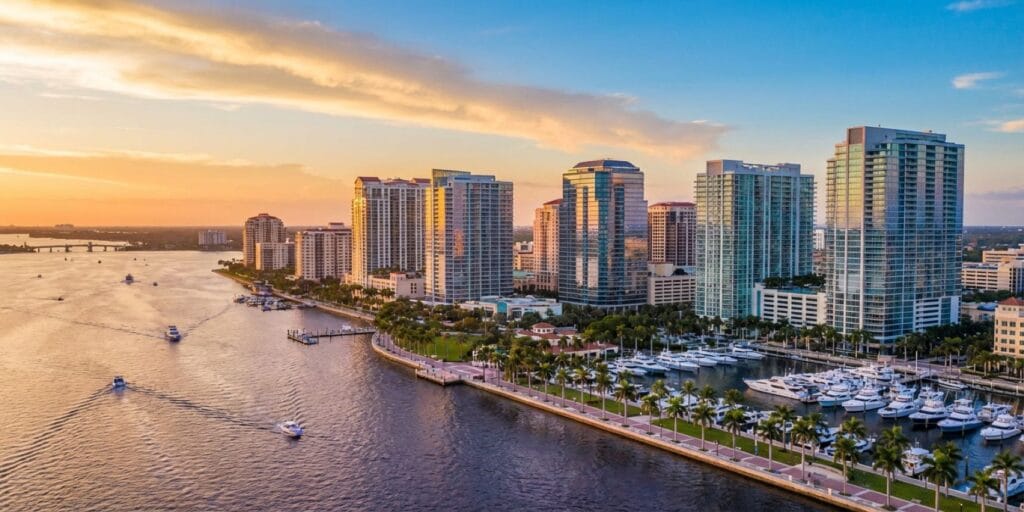
Over the past five years, more than 120 major financial firms have relocated or expanded operations to Palm Beach County—a migration so significant that industry insiders have dubbed the region “Wall Street South.” If you’re considering relocating to Florida, West Palm Beach represents something rare: a city in the midst of genuine economic transformation, where the combination of zero state income tax, waterfront living, and a rapidly diversifying job market is attracting everyone from hedge fund managers to remote-working families.
Here’s what you need to know at a glance:
Quick Answers
- Average move cost: $2,000-$7,000 (from Northeast)
- Median home price: $370,000-$440,000
- Median rent (1BR): $2,300-$2,500/month
- Cost of living: 14% above national average
- Best for: Finance professionals, remote workers, retirees, waterfront enthusiasts
What makes West Palm Beach particularly compelling right now isn’t just the absence of state income tax—though for high earners leaving New York or New Jersey, that alone can mean $15,000-$25,000 in annual savings. It’s the infrastructure investment happening downtown, where gleaming new Class A office towers like One Flagler (fully leased at $100-$140 per square foot) sit alongside walkable streets, cultural venues, and the Brightline high-speed rail connecting the city to Miami in under an hour and Orlando in about three. The city is growing strategically, with more than 9,000 residential units currently in the development pipeline and a downtown master plan being updated for the first time in 18 years.
Why West Palm Beach Is Having a Moment
The numbers tell a compelling story. Wells Fargo recently moved its wealth management headquarters to One Flagler tower, relocating approximately 100 employees including senior executives from New York. Bessemer Trust, a 117-year-old firm managing $200 billion in assets, relocated its headquarters from Palm Beach to West Palm Beach. Baron Funds opened its first South Florida office. Paulson Capital established its first Florida location. The list includes Citadel, Goldman Sachs, Elliott Management, Point72, BlackRock, Morgan Stanley, and more—over 120 major finance firms now operating in Palm Beach County, contributing $35 billion to regional GDP and creating more than 120,000 finance-related jobs.
This isn’t happening by accident. Palm Beach County’s millionaire population grew 112% between 2014 and 2024, making it one of the fastest-growing wealth hubs in the world. The region now hosts 78 centi-millionaires—individuals with $100 million or more in liquid assets. For finance professionals considering their options, the math is straightforward: maintain your salary, eliminate state income tax, trade a Manhattan apartment for a waterfront condo with Intracoastal views, and gain 238 sunny days per year.
But the transformation extends beyond finance. ServiceNow, a major AI platform company, is opening a significant office at 10 CityPlace with plans to create over 850 new jobs by 2028, focusing on product innovation and enterprise AI development. The broader Miami-Fort Lauderdale-West Palm Beach metropolitan area added 42,600 jobs over the past year—a 1.5% growth rate that exceeded the national average. Healthcare and education services alone gained 13,400 positions.
For families and remote workers watching from the Northeast, West Palm Beach offers something Fort Lauderdale and Miami can’t quite match: a more manageable scale. The city’s population of approximately 128,000 means you’re not battling Miami’s traffic intensity while still accessing world-class amenities. The median age of 40.2 years suggests a healthy mix of young professionals, families, and retirees—not a retirement community frozen in time.
The Neighborhoods That Define West Palm Beach
Understanding West Palm Beach means understanding its geography: the city stretches along the Intracoastal Waterway (locally called Lake Worth Lagoon), which separates the mainland from Palm Beach Island—home to the exclusive enclave simply called “Palm Beach.” West Palm Beach proper occupies the mainland, offering a range of neighborhoods from urban high-rises to suburban family communities.
Downtown and Clematis Street District
The heart of West Palm Beach beats along Clematis Street, a walkable corridor of restaurants, galleries, and entertainment venues that serves as the city’s cultural epicenter. Luxury high-rise condominiums with water views dominate this area, attracting young professionals who want to walk to work at the new Class A office towers or catch Brightline to Miami for client meetings. Expect to pay $2,500-$4,000 monthly for a one-bedroom with water views, or $500,000+ to purchase a condo.
The dining scene has matured significantly. Estiatorio Milos anchors One Flagler with its renowned Mediterranean cuisine. Pistache French Bistro brings Parisian elegance to the waterfront. Kapow Noodle Bar and Lynora’s modern Italian round out a scene that no longer feels like Miami’s afterthought. Thursday nights bring live entertainment to the streets, and weekend festivals draw crowds throughout the year.
CityPlace and Rosemary Square
Adjacent to downtown, the CityPlace development (portions now called Rosemary Square) represents the new West Palm Beach: mixed-use towers combining office space, residential units, and ground-floor retail and dining. This is where many of the finance firms have established their Florida offices, and where the city’s transformation is most visible.
Related Ross, the developer behind much of this transformation, has invested heavily in the area. The 15 CityPlace tower rises 26 stories with 485,000 square feet of office space; 10 CityPlace adds another 19 stories and 468,000 square feet. For residents, the appeal is obvious: step out of your apartment and into a vibrant urban environment without needing a car. Rental rates typically run $2,400-$3,500 for modern one- and two-bedroom units.
Northwood Village
For those seeking character over polish, Northwood Village offers historic charm with a vibrant arts scene. Located just north of downtown, this neighborhood features eclectic galleries, antique shops, and a monthly Art Night that draws creative types from across the county. The median home price of approximately $485,000 puts it within reach of many buyers, while the neighborhood’s walkability and distinct personality attract first-time buyers, investors, and those tired of cookie-cutter developments.
Architectural styles range from 1920s Mediterranean Revival to mid-century modern, giving the neighborhood a texture that newer developments can’t replicate. The proximity to downtown (about a 10-minute drive or bike ride) means you get character without sacrificing convenience.
Grandview Heights
Families searching for the elusive combination of affordability, good schools, and community atmosphere often land in Grandview Heights. This neighborhood offers single-family homes with median prices around $425,000—substantially below waterfront areas but with easy access to parks, recreational facilities, and quality schools. The community-oriented atmosphere, with block parties and neighborhood events, creates the kind of environment where children ride bikes to friends’ houses and neighbors actually know each other.
For families relocating from the Northeast, Grandview Heights delivers a lifestyle that feels familiar in its suburban rhythms while offering weather, outdoor access, and space that cramped apartments simply can’t provide.
El Cid and Flamingo Park
For those seeking historic character with prestigious addresses, El Cid offers elegant Mediterranean architecture and waterfront views along the Intracoastal. Expect to pay significantly more—homes here often exceed $1 million—but you’re getting classic Florida architecture, mature landscaping, and a neighborhood that feels established rather than emerging.
Flamingo Park similarly offers historic homes with walkable streets and proximity to downtown amenities. These neighborhoods appeal to buyers who want the character of older construction with the convenience of urban accessibility.
Palm Beach Gardens and Wellington
While technically separate municipalities, Palm Beach Gardens and Wellington function as extended suburbs of West Palm Beach and merit consideration for certain relocators. Palm Beach Gardens offers newer planned developments, top-rated schools (including Timber Trace Elementary and Dwyer High), and a quieter, more residential feel. Wellington draws families for its excellent schools and equestrian culture—this is horse country, with world-class polo and riding facilities.
Expect lower crime rates in both communities: Palm Beach Gardens’ rate of 1,814 per 100,000 residents compares favorably to West Palm Beach’s higher figures, while Wellington offers even lower rates at approximately 1,117 per 100,000.
The Financial Picture: What West Palm Beach Really Costs
For finance professionals accustomed to New York’s compensation levels, West Palm Beach’s economics work decidedly in your favor. The city’s cost of living runs approximately 14% above the national average—meaningful, but far below Manhattan or even Miami. More importantly, Florida’s zero state income tax transforms that 8.82% you’ve been paying New York into direct savings.
Housing represents your largest expense and your greatest variable. The median home price ranges from $370,000 to $440,000 depending on the source and time frame, with prices actually declining 5-6% year-over-year as inventory has increased. This represents a buyer-favorable market—homes currently take 63-87 days to go pending, giving you negotiating room that didn’t exist two years ago. For context, that same money in Boca Raton buys significantly less ($650,000 median), while Miami demands even more ($580,000+).
Renters will find one-bedroom apartments averaging $2,300-$2,500 monthly in desirable areas, with two-bedrooms running $2,700-$3,500. Budget-conscious relocators find better value in western suburbs like Royal Palm Beach and Lake Clarke Shores, where rents drop to $2,100-$2,400.
Monthly Budget Breakdown (Single Professional):
- Housing: $2,300-$2,800
- Utilities (including A/C): $220-$340
- Groceries: $400-$500 (7-10% above national average)
- Transportation: $350-$500 (higher auto insurance than national average)
- Healthcare: $300-$400
The sting comes from insurance. West Palm Beach homeowners pay an average of $14,388 annually for policies with $300,000 in dwelling coverage—roughly 2.5 times the national average and significantly higher than Florida’s statewide average of $5,616. Coastal location plus hurricane exposure equals elevated premiums. Shopping around matters enormously: State Farm offers the lowest average at $4,970 annually, while other carriers charge substantially more for equivalent coverage.
Auto insurance similarly runs high thanks to Florida’s no-fault system and, frankly, driving patterns that frustrate transplants from more orderly states. Budget $2,000-$3,500 annually depending on coverage levels and driving record.
Income Requirements for Comfort:
According to cost-of-living analyses, a single person needs approximately $75,960 annually to live comfortably in West Palm Beach, while families should target $80,000-$110,000 household income. These figures assume reasonable housing choices and don’t account for luxury waterfront living or private school tuition.
For those relocating from high-tax states, remember to factor in your tax savings. A household earning $300,000 in New York pays roughly $25,000 in state income tax; in Florida, that becomes zero. Applied against higher insurance costs and slightly elevated living expenses, most transplants still come out significantly ahead.
Career and Economic Opportunity
The “Wall Street South” narrative isn’t just marketing—it reflects genuine economic transformation. Palm Beach County has attracted over 120 major financial firms since 2020, creating a self-reinforcing ecosystem where talent attracts firms and firms attract talent.
Finance and Wealth Management
The concentration of wealth management, private equity, and hedge fund operations creates opportunities across the compensation spectrum. Senior financial analysts in West Palm Beach earn approximately $128,244 annually—29% above the national average. Financial advisors average $145,200 in base salary plus $17,800 in commissions. Entry-level financial analysts start in the $55,000-$75,600 range, with clear advancement paths as firms continue expanding their Florida operations.
Major employers now include Wells Fargo Wealth Management (headquartered locally), Goldman Sachs, Morgan Stanley, BlackRock, Citadel, and dozens of boutique firms. The presence of these institutions creates secondary demand for legal services, accounting, compliance, and technology roles.
Technology and AI
ServiceNow’s decision to open a major office at 10 CityPlace, with plans for 850+ jobs by 2028, signals technology’s growing presence. The company focuses on product innovation and enterprise AI development—high-value roles that command strong compensation. Downtown West Palm Beach is positioning itself as a hub for AI engineering and product management, leveraging the finance industry’s technology needs.
Healthcare and Education
The healthcare sector continues expanding, adding 13,400 jobs across the Miami-Fort Lauderdale-West Palm Beach metro area over the past year—a 2.9% increase and the strongest growth of any private industry sector. Major hospital systems maintain substantial operations in Palm Beach County, while the aging population (24% of residents are 65+) ensures continued demand for healthcare services.
Remote Work Advantage
For remote workers, West Palm Beach offers compelling economics: maintain your current salary while eliminating state income tax and potentially reducing housing costs. The Brightline connection to Miami (under an hour) and Orlando (approximately three hours) provides connectivity for occasional in-person meetings, while Palm Beach International Airport offers nonstop service to more than 40 destinations including all major Northeast cities.
The airport’s carriers include Delta, JetBlue, Southwest, American, United, and Frontier, with direct flights to New York (JFK, LaGuardia, Newark), Boston, Philadelphia, Washington D.C., Chicago, and Los Angeles. For professionals who need to be in Manhattan occasionally, the 2.5-hour flight makes day trips feasible.
What Will Your Move to West Palm Beach Actually Cost?
A full-service move from the New York or New Jersey area to West Palm Beach typically runs between $2,000 and $7,000 for a moderately furnished two- to three-bedroom home. The approximately 1,200-mile distance puts you in standard long-haul pricing territory, with costs varying based on the factors below.
What Affects Your Final Cost
Shipment weight drives most of the cost. The average two-bedroom apartment weighs 5,000-7,000 pounds; a three-bedroom home typically runs 8,000-11,000 pounds. Every item you declutter before moving saves money—and given the lifestyle shift to Florida, many transplants take the opportunity to shed heavy winter gear, bulky furniture that doesn’t suit subtropical living, and accumulated belongings that no longer serve them.
Distance matters, but not linearly. Moving from New York (approximately 1,200 miles) costs less than moving from Chicago (approximately 1,300 miles) in some cases, because route efficiency and carrier networks affect pricing. The I-95 corridor from the Northeast to Florida is among the most-traveled moving routes in the country, which generally means competitive pricing and available capacity.
Timing significantly impacts pricing. Peak moving season runs May through September, when rates climb 20-30% above off-season levels. Late fall through early spring offers the best combination of lower rates and ideal weather for settling in—you’ll avoid the intense summer humidity while securing better moving prices.
Moving Cost by Home Size:
- Studio/1BR (2,000-3,500 lbs): $940-$3,500
- 2BR (5,000-7,000 lbs): $2,025-$5,000
- 3BR+ (8,000-11,000 lbs): $3,500-$7,000+
Additional services add up quickly. Vehicle shipping runs $800-$1,500 depending on whether you choose open or enclosed transport. If you’re selling one vehicle anyway—and many relocators do, given reduced public transit reliance—shipping may not be necessary. Temporary storage costs $150-$300 monthly for climate-controlled units, important in Florida’s humidity. Full packing service adds 15-25% to your base moving cost but saves significant time and stress during an already-demanding transition.
For a detailed breakdown of planning an interstate move, our comprehensive guide covers everything from timeline to logistics.
Climate and Weather: What to Actually Expect
West Palm Beach’s subtropical climate delivers the sunshine Florida promises—238 sunny days annually, compared to the U.S. average of 205. Winters bring nearly ideal conditions: January averages 56-60°F overnight and mid-70s during the day, with over 60% of days clear. This is why the region has long attracted retirees and seasonal residents.
Summer tells a different story. From June through August, expect daily highs around 89°F with humidity that makes it feel considerably warmer. August represents peak heat and humidity—nearly every day registers as “muggy,” and afternoon thunderstorms become a daily rhythm. The silver lining: those thunderstorms are typically brief, and evening temperatures drop to the mid-70s.
Seasonal Weather Breakdown:
- Winter (Dec-Feb): Highs 75-78°F, lows 56-62°F. Dry, pleasant, lowest humidity.
- Spring (Mar-May): Highs 78-84°F, lows 64-72°F. Humidity rises, occasional rain.
- Summer (Jun-Aug): Highs 87-89°F, lows 74-76°F. Hot, humid, daily afternoon storms.
- Fall (Sep-Nov): Highs 79-87°F, lows 67-76°F. Hurricane season, gradual cooling.
Speaking of hurricanes: the Atlantic season runs June through November, with peak activity in August and September. West Palm Beach’s coastal location creates genuine exposure, though the city hasn’t taken a direct major hit in recent memory. Preparation matters—hence the elevated insurance costs—but most years pass without significant impact. The trade-off for year-round warmth is seasonal vigilance.
Rainfall averages 43-63 inches annually, concentrated heavily in summer months. June sees roughly 5.9 inches; December brings only 1.7 inches. For transplants from the Northeast, summer feels like an extended heat wave, but you’ll never again shovel snow, scrape windshields, or lose productivity to ice storms.
Schools and Education
The School District of Palm Beach County maintained its “A” grade from the Florida Department of Education in 2025, with 71% of traditional schools earning “A” or “B” grades. The district has improved significantly, with 91% of high schools now rated “A” and 73% of middle schools achieving “A” or “B” status.
Top-Performing Schools
Morikami Park Elementary School stands out with a dual-language program and strong STEAM emphasis—96% math proficiency and 95% reading proficiency. Bak Middle School of the Arts, a magnet school, delivers similarly strong academics (96% math, 95% reading) for artistically inclined students. Timber Trace Elementary in nearby Palm Beach Gardens maintains 80% math and 83% reading proficiency with a magnet program.
For families prioritizing schools, Palm Beach Gardens often emerges as the preferred choice, with top-rated public options including Dwyer High School. Wellington similarly offers strong schools alongside its equestrian-community appeal.
Private School Options
West Palm Beach hosts several well-regarded private schools, including Cardinal Newman High School (Catholic) and the Benjamin School (independent, pre-K through 12) in Palm Beach Gardens. Private school tuition typically ranges from $15,000 to $35,000 annually depending on grade level and institution.
Higher Education
Palm Beach Atlantic University and Palm Beach State College provide local higher education options, while Florida Atlantic University’s main campus in Boca Raton sits about 45 minutes south. For families with college-bound children, Florida’s Bright Futures scholarship program and in-state tuition rates at quality public universities represent meaningful financial benefits.
Transportation and Getting Around
West Palm Beach functions as a car-centric city with meaningful alternatives emerging. Unlike most Florida metros, genuine options exist for reducing car dependency—though most residents still maintain at least one vehicle.
Brightline High-Speed Rail
The Brightline station at 260 Quadrille Plaza Drive connects West Palm Beach to Miami (under an hour, approximately $20-40 one-way) and Orlando (approximately three hours, $50-100). Service runs frequently, with trains departing roughly every hour during peak times. For finance professionals with Miami clients or Orlando connections, Brightline transforms what would be a frustrating drive into productive work time.
Commuter passes at $399 monthly for 40 Miami-West Palm Beach rides make regular use economical. The station’s downtown location means walking or a short ride-share to most office towers.
Palm Beach International Airport
Palm Beach International Airport (PBI) offers nonstop service to more than 40 destinations via 15 carriers. Northeast connectivity is excellent: multiple daily flights to New York (JFK, LaGuardia, Newark), Boston, Philadelphia, and Washington D.C. on Delta, JetBlue, American, and United. Southwest serves Chicago, Baltimore, and other major hubs. International service includes Toronto and Montreal.
For frequent business travelers, PBI’s manageable size—you can move from parking to gate in 15 minutes on a quiet day—offers meaningful quality-of-life advantages over Miami International’s chaos.
Driving and Commutes
I-95 runs through West Palm Beach, providing north-south connectivity to Miami (approximately 70 miles south) and beyond. The Florida Turnpike offers an alternative for longer drives. Local traffic, while frustrating during rush hours, remains manageable compared to Miami or Fort Lauderdale—a significant quality-of-life factor for those relocating from the southern part of the metro area.
Downtown parking can be challenging; most office towers offer garage parking, and residential buildings typically include spaces. Budget for parking costs if you’re apartment hunting downtown.
Tri-Rail
Tri-Rail commuter rail provides an economical alternative for north-south travel, connecting West Palm Beach to Fort Lauderdale (approximately 45 minutes) and Miami (approximately 90 minutes). While slower than Brightline, monthly passes run significantly cheaper at approximately $150.
Living the West Palm Beach Lifestyle
What does daily life actually look like in West Palm Beach? For transplants from dense urban environments, the adjustment involves both welcome space and unfamiliar rhythms.
Waterfront Living
The Intracoastal Waterway defines West Palm Beach’s geography and lifestyle. Flagler Drive runs along the water, offering some of the city’s most desirable addresses and spectacular views toward Palm Beach Island. New waterfront developments like Olara and the upcoming Ritz-Carlton Residences (breaking ground early 2026, completing 2028) cater to buyers seeking luxury water access with private boat slips and marinas.
For boating enthusiasts, the Intracoastal provides direct ocean access—a significant draw for fishing, sailing, and recreational boating. Even non-boaters benefit from the waterfront’s visual appeal and the breezes that moderate summer heat along the shore.
Cultural Amenities
The Norton Museum of Art, one of Florida’s most significant art museums, anchors West Palm Beach’s cultural scene. Weekly “Art After Dark” events (Fridays, 5-10 p.m.) combine live performances, docent-led tours, and workshops. The Kravis Center for the Performing Arts brings Broadway touring productions, symphony performances, ballet, and comedy to the region.
Ann Norton Sculpture Garden offers a more intimate cultural experience—a historic home and artist studio surrounded by rare palms and cycads. The waterfront itself becomes an amenity: sunset walks along Flagler Drive rival anything in South Florida.
Dining and Entertainment
Clematis Street’s restaurant scene has matured considerably. Pistache French Bistro delivers classic Parisian cuisine with Mediterranean influences. Lynora’s serves modern Italian. Kapow Noodle Bar satisfies Asian cravings. Dr. Limon Ceviche Bar brings Peruvian flavors. New openings continue: Top of the Rox, a rooftop pool bar, adds another option, while West Palm Cowboy Bar (backed by DJ Diplo) and Hacienda are opening in 2026.
For weekend activities, the West Palm Beach Green Market (Saturdays) draws crowds for local produce, prepared foods, and artisan goods. The Palm Beach Zoo and Rapids Water Park provide family entertainment. Golf options abound throughout the region.
Outdoor Recreation
Beyond the waterfront, outdoor opportunities include Okeeheelee Park (approximately 900 acres with trails, fishing, and sports facilities), John D. MacArthur Beach State Park to the north (natural beach and nature trails), and easy access to the Everglades for those seeking wilder landscapes.
For runners and cyclists, the Lake Trail on Palm Beach Island offers scenic waterfront routes, while various parks provide maintained paths. The weather supports year-round outdoor activity—though summer workouts shift to early morning or evening to avoid peak heat.
Practical Relocation Timeline
Moving 1,200+ miles requires methodical planning. Here’s a realistic timeline adapted for West Palm Beach’s specific considerations:
8-10 Weeks Before Your Move
Research neighborhoods thoroughly. Use our guide above, but also schedule virtual tours and, if possible, a scouting trip. West Palm Beach neighborhoods vary significantly in character and price point—what works for a young professional differs from what suits a family with school-age children.
Connect with a local real estate agent. The market is currently buyer-favorable (63-87 days on market), giving you negotiating leverage. Get mortgage pre-approval if buying.
Obtain moving quotes from multiple carriers. The I-95 corridor from the Northeast to Florida is well-traveled, meaning competitive options exist. Request in-home or video estimates rather than relying solely on online calculators.
4-6 Weeks Before Your Move
Book your moving company with a deposit to lock in your date. Summer moves require earlier booking; fall and winter offer more flexibility.
Research Florida requirements for driver’s license (must obtain within 30 days of establishing residency), vehicle registration (within 10 days), and voter registration if applicable.
Arrange homeowners or renters insurance. Given West Palm Beach’s elevated insurance costs, shop multiple carriers. State Farm offers the lowest average homeowners premiums; compare quotes from Nationwide, Citizens (Florida’s state-backed insurer), and others.
If renting with a car: Many downtown buildings have elevator and parking restrictions. Confirm permit requirements and schedule elevator reservations for moving day.
2-3 Weeks Before Your Move
Transfer records: Forward medical records to new providers, transfer school records if applicable, and obtain copies of any legal documents you may need.
Notify important contacts: Banks, investment accounts, insurance companies, subscriptions, and employers need your new address. Set up mail forwarding through USPS.
Research hurricane preparedness. If you’re moving during hurricane season (June-November), have a basic plan and supplies in place. Your new neighbors can advise on local shelters and procedures.
Moving Week
Confirm all details with your moving company, including arrival time, payment method, and contact information.
Prepare for the heat if moving during summer months. Have water readily available and plan for breaks. Air conditioning in your new home should be running before belongings arrive—Florida humidity is unforgiving to furniture and belongings.
Document your new home’s condition before unpacking, particularly if renting. Florida’s humidity can cause issues that weren’t apparent during your initial viewing.
Frequently Asked Questions
How much does it cost to move from New York to West Palm Beach?
A full-service move from the New York area to West Palm Beach typically costs between $2,000 and $7,000 for a two- to three-bedroom home. The approximately 1,200-mile distance places this move in standard long-haul territory, with costs varying based on shipment weight, timing (summer moves cost 20-30% more), and additional services like packing or vehicle transport. Getting multiple quotes from licensed interstate movers ensures competitive pricing.
Is West Palm Beach a good place to raise a family?
West Palm Beach offers strong family-oriented options, particularly in neighborhoods like Grandview Heights and adjacent communities like Palm Beach Gardens and Wellington. The School District of Palm Beach County maintained its “A” grade in 2025, with 91% of high schools rated “A.” Families should research specific school zones carefully, as quality varies by location. The outdoor lifestyle, year-round warm weather, and proximity to beaches and parks create an appealing environment for children.
What salary do you need to live comfortably in West Palm Beach?
Financial analyses suggest a single person needs approximately $75,960 annually to live comfortably in West Palm Beach, while families should target $80,000-$110,000 household income. These figures assume moderate housing costs; luxury waterfront living or private school tuition require higher incomes. For transplants from high-tax states, remember that Florida’s zero state income tax effectively increases your take-home pay—a household earning $300,000 saves roughly $25,000 annually compared to New York.
Why are so many financial firms moving to West Palm Beach?
Palm Beach County has attracted over 120 major financial firms since 2020, earning the region the nickname “Wall Street South.” The primary driver is Florida’s zero state income tax combined with lower overall living costs than New York or Connecticut. Wells Fargo moved its wealth management headquarters to downtown West Palm Beach in 2025; Bessemer Trust, Baron Funds, and Paulson Capital have similarly established Florida operations. The growing concentration creates a self-reinforcing ecosystem of talent and opportunity.
What is the crime rate in West Palm Beach?
West Palm Beach’s crime rate of 4,171 per 100,000 residents exceeds the national average of 2,324 per 100,000—a genuine consideration for relocators. However, crime varies significantly by neighborhood; downtown and affluent waterfront areas report lower rates, while certain western and northern sections experience higher incidents. Adjacent communities offer notably lower crime: Palm Beach Gardens (1,814 per 100,000), Wellington (1,117 per 100,000), and North Palm Beach (762 per 100,000) provide suburban alternatives for safety-conscious relocators.
How does West Palm Beach compare to Miami and Fort Lauderdale?
West Palm Beach offers a more manageable scale than Miami’s intensity while maintaining urban amenities that Fort Lauderdale’s beach focus doesn’t provide. Home prices average $370,000-$440,000 compared to Miami’s $580,000+, making it the most affordable of the three for buyers. The downtown transformation—driven by finance industry migration—creates economic opportunity that differs from Miami’s international trade focus or Fort Lauderdale’s tourism emphasis. For families, West Palm Beach’s smaller size often translates to easier daily logistics.
What is the best time of year to move to West Palm Beach?
Late fall through early spring (October through March) offers ideal conditions: lower moving rates (20-30% below summer peak), pleasant weather for settling in, and reduced humidity. Summer moves coincide with peak pricing, intense heat, daily afternoon thunderstorms, and hurricane season. If your schedule allows flexibility, booking a mid-month, mid-week move during the off-season maximizes savings while ensuring comfortable arrival weather.
Your West Palm Beach Chapter Begins
West Palm Beach in 2026 represents something genuinely rare: a city at an inflection point, where economic transformation creates opportunity for those willing to act. The finance industry’s migration southward isn’t speculation—it’s happening, documented in the office towers rising downtown and the firms announcing new operations monthly. For professionals leaving high-tax states, the math increasingly favors Florida.
But the city offers more than tax advantages. The waterfront setting, improving cultural scene, and subtropical climate create a lifestyle that rewards those who embrace outdoor living. The Brightline connection to Miami and Orlando provides flexibility that didn’t exist five years ago. The housing market’s recent cooling creates buying opportunities that favor patient, informed purchasers.
Whether you’re a finance professional following your industry southward, a remote worker seeking better economics, or a family trading Northeast winters for year-round warmth, West Palm Beach merits serious consideration. The infrastructure investment happening now—9,000 residential units in the pipeline, a downtown master plan update, new office towers opening—suggests a city positioning itself for the next decade.
Your move to West Palm Beach represents more than a change of address. It’s an opportunity to participate in a city’s transformation while improving your own financial picture and quality of life.
Related Articles
New York City vs. Austin (2026): What Your Paycheck Really Buys
Few city comparisons produce a gap as wide as New York City versus Austin. By one widely cited 2026 estimate, it takes roughly $11,500 a month in New York to sustain the same standard of living that $6,900 buys in Austin — a difference so large it reshapes not just a budget but a life. […]
Read MoreChicago vs. Charlotte (2026): The Queen City at a Fraction of the Cost
For a Chicago household weighing a move south, Charlotte presents an unusually clean comparison: a real city, with a genuine corporate economy and four mild seasons, at a fraction of Chicago’s cost — and, most strikingly, a fraction of its property-tax burden. A Chicago homeowner paying the metro’s effective property-tax rate near 1.98% on a […]
Read More

Table of Contents

Atlas Van Lines, Inc. U.S. DOT No. 125550 (TM & © 2026 AWGI LLC.) | G.P.S.C. 4917 | IL C.C. 4246 | NJPC 00104 | Cal-T 110193
© 2026 Nelson Westerberg, Inc. All Rights Reserved Worldwide.