Moving in Winter Weather (2026): A Professional’s Guide to Cold-Weather Relocation

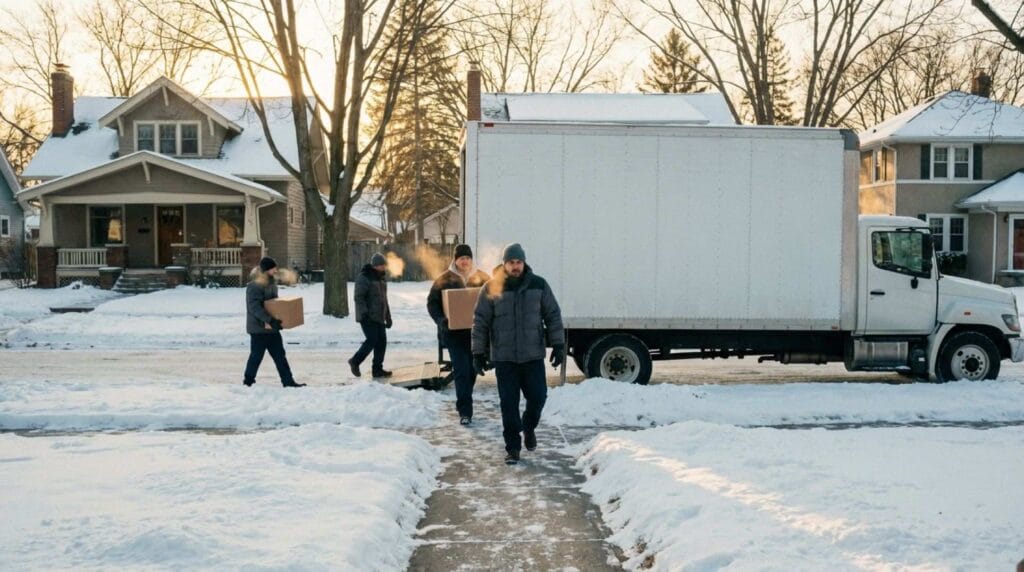
The 2025-2026 La Niña winter has delivered exactly what forecasters predicted: heavier-than-normal snowfall across the Midwest and Northeast — conditions that make moving from states like Illinois or New York particularly challenging — polar vortex disruptions pushing arctic air deep into the South, and road conditions that make any long-distance drive an exercise in planning. If you’re facing a winter move this season, you’re dealing with conditions that demand more preparation than a typical summer relocation.
Here’s what you need to know at a glance:
Quick Answers
- Winter moving window: October through March (peak savings: January 15-31)
- Cost savings vs. summer: 20-30% lower rates during off-peak months
- Temperature threshold: Below 20°F requires special protocols for electronics, wood furniture, and appliances
- Key risk: Condensation damage when cold items enter heated spaces — not the cold itself
- Best protection: Full value protection coverage and a mover experienced in cold-weather logistics
But this guide isn’t primarily about saving money. It’s about executing a winter move safely — protecting your belongings, your home, and the people doing the heavy lifting. The financial advantage of off-season moving is real, and we’ll cover it. First, though, let’s address what actually changes when the temperature drops.
What Cold Weather Does to Your Belongings
Most winter moving advice recycles the same generic tips: wear layers, clear the walkway, keep the heat on. That’s fine as far as it goes, but it misses the actual science of what happens to your possessions during temperature swings — and understanding that science is what separates a smooth winter move from one that ends with cracked furniture and a damaged television.
The Condensation Problem
The single biggest risk during a winter move isn’t the cold itself — it’s the transition from cold to warm. When items that have been sitting in a sub-freezing truck for hours are suddenly carried into a heated 72°F home, moisture condenses on every surface. Think of a cold glass of water on a summer day, but happening inside your electronics, across your wood furniture finishes, and throughout your upholstered items.
This condensation can cause:
- Short circuits and corrosion in televisions, computers, and gaming consoles
- Finish clouding and white marks on wood furniture
- Mold growth in upholstered furniture and mattresses if moisture gets trapped
- Adhesive failures on veneer and laminate surfaces
The solution isn’t avoiding winter moves — it’s managing the temperature transition. More on that in the protocols below.
How Cold Affects Different Materials
Not everything in your home responds to cold the same way. Understanding which items need special attention helps you prioritize.
Wood furniture contracts as temperatures drop. If you’re moving furniture across the country, understanding this matters. This is normal and usually reverses without damage — unless the temperature change happens too quickly. Rapid warming causes the exterior of wood pieces to expand faster than the interior, creating stress fractures in finishes, warping in thin panels, and separation at glue joints. Antique furniture and pieces with intricate inlays are particularly vulnerable.
Electronics are more resilient to cold than most people think. Modern devices can generally withstand temperatures down to 0°F without operational damage. The risk comes during power-on: if condensation has formed on internal circuit boards, turning on a device can cause immediate short circuits. The universal rule is simple — wait 24 hours after bringing electronics inside before plugging anything in.
Appliances present unique challenges. Washing machines and dishwashers retain water in hoses and pumps that can freeze and crack components. Refrigerators and freezers contain lubricating oils that thicken in extreme cold, potentially damaging compressors if powered on before reaching room temperature. Water softeners can suffer catastrophic freeze damage to resin tanks if not properly drained.
Musical instruments, particularly pianos and stringed instruments, are among the most cold-sensitive items in any household. Temperature fluctuations cause tuning instability, soundboard stress, and in extreme cases, structural cracking. Professional movers experienced in cold-weather moves use climate-controlled trucks for these items when possible.
Artwork and photographs on canvas or paper can become brittle in extreme cold, making them vulnerable to cracking during handling. Framed pieces should be wrapped with insulating materials rather than just standard packing paper.
Temperature Protocols: What to Do at Every Threshold
Here’s where most winter moving guides fail completely: they treat “winter” as a single condition. Moving in 45°F drizzle in Seattle requires fundamentally different preparation than moving in -10°F windchill in Minneapolis. Your protocols should adjust to what the thermometer actually says.
Above 35°F: Standard Precautions
At these temperatures, cold is a nuisance rather than a threat. Your main concerns are moisture from rain or sleet rather than freezing damage.
- Protect items from precipitation during loading and unloading
- Use plastic wrap over upholstered furniture and mattresses
- Lay floor runners to prevent tracking slush through both homes
- Keep the heat running in both origin and destination homes
20°F to 35°F: Cold-Weather Protocols
This is where deliberate preparation starts mattering. Temperatures in this range won’t cause immediate damage to most items, but extended exposure on a long-distance truck creates cumulative risk.
- Electronics: Allow a minimum of 4 hours to reach room temperature before powering on
- Wood furniture: Bring into a room that’s warm but not overheated — aim for 65°F initially, then raise gradually
- Appliances: Drain all water from washing machines, dishwashers, and water softeners before loading
- Packing materials: Standard cardboard and packing tape function normally, though tape adhesion weakens slightly below 30°F
- Crew considerations: Moving crews need warm-up breaks every 45-60 minutes to maintain safe handling
Below 20°F: Extreme Cold Protocols
Below 20°F, the physics change meaningfully. Materials become brittle, adhesives fail, and the temperature differential between truck and home creates aggressive condensation. This is where professional experience with winter moves becomes essential rather than optional.
- Electronics: Full 24-hour warm-up before any power-on
- Wood furniture: Critical risk zone. Move pieces to an intermediate temperature space (garage, enclosed porch at 40-50°F) before bringing into heated rooms
- Packing tape: Standard tape loses adhesion below 20°F — use cold-weather rated packing tape or shrink wrap
- Plastic and vinyl items: Become brittle and can crack during handling — extra padding required
- Vehicle fluids: Ensure the moving truck has been properly winterized (diesel fuel additive, antifreeze levels, battery condition)
- Pathway safety: Ice and compacted snow create genuine injury risk — salt and sand application before the crew arrives is non-negotiable
Below 0°F: Danger Zone
At sub-zero temperatures, some moving operations become genuinely inadvisable. Professional movers with winter experience know when conditions cross from difficult to dangerous.
- Open-air loading and unloading time should be minimized — stage items near the door rather than throughout the house
- Metal components on furniture (drawer slides, hinges, decorative hardware) can cause cold burns to bare skin
- Hydraulic lift gates on trucks can malfunction in extreme cold
- The risk of falls on ice increases dramatically — crew injuries during sub-zero moves are a real concern
- Seriously consider whether a delay of 24-48 hours for a warming trend is worth the reduced risk
Moving Day Execution: The Winter Playbook
The logistics of a winter moving day require adjustments that summer moves don’t. Here’s how professionals handle it.
Preparing Your Origin Home
Start early. Winter daylight is limited — in January, many northern cities offer barely 9 hours of usable light. Professional crews aim to begin loading by 7:00 or 8:00 AM to maximize available time.
Clear all walkways, driveways, and stairs of snow and ice the night before, then again the morning of your move. Lay down salt or ice melt on every surface your movers will walk on. Place floor runners from the staging area to the truck — movers carrying heavy items can’t look down at every step, so the path needs to be consistently safe.
Keep your heat running. It’s tempting to shut everything down before the movers arrive, but a warm house keeps your belongings at a stable temperature right until they’re loaded. Ideally, items move directly from a 68-72°F interior into the truck with minimal outdoor exposure.
Have a warm room designated for the crew to take breaks. Hot coffee and a heated space to warm up aren’t just polite — they’re practical. Cold movers make mistakes. Numb hands drop things. A ten-minute warm-up every hour keeps the crew effective and your belongings safe.
Protecting Your Floors
Winter moves are hard on flooring. Between salt, slush, snow, and the constant in-and-out traffic, an unprotected floor can take significant damage in a single moving day.
At your origin home, the damage is usually cosmetic — you’re leaving anyway. But at your destination, scuffed hardwoods or stained carpet from the first day leave a bad impression. Professional movers bring their own floor protection, but confirm this in advance. Reinforced cardboard runners or adhesive-backed floor protectors are the standard.
Loading in Cold Weather
Professional crews adjust their loading approach for winter conditions. Items that are most temperature-sensitive — electronics, artwork, musical instruments — get loaded last so they spend the least time in the cold truck. Conversely, durable items like boxes of clothing and bedding go in first and provide an insulating buffer.
For long-distance moves — especially if you’re planning an interstate move — some carriers offer climate-controlled trailers that maintain temperatures above freezing throughout transit. This option costs more but provides meaningful protection for high-value or temperature-sensitive shipments. Ask about it when requesting your quote.
Arriving at Your Destination: The Critical First Hours
How you handle the first few hours at your new home during a winter move determines whether your belongings survive the transition intact.
Before the Truck Arrives
Make sure the heat has been running for at least 24 hours before your moving day. An empty house that’s been sitting cold takes time to warm fully — walls, floors, and the air itself all need to reach a stable temperature. If you’re moving into a home that’s been vacant, verify with the utility company that service is active and the thermostat is set to at least 65°F.
If any pipes have been winterized (drained for the season), have a plumber reactivate the plumbing system before move-in day. Discovering you have no running water while surrounded by boxes is miserable in any season but particularly so in winter. And don’t forget to update your address everywhere before the chaos of unpacking takes over.
Clear and salt all walkways, steps, and the driveway. If there’s been heavy snowfall, hire a plow or snow removal service for the day. Your moving crew needs clear access from truck to front door.
The Warm-Up Protocol
Resist the urge to unpack electronics immediately. The condensation risk is real and the patience required is minimal compared to the cost of replacing a damaged TV or computer.
Electronics: Leave them in the room — still in their boxes or wrapping — for a full 24 hours before unwrapping or powering on. This allows them to reach room temperature gradually without condensation forming on cold internal components.
Wood furniture: Place pieces away from heating vents and radiators. Direct heat on cold wood causes the rapid temperature differential that leads to cracking and warping. Let furniture warm naturally over 12-24 hours.
Appliances: Washing machines, dryers, and refrigerators need at least 3-4 hours at room temperature before operation. For refrigerators and freezers, 24 hours is safer — the compressor oil needs to settle and warm fully.
Your Winter Moving Checklist
For quick reference, here’s the complete preparation timeline:
Four Weeks Before
- Confirm your moving company has winter experience and cold-weather protocols (if you’re weighing options, our guide to choosing a white-glove moving company covers what to look for)
- Verify insurance coverage — does your policy cover weather-related damage?
- Research weather patterns at both your origin and destination
- If moving to or through mountain passes, research chain requirements and alternate routes
One Week Before
- Monitor weather forecasts for both your origin and destination
- Purchase cold-weather packing tape, plastic sheeting, and extra moving blankets
- Arrange for snow removal at your destination on moving day
- Confirm the heat is running (or will be running) at your new home
Two Days Before
- Clear and salt all walkways at your origin home
- Drain water from washing machines, dishwashers, and any water-connected appliances
- Set thermostats at both homes to 68-72°F
- Pack an essentials bag with warm clothing, boots, gloves, and hand warmers
Moving Day Morning
- Re-salt all walkways (overnight temperatures create fresh ice)
- Lay floor runners from staging areas to the truck
- Prepare a warm break room with hot drinks for the crew
- Stage temperature-sensitive items (electronics, instruments, artwork) near the door for last-loading
The Financial Upside: Winter Moving Saves Real Money
Once you’ve addressed the practical challenges, the financial case for winter moving is compelling. The moving industry’s calendar creates a pricing dynamic that rewards off-season movers with significant savings.
Roughly 60% of all moves happen between May and September, creating intense demand that drives prices up 20-30% above off-peak rates. Winter — particularly the stretch from mid-January through February — represents the industry’s lowest demand period, and pricing reflects that reality.
What that means in practice: a full-service interstate move that quotes at $6,000 in July might come in at $4,200-$4,800 for the same shipment in January. For a large household move, the savings can exceed $2,000-$3,000 — enough to cover your security deposit at the new place or fund the furniture you’ve been eyeing.
Beyond pricing, winter moves offer logistical advantages that don’t show up in the quote:
Scheduling flexibility improves dramatically. Summer moves often require booking 6-8 weeks in advance for preferred dates. In winter, 2-3 weeks of lead time is typically sufficient, and your preferred date is far more likely to be available.
Crew availability means better service. During peak season, moving companies stretch their workforce thin. Winter crews are typically more experienced — companies assign their veteran teams year-round and bring on seasonal help only during summer demand surges.
Real estate timing can also work in your favor. Housing markets in most regions soften during winter months, potentially giving buyers more negotiating leverage. If you’re relocating to a warmer climate — say, moving to Florida or moving to Texas — winter weather at your origin often motivates faster timelines. Sellers eager to close before spring often accept offers they’d reject in June.
Why Nelson Westerberg for Your Winter Move
Nelson Westerberg doesn’t scale back operations when the temperature drops. Our crews operate through full-winter conditions across the Midwest, Northeast, and every major corridor in between — the same routes, the same standards, the same single point of contact whether you’re moving in July heat or January ice.
That means teams who understand cold-weather loading sequences, who carry cold-rated packing materials as standard equipment, and who know that the critical moment isn’t the drive — it’s the transition from truck to home. It means binding not-to-exceed pricing that doesn’t change because the forecast calls for snow. And it means the same full value protection options available year-round, because winter conditions don’t reduce our commitment to your belongings.
When you’re watching the forecast and wondering whether your move will go smoothly, you want a company that’s handled exactly these conditions hundreds of times before.
Frequently Asked Questions
Is it cheaper to move in winter?
Yes. Winter moves typically cost 20-30% less than comparable summer moves due to lower demand. The cheapest period of the entire year falls between mid-January and the end of February, when moving companies offer their lowest rates. A full-service interstate move that costs $6,000 in peak summer might run $4,200-$4,800 for the same shipment in winter. Additional savings come from mid-week and mid-month scheduling, which further reduces rates by approximately 10%.
What temperature is too cold to move?
There’s no absolute cutoff, but professional movers adjust protocols at key thresholds. Above 35°F, standard procedures apply. Between 20-35°F, electronics need 4+ hours to warm before powering on and appliances should be drained. Below 20°F, materials become brittle, adhesives fail, and condensation risk increases significantly. Below 0°F, some operations become genuinely inadvisable and crews face increased safety risks from ice and extreme cold exposure.
How do I protect electronics during a winter move?
The primary risk to electronics is condensation — when cold devices enter heated spaces, moisture forms on internal circuit boards. To prevent damage, load electronics last (minimizing cold exposure), keep them in their wrapping or boxes for a full 24 hours after arriving at your new home, and do not plug in or power on any device until it has fully reached room temperature. This simple protocol prevents the short circuits and corrosion that cause winter move damage.
Should I keep the heat on during a winter move?
Yes, keep heat running at both your origin and destination homes throughout the moving process. At your departure home, a warm interior keeps belongings at stable temperatures right up until loading. At your new home, having heat running for at least 24 hours before arrival ensures a warm, stable environment for the critical unloading phase when cold items need to gradually reach room temperature without excessive condensation.
What items are most at risk during a winter move?
The highest-risk items in cold weather are electronics (condensation causing short circuits), wood furniture (finish cracking from rapid temperature changes), appliances with water connections (frozen hoses and pumps), musical instruments (structural stress and tuning damage), and artwork on canvas (brittleness and cracking). Each requires specific handling protocols during winter moves. Released value protection covers only $0.60 per pound — full value protection is strongly recommended for winter relocations.
Do moving companies operate in winter?
Yes, reputable moving companies operate year-round. In fact, winter is when experienced crews tend to be most available — peak season (May-September) stretches workforces thin with seasonal hires, while winter rosters typically consist of veteran teams. However, not all companies have cold-weather protocols or experience. When booking a winter move, verify that your moving company has specific winter handling procedures, cold-rated packing materials, and experience with the weather conditions typical of your route.
When the Weather Won’t Wait
Not every move allows you to choose your season. Job starts, lease endings, family circumstances, and life itself often set the timeline — and once the date is set, there’s a whole process of moving to manage regardless of conditions — and sometimes that timeline falls in the dead of winter. The good news: a winter move executed with proper preparation and an experienced moving partner produces the same result as a summer move. Your belongings arrive intact, your new home is ready, and the transition happens smoothly.
The difference is in the preparation. Understand what cold does to your belongings. Follow the temperature protocols. Protect your floors, your electronics, and your crew. And choose a moving company that treats winter operations as standard business rather than an inconvenience to endure.
Your move doesn’t have to wait for spring.
Related Articles
New York City vs. Austin (2026): What Your Paycheck Really Buys
Few city comparisons produce a gap as wide as New York City versus Austin. By one widely cited 2026 estimate, it takes roughly $11,500 a month in New York to sustain the same standard of living that $6,900 buys in Austin — a difference so large it reshapes not just a budget but a life. […]
Read MoreChicago vs. Charlotte (2026): The Queen City at a Fraction of the Cost
For a Chicago household weighing a move south, Charlotte presents an unusually clean comparison: a real city, with a genuine corporate economy and four mild seasons, at a fraction of Chicago’s cost — and, most strikingly, a fraction of its property-tax burden. A Chicago homeowner paying the metro’s effective property-tax rate near 1.98% on a […]
Read More

Table of Contents

Atlas Van Lines, Inc. U.S. DOT No. 125550 (TM & © 2026 AWGI LLC.) | G.P.S.C. 4917 | IL C.C. 4246 | NJPC 00104 | Cal-T 110193
© 2026 Nelson Westerberg, Inc. All Rights Reserved Worldwide.