Moving Guide to Fort Worth, TX (2026): Cowtown’s Corporate Turn

Quick Answers
- Not a Dallas suburb: Fort Worth is one of the dozen largest cities in the U.S. and among the fastest-growing, with its own economy and identity
- The job base: aerospace and defense (American Airlines HQ, Lockheed Martin, Bell), plus healthcare, manufacturing, logistics, and financial services
- Median home price: roughly $330K — below the national average and well under Dallas’s northern suburbs
- Texas tax: no state income tax; property tax runs ~1.6–1.9% (budget it into your mortgage escrow)
- Where newcomers land: Alliance and far-north master-planned communities, the Cultural District and TCU-adjacent southwest, and downtown
- Full-service move cost: varies by origin — see the breakdown below
Fort Worth spends a lot of its life being mistaken for the smaller, quieter half of “Dallas–Fort Worth.” That framing is out of date. Fort Worth is now one of the dozen largest cities in the United States, one of the fastest-growing, and the anchor of an economy — aerospace, defense, logistics — that is distinctly its own rather than an overflow of Dallas. For the household relocating here, the important early insight is exactly that: you’re not moving to a Dallas bedroom community, you’re moving to a major city with its own downtown, its own culture, and a value proposition that its higher-profile neighbor can’t match on price.
This guide is the map. As a distinct market within the broader Texas relocation picture, Fort Worth rewards newcomers who understand what drives it — the aerospace-and-defense job base, the split between the booming far-north Alliance corridor and the established, tree-lined southwest — and how a professional long-distance move into it actually works. For those weighing it against the other side of the metroplex, our Dallas guide covers that market; here the focus is Cowtown on its own terms.
Why People Are Moving to Fort Worth
Fort Worth’s growth runs on a combination that’s rare in a city this size: a genuine major-employer job base, a cost of living below the national average, and a culture that has held onto its Western identity while adding the amenities of a big city.
The Aerospace-and-Defense Backbone
Where many Sun Belt boomtowns rely on a single new employer, Fort Worth’s economy is anchored by decades-deep aerospace and defense. American Airlines is headquartered here. Lockheed Martin’s Fort Worth plant builds the F-35. Bell (the helicopter maker) is a hometown institution. Around that core sits a dense supplier and MRO ecosystem, plus the logistics muscle of the AllianceTexas development in the far north — an inland port with rail, air cargo, and a vast distribution footprint that has pulled in employers like Amazon, Charles Schwab’s regional campus nearby, and dozens of others. The practical effect for a relocating professional is stability: this is a job market built on multi-decade defense programs and physical infrastructure, not a single hiring cycle.
Healthcare (Texas Health Resources, Cook Children’s, and Baylor Scott & White all have major presences), manufacturing, and a growing financial-services and back-office cluster round out the base. For many newcomers, the move follows an employer directly; for others, it’s the breadth of the market that makes Fort Worth a confident bet.
The AllianceTexas development deserves particular emphasis, because it’s the engine behind much of the far-north growth. Built around an intermodal rail-and-air logistics hub, it has become one of the largest master-planned mixed-use developments in the country, drawing distribution, e-commerce, manufacturing, and corporate operations. The jobs it creates — and the housing built to serve them — are a major reason north Fort Worth and the surrounding towns have grown so fast. For a relocating professional in logistics, supply chain, or operations, Alliance is often the specific reason for the move, and it reshapes the commute calculus toward the northern communities. Fort Worth’s economic story, in short, is diversification on top of a stable defense-and-aerospace floor: even if any one sector cools, the breadth of the base cushions it in a way single-industry boomtowns can’t match.
The Texas Tax Equation
Like the rest of Texas, Fort Worth offers no state income tax — the headline benefit for anyone arriving from a high-tax state. The honest counterpart, as with all of Texas, is property tax: effective rates run roughly 1.6% to 1.9%, and because Texas funds itself without an income tax, that bill is real and belongs in your monthly mortgage escrow from the start. The saving grace in Fort Worth specifically is that home prices are markedly lower than in Dallas’s northern suburbs, so the property-tax bill on a comparable home is smaller even at a similar rate. For a high earner relocating from California or the Northeast, the combination — no income tax, lower home prices, moderate everyday costs — is compelling.
Value and Identity
The other half of Fort Worth’s draw is what its lower cost buys: more house, a shorter commute, and a city with a strong sense of itself. The Stockyards preserve the cattle-town heritage; the Cultural District houses a genuinely world-class cluster of museums; Sundance Square anchors a walkable downtown; and TCU gives the southwest side a collegiate energy. Newcomers frequently describe Fort Worth as feeling friendlier and more grounded than the faster, flashier metros they left — a big city that still behaves like a community.
Who’s Moving to Fort Worth
The migration isn’t one kind of person, and knowing the segments clarifies where you’ll fit.
Aerospace and defense professionals follow the industry directly — engineers and program staff at Lockheed, Bell, and the supplier network, and the American Airlines corporate workforce. They tend toward the southwest neighborhoods near the plants and the far-north corridor for newer housing.
Logistics and corporate transferees arrive with the AllianceTexas boom — the distribution, e-commerce, and back-office roles concentrated in the far north — and settle in the Keller and Northwest ISD master-planned communities nearby.
Families relocating from higher-cost states come for the combination of no income tax, lower home prices than Dallas’s suburbs, and strong schools; they anchor the far-north and southwest school-driven markets.
Young professionals and empty-nesters increasingly choose downtown and the West 7th corridor for a walkable urban life at a fraction of a coastal city’s cost.
Retirees and remote workers value the low overall cost, the mild winters, and the well-connected airport, and spread across the value-priced edges and the established in-town neighborhoods.
Knowing which you are shapes both the neighborhood and the school district you prioritize — the two decisions that most define a Fort Worth move.
Where to Live in Fort Worth
Fort Worth splits into distinct areas, and choosing among them is the central decision of the move. The broad divide is between the fast-growing, newer-construction north and the established, tree-canopied southwest — with downtown and the near-in neighborhoods offering an urban option between them.
The Far North: Alliance, Keller, and the Master-Planned Corridor
The area along the I-35W corridor north of the city — around the AllianceTexas development and extending into Keller, Roanoke, and far-north Fort Worth — is where much of the growth and new construction is concentrated. Master-planned communities here offer newer homes, strong and sought-after school districts (Keller ISD and Northwest ISD among them), and proximity to the Alliance employment base and the airport. This is the landing zone for many corporate and logistics transferees who want turnkey newer housing and top schools, and it’s where families relocating on a professional salary most often concentrate. Communities such as those around Alliance Town Center, and the growing developments in Haslet and north Keller, offer the newer-construction, amenity-rich profile that relocating families gravitate to — pools, greenbelts, and schools built within the last decade to keep pace with the rooftops. The trade-off is a longer commute if your job is downtown or on the southwest side, and a newer, more uniform suburban feel than the established neighborhoods offer. Neighboring Southlake and Westlake, just east across the county line, offer the metroplex’s most prestigious addresses for those at the top of the market, with Carroll ISD among the highest-rated districts in the state.
The Established Southwest: Tanglewood, Westcliff, and TCU
Closer in, the southwest neighborhoods — Tanglewood, Westcliff, Wedgwood, and the areas around TCU — offer mature trees, larger established lots, and some of the most coveted addresses in the city proper. Tanglewood in particular is a perennial favorite for professionals and families who want top Fort Worth ISD schools, walkability to the Trinity Trails, and proximity to both downtown and the Cultural District. This is where buyers who prize character and location over new construction concentrate, and prices reflect the demand. Nearby Mira Vista and the gated communities of the far southwest offer executive-scale homes, while Berkeley and Ryan Place, closer to downtown, draw buyers restoring historic homes in walkable, established neighborhoods. The common thread across the southwest is permanence — tree canopy, established schools, and a settled feel that the newer northern communities are still growing into. For a household that wants to feel rooted in the actual city of Fort Worth rather than a new subdivision on its edge, this is where they land, and the limited inventory of the best streets means buyers often wait for the right listing.
Downtown, the Cultural District, and the Near West Side
For those who want urban living, downtown Fort Worth and the adjacent West 7th / Cultural District corridor offer walkable apartments, townhomes, and condos within reach of Sundance Square, the museums, and a dense restaurant and nightlife scene. It’s the choice for young professionals and empty-nesters who want to trade yard maintenance for walkability — a smaller, more manageable urban core than downtown Dallas, at a lower price. The near-south neighborhoods around Magnolia Avenue have emerged as the city’s hippest stretch, with independent restaurants, coffee shops, and renovated bungalows drawing a creative, younger crowd. What distinguishes Fort Worth’s urban core from a bigger city’s is scale: it’s walkable and lively without being overwhelming or expensive, and a downtown-dweller here can still reach a trailhead or a highway out of town in minutes. For transplants who assumed a move to Cowtown meant giving up urban life entirely, the near-west and near-south neighborhoods are often a genuine and welcome surprise.
The Value Edges: Far North, Far South, and Surrounding Towns
Growing areas on the city’s edges and the surrounding towns — from far-north communities to Burleson, Crowley, and Mansfield to the south, and Aledo to the west — offer the most accessible prices for buyers willing to trade commute time for square footage. Mansfield and Aledo in particular pair strong schools with newer homes at prices below the closer-in neighborhoods, drawing families who want quality without the premium of Southlake or the established southwest. Much of the metroplex’s newer, more affordable construction sits in this ring, and it’s where a good deal of the workforce supporting Fort Worth’s growth is settling. For a buyer whose budget or commute doesn’t require an in-city address, these edges often deliver the best combination of new construction, space, and price in the entire market.
The Cost of Living in Fort Worth
Fort Worth’s affordability is one of its most consistent selling points, and it holds up under scrutiny. The median home value sits around $330,000 — below the national average and materially under the $450,000-and-up pricing common in Dallas’s northern Collin County suburbs. For a buyer relocating from California or the Northeast, that gap is transformative: a home that would list well over a million dollars in a coastal metro has its equivalent here at a fraction of the price, and the no-state-income-tax structure adds to the take-home advantage.
The honest counterweight, again, is property tax. Texas’s effective rate — roughly 1.6% to 1.9% — means a $400,000 Fort Worth home carries something in the range of $6,400 to $7,600 a year in property tax, folded into the monthly mortgage escrow, and buyers should file for the homestead exemption to reduce it on a primary residence. Even so, because the underlying home prices are lower than in the pricier suburbs, the property-tax bill on a comparable home stays smaller. Outside of housing and property tax, everyday costs — groceries, dining, services, utilities — run near or below national averages, and the short commutes translate into lower fuel and time costs than the coastal metros most newcomers leave. The overall picture is a genuinely lower cost of living, with the one caveat that summer electricity bills climb when the air conditioning runs around the clock.
Downtown, the Stockyards, and Daily Life
Fort Worth’s quality of life is a bigger part of the relocation story than newcomers expect, because the city offers a genuine cultural core that belies its cowtown reputation. The Cultural District is the crown jewel — the Kimbell Art Museum (an architectural landmark in its own right), the Modern, and the Amon Carter cluster together to give a mid-size city one of the best museum districts in the country, free or low-cost and walkable. Sundance Square anchors a clean, walkable downtown with restaurants, theaters, and public plazas that actually draw people in the evenings. The Stockyards, the preserved heart of the old cattle industry, run daily cattle drives and a calendar of rodeos, music, and events that keep the Western heritage a living thing rather than a museum piece.
Along the West 7th corridor, a dense strip of restaurants, bars, and apartments has become the young-professional social hub. The Trinity Trails — miles of paved paths along the river — thread the whole city together for running, cycling, and weekend life. For a household leaving a larger metro, the pleasant surprise is how much there is to do without the congestion or the cost, and how quickly the city’s friendliness makes it feel like home.
Moving to Fort Worth: Costs by Corridor
Because Fort Worth draws movers from across the country, the cost of the move depends heavily on your origin. As a long-haul destination from most major metros, these are professional full-service moves rather than rental-truck jobs.
Typical Full-Service Move Costs by Origin
| Origin | Approx. distance | 3BR full-service (off-peak) |
|---|---|---|
| Los Angeles / Southern California | ~1,400 miles | $9,000–$15,000 |
| Chicago / Midwest | ~950 miles | $8,500–$14,000 |
| New York / New Jersey | ~1,550 miles | $9,200–$16,000 |
| Denver | ~800 miles | $8,000–$13,000 |
| Atlanta / Southeast | ~800 miles | $8,000–$13,000 |
Full-service estimates for moves into the Fort Worth market, mid-2026. Final pricing depends on exact weight, access, and season.
What Drives Your Price
Weight and distance are the two biggest factors. On a long-haul move, decluttering before you go has a real effect on the bill — and it’s an easy win for households right-sizing from a more expensive market.
Time of year swings the price 20–30%. Peak season (May–September) is both pricier and busier and coincides with the family moving rush around the school calendar, so book early for a summer date.
Services layer on: full packing, custom crating for high-value pieces, and vehicle shipping are the common additions.
Additional Budget
Beyond the move itself, plan for vehicle shipping if you’re not driving, travel, utility and service setup, Texas license and registration (with the vehicle inspection most counties require), and a contingency buffer of $1,500–$3,000.
Planning Your Fort Worth Move: Timeline
For most origins, a Fort Worth move is a several-hundred-to-fifteen-hundred-mile relocation with a delivery window rather than a fixed date. Plan backward from move day.
8 weeks out. Get in-home or virtual surveys and book your carrier — earlier for a summer move. Begin narrowing Fort Worth areas and, if buying, get pre-approved with a lender who models Texas property-tax escrow accurately for the specific area you’re targeting.
6 weeks out. Lock the date. Begin the declutter in earnest. Start packing what you rarely use.
4 weeks out. Notify employer, banks, insurers, and subscriptions. Book vehicle shipping. Research Texas license and registration requirements.
2 weeks out. Confirm all move details with your carrier. Schedule utility shutoff at your origin and connection in Fort Worth. Finalize travel.
Move week. Pack a personal-essentials set you keep with you. Supervise the load and confirm the inventory sheet before the truck departs.
Schools and Family Life
Fort Worth’s family appeal rests heavily on schools, and the district you land in matters. Within the city, Fort Worth ISD serves the core, with strong pockets particularly in the southwest around Tanglewood and Westcliff. To the north, Keller ISD and Northwest ISD — covering the fast-growing master-planned corridor — are among the most sought-after in the region and a primary reason families concentrate there. The neighboring Southlake area’s Carroll ISD is one of the highest-rated in Texas for those at the top of the market. Beyond academics, Fort Worth’s family draw is the combination of space, safety, and a genuinely kid-friendly culture — from the Fort Worth Zoo (consistently ranked among the nation’s best) and the Stockyards to the trails along the Trinity River and the free museums of the Cultural District. Families relocating from denser, pricier metros frequently find that the everyday logistics of raising children — the size of the yard, the length of the commute, the cost of activities, the ease of getting to a park — all shift decisively in their favor, and that quality-of-life math is often what turns a job-driven move into a permanent one.
Adjusting to Life in Fort Worth
Moving to Fort Worth means adapting to real differences, most of which newcomers count as gains.
Climate
Fort Worth has hot summers (regularly 95–105°F from June through September, with the air conditioning running constantly), mild winters, and pleasant spring and fall shoulder seasons. North Texas also sits in a zone that sees occasional severe spring storms. For transplants from cooler climates, the summer heat is the main adjustment; the mild winters — no shoveling, rare freezes — are the compensation.
The Car and the Commute
Fort Worth is car-oriented, though distances and traffic are more manageable than in the coastal metros many newcomers leave. The TEXRail line connects downtown to DFW Airport, and the Trinity Railway Express links Fort Worth and Dallas, but most daily life happens by car. One genuine advantage: DFW International Airport sits between the two cities, giving Fort Worth residents one of the best-connected airports in the country for both business travel and trips home — a meaningful convenience for transferees who still need to visit a former city regularly in the first year, and one of the practical reasons corporate relocation teams are comfortable placing employees on the Fort Worth side of the metroplex.
Culture and Pace
Fort Worth runs warmer and more relaxed than Dallas, with a strong Western heritage it wears proudly and without irony. Newcomers often note the friendliness and the lack of pretense — this is a city comfortable in its own skin. The Cultural District’s museums, a serious dining scene, TCU athletics, and the Stockyards’ events give it more to do than its reputation suggests.
What Transplants Miss and Love
Newcomers from larger coastal cities sometimes miss the density of options and the transit. They’re most often surprised by how far their money goes, how short the commutes are, how genuinely friendly the city feels, and how much big-city culture Fort Worth quietly offers.
Administrative Checklist: Moving to Texas
Establishing Texas residency makes the no-income-tax benefit official, so handle these promptly.
Driver’s License
Texas requires a new license within 90 days of moving. Bring your current out-of-state license, proof of Texas residency, proof of identity and Social Security number, and proof of vehicle registration and insurance. Fee: about $33.
Vehicle Registration and Inspection
Register within 30 days. Texas requires a vehicle safety inspection in most counties, proof of insurance meeting Texas minimums, and payment of registration and title fees plus any applicable sales tax. Budget $250–$500 depending on the vehicle.
The Rest
- Update your address with USPS
- Update banks, credit cards, and investment accounts
- Update auto and homeowner’s/renter’s insurance to Texas policies
- Register to vote in Texas
- Establish new physicians and transfer prescriptions
- File for the homestead exemption on your primary residence to reduce your property-tax bill
Frequently Asked Questions
How much does it cost to move to Fort Worth?
It depends on your origin, since Fort Worth is a long-haul destination from most major cities. A full-service 3-bedroom move runs roughly $9,000–$15,000 from Southern California, $8,500–$14,000 from the Midwest, $9,200–$16,000 from the Northeast, and $8,000–$13,000 from Denver or the Southeast, depending on weight, season, and services. Peak summer season adds 20–30%.
Is Fort Worth a good place to live in 2026?
For many households, yes. It offers a stable aerospace-and-defense-anchored job market, a cost of living below the national average, no state income tax, and a strong civic identity — all while being one of the fastest-growing large cities in the country. The main trade-offs are hot summers, car dependence, and the high Texas property tax, which is offset by lower home prices than Dallas’s northern suburbs.
Is Fort Worth cheaper than Dallas?
Generally, yes. Home prices in Fort Worth and its surrounding communities tend to run below comparable properties in Dallas’s northern suburbs like Plano and Frisco, and the city’s overall cost of living sits below the national average. Both share Texas’s no-income-tax, high-property-tax structure, so the housing-price difference is what makes Fort Worth the value side of the metroplex for many buyers.
Where do most newcomers to Fort Worth live?
It depends on priorities. Families and corporate transferees concentrate in the fast-growing far-north master-planned corridor (Alliance, Keller, Northwest ISD areas) for newer homes and top schools; buyers prizing character and location choose the established southwest (Tanglewood, Westcliff, TCU area); young professionals and empty-nesters pick downtown and the Cultural District for walkability; and value-focused buyers look to the surrounding towns.
What is the job market like in Fort Worth?
Stable and diversified. Aerospace and defense anchor it — American Airlines is headquartered here, Lockheed Martin builds the F-35 locally, and Bell is a hometown institution — supported by the AllianceTexas logistics hub, healthcare systems, manufacturing, and a growing financial-services cluster. It’s a job base built on multi-decade programs and physical infrastructure rather than a single hiring cycle.
What’s the best time of year to move to Fort Worth?
October through April is both cheaper — roughly 20–30% below peak — and easier to book, and it avoids the worst of the summer heat for move-in day. Summer is peak season and coincides with the family moving rush around the school calendar, so book six to eight weeks ahead if you must move then.
Planning Your Move
Fort Worth in 2026 is a major American city that still surprises the people who move there — bigger, more economically grounded, and more culturally rich than its reputation as Dallas’s quieter half suggests. For the household relocating for a job, or drawn by the value and the identity, the opportunity is real, and it rewards arriving with a clear picture of where to land and what the move will take.
For the long-haul relocation into Cowtown, the details matter — the honest per-pound cost of the distance, the vehicle shipping, the careful handling of the pieces that made your last home yours. A trusted partner like Nelson Westerberg handles moves into Fort Worth with crews who understand exactly what a long-distance move-out and a Metroplex move-in each require.
Related Articles
Specialty Moving: Pianos, Fine Art & High-Value Items (2026)
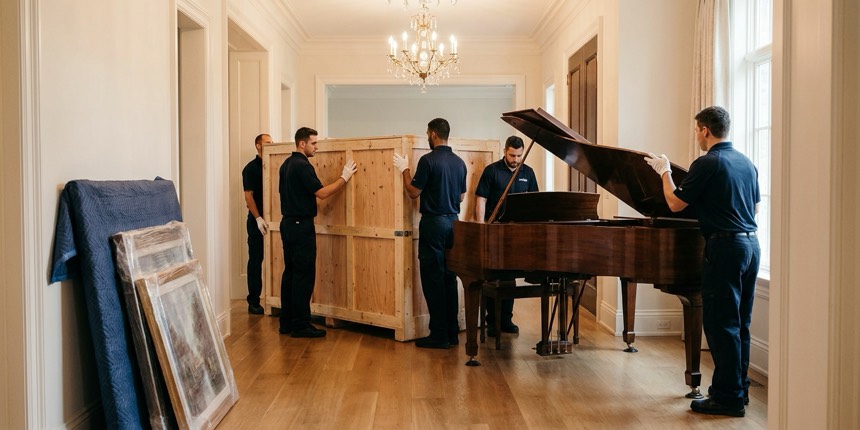
Quick Answers Specialty moving covers the pieces a standard move can’t safely handle: pianos, fine art, antiques, sculpture, wine collections, chandeliers, and other high-value or fragile items. What makes it different: custom-built crates, climate-conscious transport, specialized equipment and trained crews, condition documentation, and proper valuation coverage — applied as standard, not as surprises. The risk […]
Read MoreMilitary PCS Moves: The Complete 2026 Guide

Quick Answers PCS = Permanent Change of Station — a government-ordered relocation, run through your installation’s transportation office and the Defense Personal Property System (DPS/MilMove). Two main paths: a government-arranged HHG move (a carrier ships your household goods at no cost to you, up to your weight allowance) or a PPM/DITY (you move yourself and […]
Read More

Table of Contents

Atlas Van Lines, Inc. U.S. DOT No. 125550 (TM & © 2026 AWGI LLC.) | G.P.S.C. 4917 | IL C.C. 4246 | NJPC 00104 | Cal-T 110193
© 2026 Nelson Westerberg, Inc. All Rights Reserved Worldwide.