Moving Guide to Encinitas, CA (2026): Surf, Soul, and the Coast Highway

Quick Answers
- The character: North County’s surf town — laid-back, wellness-forward, and built along a walkable stretch of the Coast Highway (101)
- The communities: Leucadia (bohemian north), Old Encinitas/downtown (walkable 101, Moonlight Beach), Cardiff-by-the-Sea (beachy south), and New Encinitas/Olivenhain (inland, larger lots)
- Schools: among the best in San Diego County — Encinitas Union (elementary) feeding the highly rated San Dieguito Union high school district
- Housing: premium coastal North County — beachfront and 101-adjacent homes deep into seven figures, more space inland
- The culture: surf, yoga and wellness, farm-to-table, and a fiercely protected small-town feel
- The honest note: like all of coastal California, a lifestyle move, not a money-saving one
Some beach towns are places you visit; Encinitas is a place people rearrange their lives to live in. Twenty-some miles up the coast from downtown San Diego, it has held onto something most of coastal California has traded away: a genuine, unpolished surf-town soul. The Coast Highway rolls through a walkable downtown and the bohemian stretch of Leucadia; the surf breaks at Swami’s and Moonlight Beach are institutions; and a wellness-and-yoga culture, a farm-to-table food scene, and the remnants of the area’s flower-growing heritage give the town a character that residents guard fiercely. People move to Encinitas for that character first — and then discover it also happens to have some of the best schools in the county.
This guide covers what the move actually involves. As part of the California coastal picture — the surf-town counterpoint to neighboring Carlsbad and a distinct alternative to the city of San Diego — Encinitas rewards newcomers who understand its four distinct communities, its culture, and how a professional move into a tight, high-value coastal market works. For the local moving logistics — the narrow Leucadia streets, the Cardiff bluffs, the Olivenhain estates — our Encinitas movers page covers the access details neighborhood by neighborhood.
Why People Are Moving to Encinitas
Encinitas draws a specific kind of mover, and the reasons run deeper than “it’s near the beach.”
The Culture and the Coast
The defining draw is a way of life. Encinitas is built for the outdoors and the water — surfing, paddling the San Elijo Lagoon, running the coastal rail-trail, and a beach culture that isn’t a weekend activity but the organizing principle of daily life. Swami’s, the point break below the Self-Realization Fellowship gardens, is a legendary surf spot and a kind of civic landmark; Moonlight Beach is the family gathering place; and the rhythm of tides and swells is woven into how residents structure their days. Layered on top is a wellness-forward identity that the town wears openly: the yoga studios, the meditation gardens, the farmers’ markets, the plant-based and farm-to-table restaurants, the run-and-surf-before-work culture, and a general ethos of health and the outdoors that draws people who want that to be the water they swim in rather than an occasional indulgence. There’s a creative and independent streak too — local shops over chains, music and art woven through the town — that gives Encinitas a texture more like a small independent beach city than a suburb. The walkable Coast Highway through downtown and Leucadia ties it together, giving the town a village feel — you can genuinely live much of your life on foot or a beach cruiser — that is rare in Southern California and, crucially, impossible to fake or build from scratch. It’s the accumulated result of decades of residents choosing to protect exactly this, and it’s what people are really buying when they move here.
The Schools
Beneath the laid-back surface, Encinitas is also a serious schools town. The Encinitas Union School District (elementary) and the San Dieguito Union High School District are among the highest-rated in San Diego County, and they are a primary reason families relocate here despite the cost. It’s the combination that defines the town’s appeal for families: a barefoot surf-town lifestyle attached to genuinely excellent schools — the sort of pairing that lets parents feel they’re giving their children both a childhood and an education.
The Small-Town Feel
Encinitas has fought, deliberately and successfully, to keep its scale. Voter-backed height limits and a strong preservationist streak have kept out the high-rises and much of the chain sprawl, protecting a low-slung, independent, human-scaled town where the tallest thing on the horizon is usually a eucalyptus or a church steeple. For transplants leaving denser or more corporate places, that intact small-town feel — local coffee shops instead of towers, surf and record shops instead of malls, a walkable main street instead of a strip — is a large part of the draw, and it’s why residents turn out for city-council meetings and ballot measures the way other towns turn out for football. It also has a practical consequence for a mover: because the town won’t build up and can’t build out, housing stays scarce and values stay firm, so the small-town charm and the high, sticky prices are two sides of the same deliberate choice.
An honest note on cost, true across coastal California: Encinitas is expensive and not a money-saving move. California’s income tax and a tight, high-value housing market apply here fully. The return is the lifestyle, the culture, and the schools — not a lower cost of living — and the newcomers who thrive are those whose incomes fit a premium coastal market.
Where to Live in Encinitas
Encinitas is really four communities stitched together, each with a distinct personality, and choosing among them is the heart of the move.
Leucadia
Leucadia, the northern stretch, is the bohemian heart — a funky, eucalyptus-lined run of the Coast Highway (“the 101”) dotted with surf shops, taco stands, coffee roasters, breweries, and vintage stores. Its unofficial motto, “Keep Leucadia Funky,” is only half a joke: the neighborhood has resisted polish on purpose, fought to keep the towering eucalyptus canopy and the low-slung, independent feel, and its residents like it exactly that way. Homes range from original surf bungalows and cottages to newer custom builds tucked onto the numbered streets that run down toward the beach, and inventory is tight enough that the right property is worth waiting for. The appeal is the culture: walkable, artsy, surf-soaked, and unmistakably itself, with the beach at the bottom of the hill and a coffee-and-taco run built into the morning. For the buyer who fell in love with the idea of Encinitas — the unmanicured, soulful version rather than a polished coastal resort — Leucadia is almost always the place, and the people who live there tend to be evangelists for it.
Old Encinitas and Downtown
Old Encinitas, the walkable downtown, centers on the historic 101 corridor with its restaurants, the landmark La Paloma Theatre, boutiques, and the Self-Realization Fellowship meditation gardens above Swami’s, with Moonlight Beach a short stroll away. Living here means genuine walkability — the beach, dinner, the farmers’ market, and errands on foot or by bike — in a compact, characterful downtown that stays lively year-round rather than emptying out of season. Homes are a mix of restored Craftsman and beach cottages, condos, and newer construction, all priced firmly for the location, with the blocks closest to the sand and the walkable core commanding the most. It’s the choice for those who want the village-and-beach life at the center of every day and are willing to trade lot size for the ability to walk out the door into the heart of town. For empty-nesters and professionals as much as families, the downtown’s walkability is the specific thing that sells them.
Cardiff-by-the-Sea
Cardiff (Cardiff-by-the-Sea), to the south, is the beachiest and most surf-centric of the communities — a small, tight-knit enclave wrapped around the San Elijo Lagoon and the Cardiff and Seaside surf breaks, with Restaurant Row along the coast and the beloved (and endlessly costumed) “Cardiff Kook” statue as its cheerful landmark. The hillside neighborhoods of Composer District and Cardiff-by-the-Sea proper catch sweeping ocean views and command premium prices; the flats near San Elijo State Beach sit close enough to the sand to hear it. Cardiff has an unusually strong community identity — its own elementary school district (the small, highly regarded Cardiff School District), its own farmers’ market and events, and a fierce local loyalty — and it draws surfers, families, and anyone who wants the most beach-forward, village-minded corner of the town. For many buyers Cardiff is the emotional favorite of the four communities: small, walkable to the water, and tightly knit in a way that larger neighborhoods can’t replicate. Inventory is correspondingly scarce and competitive.
New Encinitas and Olivenhain
Inland, New Encinitas and Olivenhain offer the town’s larger lots, newer homes, and more space per dollar (in relative terms — nothing in Encinitas is truly inexpensive). New Encinitas holds much of the area’s newer construction, master-planned pockets, and everyday retail along Encinitas Boulevard, a more conventional suburban setting that trades walkability for space and value. Olivenhain, further east, is the surprise: a semi-rural, equestrian community that has deliberately preserved large properties, horse trails, and a village feel, with a rural-residential character that people who think of Encinitas only as a surf town never expect. It draws families and buyers who want acreage, privacy, and room for horses or hobbies within the same top school districts. For families who want a larger, newer home and the excellent schools without paying beachfront prices — and who don’t mind trading a walk to the sand for a ten-minute drive — the inland communities are where they most often land, and they anchor much of the family migration into Encinitas.
Who’s Moving to Encinitas
Encinitas draws families for the rare pairing of surf-town lifestyle and top schools — often relocating from denser or pricier parts of California, or from out of state, specifically to raise children in this combination of beach, safety, and education. Surfers and outdoor-lifestyle devotees move here for whom proximity to Swami’s and the other breaks is genuinely non-negotiable, organizing the rest of the decision around it. Wellness, creative, and remote professionals are drawn to the culture and, increasingly, able to work from anywhere — the fastest-growing segment as hybrid work has matured, bringing strong salaries into the town without the old commute penalty. And higher-net-worth buyers and second-home owners choose Encinitas as the soulful, less-flashy alternative to the polished luxury enclaves elsewhere on the coast — people who could afford La Jolla or Del Mar but want funk and surf culture over gloss. What unites all of them is that they’re choosing a culture, not just a zip code, which is why community fit matters so much here: the classic Encinitas mistake is a mismatch — a surf purist who buys inland in Olivenhain and misses the water, or a space-seeking family that stretches for a tiny beachfront lot and feels cramped. Getting the community right is the difference between loving the town and quietly wishing you’d bought two neighborhoods over.
The Cost of Living in Encinitas
Encinitas is a premium, supply-constrained coastal market, and a clear budget is essential. Beachfront, hillside-view, and 101-adjacent homes run deep into seven figures, and even the inland communities of New Encinitas and Olivenhain carry high prices by any national standard. The town’s height limits, small footprint, and preservationist bent deliberately constrain new supply, which keeps inventory tight and values firm — the flip side of the intact small-town feel that draws people is that there simply isn’t much to buy, and desirable properties move quickly and competitively. California’s income tax applies here as everywhere in the state, and while Proposition 13 moderates property-tax rates, the dollar figures on Encinitas home values are substantial. Everyday costs — dining, services, and the wellness-and-organic lifestyle the town runs on — trend above national averages, though the mild coastal climate keeps heating and cooling bills unusually low.
The honest framing is the same as all of coastal California: you are paying for the culture, the coast, and the schools, not saving money. The households for whom Encinitas works are those whose incomes fit a premium coastal market — local and remote professionals, dual-career couples, and asset-holders — who buy the community that matches how they actually want to live. A useful way to think about the budget is that the premium isn’t for square footage, which you can get far more cheaply almost anywhere else; it’s for the specific, hard-to-replicate combination of surf-town culture, walkability, top schools, and climate. Buyers who value that combination find the price worth it; those chasing space or savings are usually happier elsewhere, and it’s better to know which you are before you fall for the town.
Encinitas and the Rest of North County
Newcomers weighing Encinitas usually weigh its neighbors, so it helps to place it. Just north, Carlsbad is larger and more corporate, with a real local job base and more master-planned communities — the choice for those who want a genuine job market and newer family neighborhoods in a beach town. Further north, Oceanside is the more accessibly priced, more diverse end of the corridor. To the south, Del Mar and Solana Beach are smaller and more exclusive, and the city of San Diego and its coastal enclaves begin twenty minutes on. Encinitas’s distinct position is soul: it’s the surf-town, wellness-forward, small-scale heart of the corridor — funkier and more bohemian than Carlsbad, more established and moneyed than Oceanside, and less buttoned-up and exclusive than Del Mar or Solana Beach. It’s the community that most fully embodies the North County surf-town ideal that draws people to the corridor in the first place, which is both its appeal and the reason its prices sit near the top of the range. A household choosing among them is really choosing a daily character, since all sit within twenty minutes of the same beaches and amenities. The buyer who wants a walkable, bohemian, surf-centered life usually lands in Encinitas; the one who wants a corporate campus nearby and a brand-new home leans to Carlsbad.
Work, Commuting, and the Remote-Work Shift
Encinitas is more a lifestyle-and-bedroom community than a job center in its own right, and that shapes who moves here and how. Unlike neighboring Carlsbad, with its cluster of headquarters, Encinitas has a smaller local employment base — some wellness, retail, hospitality, creative, and small-business activity, but not a major corporate footprint. Historically that meant residents commuted, either north to the Carlsbad and Sorrento Valley job centers or south toward San Diego. What has transformed the town’s appeal is remote and hybrid work: a professional who can work from anywhere, or who only needs to be in a San Diego or Carlsbad office a few days a week, can now have the Encinitas lifestyle without a punishing daily commute. That shift has broadened the buyer pool well beyond the retirees and independently wealthy who could always afford it, bringing in tech, finance, and creative professionals keeping strong salaries while living the surf-town life. For a household still tied to a daily office, though, it’s worth being honest about the commute: the Coaster rail helps for a downtown-San-Diego job, but a car commute south on the I-5 can be slow in peak hours, and that reality should factor into both the neighborhood choice and the decision itself.
Getting Around Encinitas and North County
Encinitas is walkable at its coastal core and car-dependent beyond it. The Coast Highway (101) and Interstate 5 run north–south through the corridor, with the 101 offering the slow, scenic route through the beach communities and the I-5 the faster spine. The Coaster commuter rail stops in Encinitas, linking north to Carlsbad and Oceanside and south to downtown San Diego — a genuine and underused option for a city commute that skips the freeway entirely. Within Leucadia, downtown, and Cardiff, a striking amount of daily life happens on foot or by bike; the completed stretches of the coastal rail-trail have made cycling the corridor safer and more popular, and beach cruisers are a legitimate mode of transport rather than a novelty. Beyond the coastal strip, in New Encinitas and Olivenhain, a car is essential and a two-car household is the norm for working couples. San Diego International Airport is about a half-hour south for major travel; McClellan-Palomar in neighboring Carlsbad handles regional flights just a few minutes north. For a working household, the mix — a walkable, bike-friendly home base plus rail access to the city and a local job market a few minutes up the coast in Carlsbad — is a large part of what makes Encinitas genuinely livable rather than merely beautiful, and it’s a meaningful upgrade over the freeway-bound reality of much of Southern California.
Schools and Family Life
Schools are a defining reason families choose Encinitas despite the cost. The Encinitas Union School District (elementary) is highly regarded, the small Cardiff School District serves that community, and both feed into the San Dieguito Union High School District — home to some of the top-rated public high schools in San Diego County. The strength and consistency of the schools across all four communities is unusual, and it means families don’t have to choose between the neighborhood they love and the school assignment they want. Private and charter options add further choice for those who want it, and several are among the most sought-after in North County, drawing applicants from well beyond the town itself. Beyond academics, family life here is unusually outdoor-centric: youth surf teams and junior lifeguards, beach afternoons and lagoon trails, club sports and skate culture, and a town ethos that prizes health and time outside. The everyday logistics of raising children — safe streets, walkable beaches, excellent schools, a temperate year-round climate, and a community that turns out for its kids — all line up in Encinitas, which is why so many families stretch to afford it and, once here, put down roots and stay for the long haul. It’s common to meet residents who arrived for a few years and reorganized their careers to never leave.
Adjusting to Life in Encinitas
Moving to Encinitas means adapting to genuine, mostly welcome differences. The climate is classic coastal Southern California — mild, dry, and sunny, with coastal temperatures rarely leaving the 60s and 70s and the ocean moderating both summer heat and winter chill. The late-spring and early-summer marine layer (“May Gray,” “June Gloom”) grays over the mornings before burning off to afternoon sun, and surprises newcomers who expect relentless sunshine; longtime residents treat it as natural air conditioning and a fair trade for a place that never really has a bad-weather season. As in much of coastal California, older beach homes often have minimal heating and no air conditioning, because the climate rarely demands either.
The pace and culture are famously relaxed — surf-town casual, wellness-forward, and community-minded — which most transplants find is exactly what they came for, though “Encinitas time” and the general unhurriedness can take adjustment for those arriving from faster, more transactional places. The cost is the constant adjustment even for well-paid newcomers, and the tight, competitive housing supply means the search takes patience and readiness to move on the right property. Southern California’s environmental realities — drought and water cost, seasonal wildfire risk in the inland canyons, and coastal-bluff erosion considerations for the beachfront — are part of life here and worth understanding for the specific property you choose. Set against all of that: a soulful, walkable surf town with top schools and a climate that keeps daily life outdoors every month of the year. For the household that genuinely fits it, Encinitas inspires a loyalty few places match — people don’t just live here, they identify with it.
Administrative Checklist: Moving to California
California sets tight deadlines for new residents. Obtain a California driver’s license within 10 days of establishing residency, and complete vehicle registration within 20 days — including the required smog check — to avoid penalties, which the state does enforce. Beyond the DMV: update your address with USPS, transfer banking and investment accounts, move auto and homeowner’s insurance to California policies, register to vote, establish new physicians and transfer prescriptions, and enroll children in their new schools with records and immunizations in hand.
Frequently Asked Questions
How much does it cost to move to Encinitas?
It depends on your origin, since Encinitas draws movers from across California and the country. A full-service 3-bedroom move runs roughly $4,500–$9,500 from elsewhere in California, $9,000–$15,000 from Denver, $12,000–$18,500 from the Midwest, and $13,500–$21,000 from the Northeast, depending on weight, season, and services. Peak summer season adds 20–30%.
What are the neighborhoods of Encinitas?
Encinitas is made up of four distinct communities: Leucadia (the bohemian north along the Coast Highway), Old Encinitas/downtown (walkable 101 and Moonlight Beach), Cardiff-by-the-Sea (the beachy, surf-centric south around the San Elijo Lagoon), and New Encinitas/Olivenhain (inland, with larger lots, newer homes, and Olivenhain’s semi-rural character).
Is Encinitas a good place to live?
For those who fit its culture, exceptionally so. It pairs a walkable, laid-back surf-town lifestyle with some of the best schools in San Diego County and a fiercely protected small-town feel. The main consideration is cost: like all of coastal California, Encinitas is expensive and supply-constrained, so it’s a lifestyle move rather than a money-saving one.
How are the schools in Encinitas?
Excellent, and a primary draw. The Encinitas Union School District (elementary) is highly rated and feeds into the San Dieguito Union High School District, one of the top districts in San Diego County. Private and charter options add further choice.
Is Encinitas better than Carlsbad?
They serve different priorities. Encinitas is the funkier, more walkable, surf-and-wellness-centered town; Carlsbad is larger and more corporate, with a real local job base and more master-planned family communities. Buyers who want bohemian, walkable surf-town character lean Encinitas; those who want a nearby job market and newer construction lean Carlsbad. Both share top schools and the same coastline, minutes apart.
What’s Encinitas like for families?
Very strong. Top schools, safe and walkable coastal neighborhoods, a temperate year-round climate, and an outdoor, health-oriented culture make it one of North County’s most sought-after family towns — the inland communities of New Encinitas and Olivenhain in particular offer the space and newer homes families often want, with the same schools.
Planning Your Move
Encinitas is a place people choose with their hearts as much as their spreadsheets — the surf-town soul, the walkable 101, the wellness culture, the four distinct communities, and the top schools add up to a way of life that its residents defend fiercely and rarely leave, often reorganizing careers and finances to stay. For the household that fits it, the move rewards choosing the right community — bohemian Leucadia, walkable downtown, beachy Cardiff, or spacious inland Olivenhain — and going in with an honest budget for a premium, supply-tight coastal market.
For the move itself — often a long haul, often with the high-value belongings and the surfboards, bikes, and gear that fill these coastal homes — the details matter, and so does the crew handling them. A trusted partner like Nelson Westerberg handles premium moves into North County with the care the destination deserves.
Related Articles
Specialty Moving: Pianos, Fine Art & High-Value Items (2026)
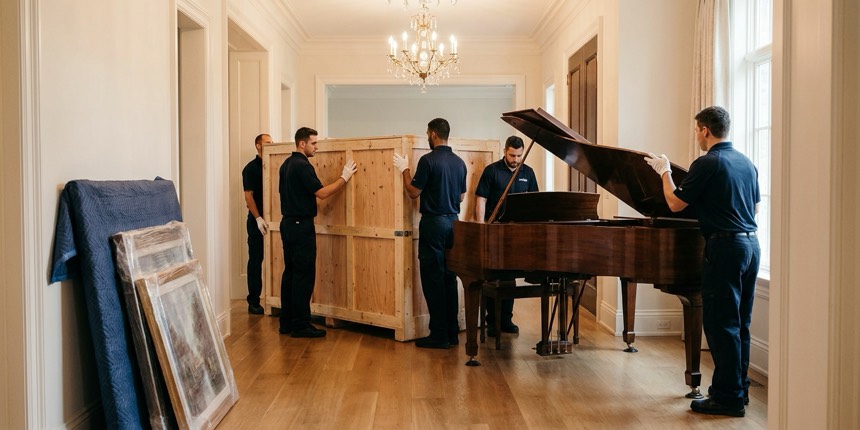
Quick Answers Specialty moving covers the pieces a standard move can’t safely handle: pianos, fine art, antiques, sculpture, wine collections, chandeliers, and other high-value or fragile items. What makes it different: custom-built crates, climate-conscious transport, specialized equipment and trained crews, condition documentation, and proper valuation coverage — applied as standard, not as surprises. The risk […]
Read MoreMilitary PCS Moves: The Complete 2026 Guide

Quick Answers PCS = Permanent Change of Station — a government-ordered relocation, run through your installation’s transportation office and the Defense Personal Property System (DPS/MilMove). Two main paths: a government-arranged HHG move (a carrier ships your household goods at no cost to you, up to your weight allowance) or a PPM/DITY (you move yourself and […]
Read More

Table of Contents

Atlas Van Lines, Inc. U.S. DOT No. 125550 (TM & © 2026 AWGI LLC.) | G.P.S.C. 4917 | IL C.C. 4246 | NJPC 00104 | Cal-T 110193
© 2026 Nelson Westerberg, Inc. All Rights Reserved Worldwide.