Moving Guide to Oceanside, CA (2026): North County’s Reinvented Coast

Quick Answers
- The story: North County’s largest, most diverse, and most accessible beach city — long anchored by Camp Pendleton, now a genuine coastal destination after a decade of downtown revitalization
- The economy: the Marine Corps base (Camp Pendleton), a growing life-sciences presence (Genentech’s Oceanside campus), tourism, and the harbor
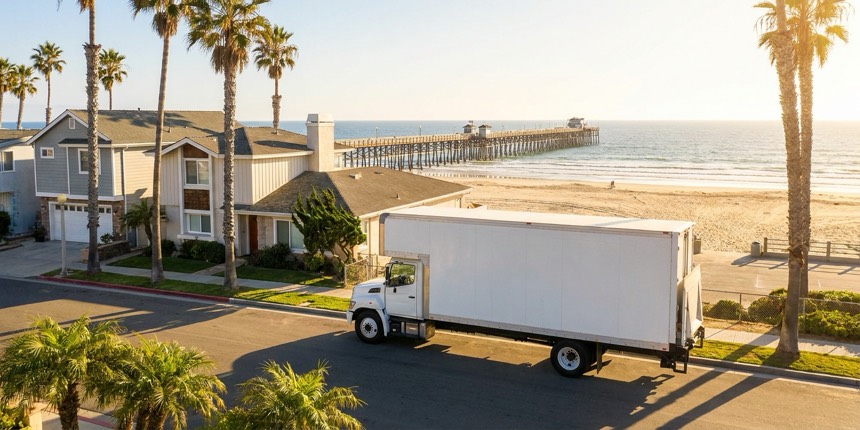
- The coast: nearly four miles of wide beaches, the historic Oceanside Pier, and a harbor — with more sand and (relatively) lower prices than the towns to the south
- Where newcomers land: South Oceanside (“South O”), the revitalized downtown and beachfront, Fire Mountain, and the inland master-planned communities
- The value angle: the coast’s most attainable entry point — still premium California, but a step below Carlsbad and Encinitas
- The honest note: more accessible than its neighbors, but still coastal California — a lifestyle move, not a cheap one
For years, Oceanside was the North County beach town people drove through on the way to somewhere more polished — the larger, working, military-anchored city at the top of the corridor. That Oceanside still exists, but it’s no longer the whole story. A decade of downtown revitalization has brought new hotels, a reimagined pier-and-beachfront, a genuine food scene, and a wave of newcomers who discovered that Oceanside offers the same coastline as its pricier neighbors to the south — more of it, in fact — at a meaningfully lower price. Add a growing life-sciences employer base and the steady presence of Camp Pendleton, and Oceanside has become the corridor’s reinvention story: the value play that’s turning into a destination.
This guide covers what the move actually involves. As the northern anchor of the North County coast — larger and more accessible than neighboring Carlsbad and Encinitas, and a distinct alternative to the city of San Diego — Oceanside rewards newcomers who understand its neighborhoods, its economy, and how a professional move into a fast-changing coastal market works. It’s part of the broader California coastal picture, and increasingly one of its most talked-about corners. For the local moving logistics — including Camp Pendleton PCS relocations — our Oceanside movers page covers the access details across the city.
Why People Are Moving to Oceanside
Oceanside’s appeal has shifted in recent years, and understanding the mix is the key to the move.
Relative Value on the Coast
The plainest reason people move to Oceanside is that it offers North County’s most attainable path to the beach. Nothing in coastal California is truly cheap, but Oceanside sits a clear step below Carlsbad and Encinitas on price while offering the same ocean, the same climate, wide beaches, and the same coastal lifestyle — often more sand and more space for the money than the towns to the south, whose beaches are narrower and lots smaller. For buyers priced out of the towns to the south, or families who want the coast without the very top-tier cost, Oceanside is frequently the answer, and it’s the reason so much of the corridor’s recent in-migration has landed here.
A Revitalized Downtown and a Real Destination
The Oceanside of a decade ago and the Oceanside of today are different places downtown. A sustained wave of investment has brought new resort hotels (including national-brand beachfront properties that signaled the city’s arrival), a redeveloped beachfront and the restored historic pier, a serious food-and-brewery scene, the beloved weekly Sunset Market, the Oceanside Museum of Art, and a reenergized stretch around the harbor. Where downtown Oceanside was once tired and transitional, it now hosts the kind of restaurants, hotels, and public spaces that draw people from across the region — and, increasingly, convince visitors to become residents. The city now draws locals and tourists for the same reasons: walkability, wide beaches, the food, the pier, and the harbor. That transformation is the single biggest factor in Oceanside’s changed reputation, turning it from the place you drove through on the way to Carlsbad or Encinitas into a destination in its own right — and it’s still underway, which means buyers today are arriving ahead of the full arc of the change rather than after it.
The Economy: Pendleton, Biotech, and Beyond
Oceanside’s economy is more substantial and more diverse than outsiders expect, and it’s a large part of what makes the city a genuine place to live rather than only a place to vacation. Marine Corps Base Camp Pendleton, on the city’s northern edge, is an enormous economic anchor — one of the largest Marine bases in the country — bringing a steady population of active-duty families, veterans, civilian base employees, and defense-adjacent contractors. That military presence gives Oceanside a stable, cyclical population base and a deep familiarity with relocation that shapes the whole city.
Beyond the base, Oceanside has attracted a growing life-sciences presence: Genentech operates a major biologics manufacturing campus in the city, one of its largest, anchoring a biotech-and-manufacturing base that connects Oceanside to the broader San Diego life-sciences cluster. Add tourism (now a real industry given the downtown revitalization), the harbor economy, healthcare, and the North County and San Diego job markets a short drive or train ride south, and Oceanside supports an unusually broad range of workers. For a relocating household, that diversity means the city isn’t dependent on any single employer or industry — military families, biotech and healthcare professionals, hospitality and small-business owners, and remote workers importing salaries from elsewhere all have a place here, and the economic base is broad enough to weather the ups and downs that a single-industry town cannot.
An honest note on cost, true across coastal California: even as the value option, Oceanside is still a premium coastal market with California’s income tax and high home prices by national standards. It’s more attainable than its neighbors, not cheap — a lifestyle move that happens to be the corridor’s best relative value, not a money-saving relocation.
Where to Live in Oceanside
Oceanside is large and varied — more so than its smaller neighbors — and its neighborhoods range from beachfront to inland master-planned, with a wide spread of prices and characters.
South Oceanside (“South O”)
South Oceanside, bordering Carlsbad, is the city’s trendiest and most sought-after neighborhood — a walkable stretch of coast highway (“South O”) lined with independent restaurants, coffee roasters, breweries, and boutiques, close to the beach and to the Carlsbad line. It has the surf-town character and independent-shop feel of Encinitas at a somewhat lower price, and it’s where much of the recent in-migration of younger professionals and families has concentrated — the neighborhood most responsible for changing Oceanside’s reputation. Homes range from original beach cottages to renovated mid-century houses and newer infill, and demand has pushed prices up sharply, narrowing (though not closing) the gap with Carlsbad as the neighborhood’s reputation has grown. The blocks closest to the sand and the walkable Cassidy and Coast Highway core command the most; a few streets inland offers relative value with the same access. For the buyer who wants the walkable, hip, beach-adjacent version of Oceanside — the version that feels like an extension of the corridor’s best surf towns — South O is the target, and it’s increasingly competitive.
Downtown and the Beachfront
The downtown and beachfront core, around the pier and harbor, has been transformed by the revitalization — new condos and residences alongside the hotels, restaurants, and the redeveloped beachfront. Living here means walkable access to the pier, the beach, the Sunset Market, and the harbor, in the most urban and amenity-rich part of the city. It draws professionals, empty-nesters, and second-home buyers who want a low-maintenance, walkable coastal life at the center of Oceanside’s reinvention.
Fire Mountain and the Established Neighborhoods
Fire Mountain, between South O and downtown, is one of Oceanside’s most established and desirable inland-of-the-coast neighborhoods — larger lots, mature landscaping, mid-century and custom homes, some with ocean views from the hill. It offers space and a settled feel a short drive from the beach, a favorite for families who want a larger home and yard while staying close to the coast and the South O scene. The exclusive gated enclave of St. Malo, a storied cluster of cottages tucked on the beach near the Carlsbad line, sits at the very top of the local market and is a reminder that Oceanside has genuine luxury alongside its value reputation. Between these established pockets, the city’s older grid neighborhoods offer some of the most attainable coastal-adjacent homes in all of North County — the kind of starter footholds on the coast that have largely vanished from the towns to the south, and a real draw for first-time coastal buyers and younger families.
Inland: Rancho Del Oro, Ocean Hills, and the Master-Planned East
The eastern, inland neighborhoods — Rancho Del Oro, Ocean Hills (whose well-known Ocean Hills Country Club is a popular 55-plus community), Jeffries Ranch, and the master-planned communities off Highway 76 — offer Oceanside’s newest construction, largest homes, and most space per dollar. These are family-and-retiree-oriented planned neighborhoods with parks, trails, and community amenities, set back from the beach but offering the value and newer housing that draw buyers who prioritize the home over walk-to-sand access. The trade is a ten-to-fifteen-minute drive to the coast in exchange for a larger, newer home and, often, a gated or amenity-rich community. For families who want the most house their budget allows and for retirees drawn to the active-adult communities, the inland east is where they most often land, and it’s where much of Oceanside’s recent growth in new construction has concentrated. The spread between a beachfront South O cottage and an inland Rancho Del Oro house is wide enough that Oceanside genuinely serves buyers across a broad budget range — a flexibility its smaller, pricier neighbors can’t match.
Who’s Moving to Oceanside
Oceanside draws an unusually broad mix. Military families and veterans connected to Camp Pendleton are a large, steady presence — some in base housing, many buying or renting throughout the city. Life-sciences and healthcare professionals follow Genentech and the broader North County biotech cluster. Families and younger professionals priced out of Carlsbad and Encinitas come for the coast at a lower entry point, concentrating in South O and the inland communities. Remote workers keep coastal-tech or other salaries and choose Oceanside for the value-plus-beach combination. And retirees and second-home buyers are drawn by the climate, the harbor, and communities like Ocean Hills. That diversity — more socioeconomic, demographic, and generational range than the smaller, pricier towns to the south — is part of Oceanside’s character, and a genuine draw for those who find the more homogeneous enclaves less appealing. It’s a real city, in other words, not a resort: it has working neighborhoods and moneyed ones, longtime residents and new arrivals, military families and biotech scientists, surfers and retirees, all sharing the same beaches. For many transplants, especially those coming from larger, more varied cities, that texture is exactly what makes Oceanside feel like a place to actually live rather than a curated coastal bubble — and it’s increasingly what people mean when they say Oceanside has “soul.” The flip side, worth naming honestly, is that the city is still mid-transformation, so a given block can sit next to one that hasn’t yet turned; buyers should walk the specific streets they’re considering rather than assume the whole city matches the polished downtown.
The Cost of Living in Oceanside
Oceanside is the North County coast’s relative value, but “value” here is relative to some of the most expensive real estate in the country, so it’s important to frame it honestly. Home prices sit a clear step below Carlsbad and Encinitas, with a wide internal spread — beachfront and South O commanding real premiums, Fire Mountain and the established coastal-adjacent neighborhoods in the middle, and the inland communities offering the most accessible entry points, all still priced high by national standards. That spread is Oceanside’s defining financial feature: it’s the one North County coastal city where a range of budgets can find a foothold, from a first-time buyer in an older grid neighborhood to a family in a newer inland home to a higher-net-worth buyer in St. Malo or on the sand.
California’s income tax applies here as everywhere in the state, and while Proposition 13 moderates property-tax rates and keeps them predictable, the dollar figures on Oceanside’s home values are still substantial. Everyday costs — dining, services, groceries — run above national averages, though the mild coastal climate keeps heating and cooling bills unusually low. The honest framing: Oceanside is the corridor’s best relative value and its most attainable path to the coast, but it remains a premium California market, not a cheap one. The households for whom it works are those whose incomes fit a coastal market and who want more beach and more home for their money than the towns to the south offer — plus the military and biotech families whose work brings them here regardless. For a buyer weighing the whole corridor, Oceanside is where the coastal-California dream is still, relatively speaking, within reach.
Oceanside and the Rest of North County
Newcomers weighing Oceanside usually weigh the corridor, so it helps to place it. To the south, Carlsbad is more polished and more corporate, with a real local job base and master-planned family communities at higher prices; Encinitas is the funky, wellness-forward surf town, pricier and more supply-constrained. Del Mar and Solana Beach, further south still, are smaller and more exclusive. Oceanside’s distinct position is scale and value: it’s the largest, most diverse, and most accessible city in the corridor, with more beach, a genuine (if less polished) downtown reinvention underway, and the military and biotech anchors its neighbors lack. A household that wants the corridor’s lifestyle at its most attainable price, or that has a Camp Pendleton or Genentech connection, usually finds Oceanside the strongest fit; one seeking the polished luxury of the southern towns will find Oceanside more real and more mixed — which, for many buyers, is precisely the appeal. All sit within twenty minutes of one another, so the choice is about character and price, not access to the same coast.
Getting Around Oceanside and North County
Oceanside is car-oriented but well-connected, and its position at the northern end of the corridor gives it unusually strong transit for a beach city. It’s the northern terminus of the Coaster commuter rail and a stop on Amtrak and the Metrolink, plus the Sprinter light rail running inland to Escondido — the Oceanside Transit Center is a genuine hub, making a car-light commute to Carlsbad, San Diego, or inland North County more feasible here than almost anywhere else on the coast. Interstate 5 and Highway 78 handle the driving, with the 78 the main artery to inland North County (Vista, San Marcos, Escondido) and the 5 the coastal spine north toward Orange County and south toward San Diego. Within South O, downtown, and the beachfront, much of daily life is walkable or bikeable along the coast and the beachside “Strand”; the inland neighborhoods require a car, and a two-car household is the norm for working couples there. McClellan-Palomar Airport in neighboring Carlsbad is minutes away for regional flights, with San Diego International about forty minutes south for major travel. For a working household, Oceanside’s transit access is a real and underrated advantage — it’s genuinely possible to commute to a downtown San Diego job by rail from here, or to reach the Carlsbad and Sorrento Valley job centers without fighting the worst of the freeway, which is more than most of coastal California can offer and a meaningful part of the city’s practical appeal.
Schools and Family Life
Oceanside is served primarily by the Oceanside Unified School District, with quality that varies by area — the South Oceanside and coastal neighborhoods and several specific schools are well-regarded, and families do their homework on individual schools as they would in any larger, more socioeconomically varied district. This is a real difference from the smaller neighboring towns, whose districts are more uniformly top-rated: in Oceanside, the school your address feeds into matters more, and it’s worth researching carefully as part of choosing a neighborhood. Parts of the city and its edges also touch or sit near the highly rated Carlsbad and San Dieguito districts, and a strong slate of private and charter options adds choice.
Beyond academics, Oceanside’s family appeal rests on the beach, the harbor, the wide range of neighborhoods and price points, and a genuine, unpretentious community feel — plus, for the large military population, the support networks, familiarity, and camaraderie that come with a major base town. The everyday logistics of raising children near the coast — wide beaches, harbor and lagoon, parks, youth sports, junior lifeguards, and a temperate year-round climate — are all here, and crucially at prices that put the coast within reach for more families than the towns to the south. For a family that wants a coastal childhood for its children but can’t stretch to Carlsbad or Encinitas, Oceanside is frequently the answer, and the diversity of the schools and community is, for many, a feature rather than a drawback.
Adjusting to Life in Oceanside
Moving to Oceanside means adapting to genuine, mostly welcome differences. The climate is classic coastal Southern California — mild, dry, and sunny, with coastal temperatures rarely leaving the 60s and 70s and the late-spring and early-summer marine layer that grays over mornings before burning off to afternoon sun. As on the rest of the coast, older beach homes here often have little heating and no air conditioning, because the ocean-moderated climate rarely calls for either — a small adjustment for transplants from harsher places. The character is more diverse and more real-world than the polished enclaves to the south — a working beach city with a military presence, a genuine mix of incomes and backgrounds, and a downtown mid-transformation, which most newcomers find refreshing and a few find less manicured than they expected. The pace is relaxed and beach-oriented, with a strong surf-and-harbor culture and a growing food-and-arts scene downtown. The cost is the constant adjustment, though less acute than in the pricier neighboring towns to the south, which is precisely why so many corridor buyers end up here. And Southern California’s environmental realities — drought and water cost, seasonal wildfire risk inland, and coastal considerations near the beach — apply here as everywhere in the region. Newcomers most often miss, at first, the fully-finished polish of the pricier towns — Oceanside is a work in progress, and that shows on some blocks — and, for those from bigger cities, the density of options. They’re most often surprised by how much beach and home their money buys relative to the corridor, how strong the transit is, how genuine and unpretentious the community feels, and how quickly the revitalized downtown has become a place they’re proud to bring visitors. Set against the trade-offs: North County’s most attainable coast, a downtown getting demonstrably better every year, the best transit access on the coast, economic anchors most beach towns lack, and a climate that keeps daily life outdoors year-round. For the household that values the coast and a real, mixed community over polish and prestige — and that wants the corridor’s lifestyle at a price that doesn’t require top-tier wealth — Oceanside is increasingly the corridor’s smartest move, and the one longtime North County watchers point to as having the most room left to grow.
Administrative Checklist: Moving to California
California sets tight deadlines for new residents. Obtain a California driver’s license within 10 days of establishing residency, and complete vehicle registration within 20 days — including the required smog check — to avoid penalties. Beyond the DMV: update your address with USPS, transfer banking and investment accounts, move auto and homeowner’s insurance to California policies, register to vote, and establish new physicians and transfer prescriptions. Military families relocating on orders should coordinate with base relocation resources and their transportation office, which can complement — and in many cases fund a portion of — a professional household move; understanding what your orders cover before booking is worth the call.
Frequently Asked Questions
How much does it cost to move to Oceanside?
It depends on your origin, since Oceanside draws movers from across California and the country. A full-service 3-bedroom move runs roughly $4,500–$9,500 from elsewhere in California, $9,000–$15,000 from Denver, $12,000–$18,500 from the Midwest, and $13,500–$21,000 from the Northeast, depending on weight, season, and services. Peak summer season adds 20–30%, and military families moving on orders should check what their transportation office covers before booking.
Is Oceanside a good place to live?
Increasingly, yes. It offers North County’s most attainable path to the coast — the same ocean and lifestyle as its pricier neighbors at a lower entry point — plus a revitalized downtown, strong transit, and economic anchors in Camp Pendleton and biotech. The main consideration is that, while it’s the corridor’s relative value, it’s still premium coastal California, so it’s a lifestyle move rather than a cheap one.
What are the best neighborhoods in Oceanside?
South Oceanside (“South O”) for walkable, hip, beach-adjacent living near the Carlsbad line; the revitalized downtown and beachfront for the most urban, amenity-rich coastal life; Fire Mountain for larger established homes a short drive from the beach; and the inland communities (Rancho Del Oro, Ocean Hills) for newer, larger homes at the most accessible prices.
Is Oceanside cheaper than Carlsbad or Encinitas?
Yes, generally — Oceanside sits a clear step below both on home prices while offering the same coastline and, in many areas, more beach and space. It’s the North County coast’s best relative value. That said, all three are premium coastal-California markets, so Oceanside is more attainable, not inexpensive.
What is the economy and job market like in Oceanside?
More substantial than outsiders expect. Marine Corps Base Camp Pendleton is a major anchor, Genentech operates a large life-sciences manufacturing campus in the city, and tourism and the harbor add to the mix — with the broader North County and San Diego job markets a short drive or train ride away. It supports military families, biotech and healthcare professionals, small-business owners, and remote workers alike.
Is Oceanside good for military families?
Very much so. As the city bordering Marine Corps Base Camp Pendleton, Oceanside has deep experience supporting active-duty families and veterans, with established support networks, familiarity with military moves, and a range of housing on and off base. For families relocating on orders, coordinating base relocation resources with a professional household move makes for the smoothest transition.
Planning Your Move
Oceanside is the North County coast caught mid-transformation — long the corridor’s working, military-anchored value option, now a genuine destination with a revitalized downtown, a growing biotech base, and the most attainable path to the beach in one of California’s most desirable regions. For the household drawn by that value, a Camp Pendleton or Genentech connection, or simply the appeal of more coast for the money, the move rewards choosing the right neighborhood and going in with an honest budget for a premium — if relatively attainable — coastal market.
For the move itself — often a long haul, sometimes a military relocation, often with high-value belongings — the details matter, and so does the crew handling them. A trusted partner like Nelson Westerberg handles moves into North County with the care the destination deserves.
Related Articles
Specialty Moving: Pianos, Fine Art & High-Value Items (2026)

Quick Answers Specialty moving covers the pieces a standard move can’t safely handle: pianos, fine art, antiques, sculpture, wine collections, chandeliers, and other high-value or fragile items. What makes it different: custom-built crates, climate-conscious transport, specialized equipment and trained crews, condition documentation, and proper valuation coverage — applied as standard, not as surprises. The risk […]
Read MoreMilitary PCS Moves: The Complete 2026 Guide

Quick Answers PCS = Permanent Change of Station — a government-ordered relocation, run through your installation’s transportation office and the Defense Personal Property System (DPS/MilMove). Two main paths: a government-arranged HHG move (a carrier ships your household goods at no cost to you, up to your weight allowance) or a PPM/DITY (you move yourself and […]
Read More

Table of Contents

Atlas Van Lines, Inc. U.S. DOT No. 125550 (TM & © 2026 AWGI LLC.) | G.P.S.C. 4917 | IL C.C. 4246 | NJPC 00104 | Cal-T 110193
© 2026 Nelson Westerberg, Inc. All Rights Reserved Worldwide.