Moving to Edison, NJ: The Complete 2026 Relocation Guide

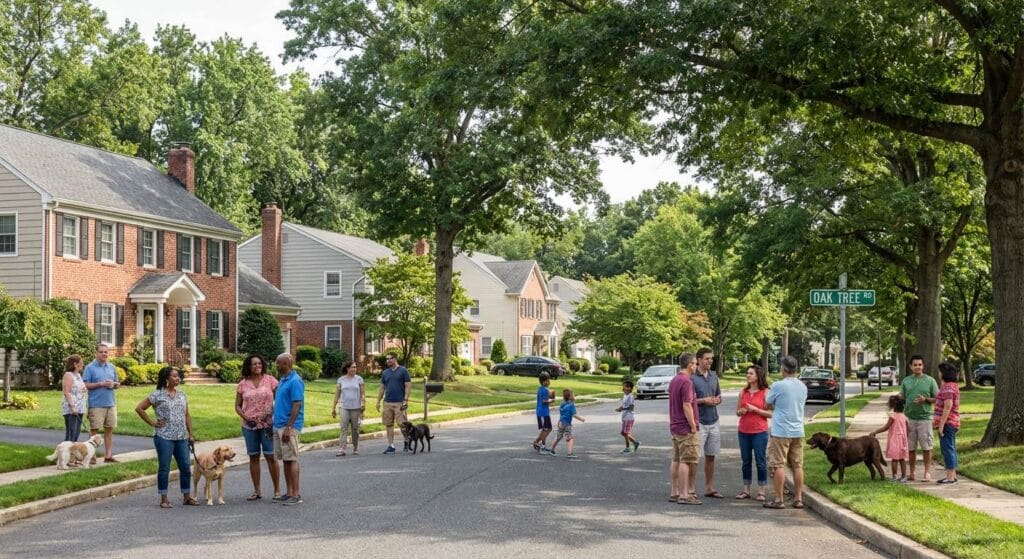
More than 45 percent of Edison’s population is of Asian descent, making this Middlesex County township one of the most ethnically diverse communities in the entire United States — a distinction that shows up immediately when you drive down Oak Tree Road, past Indian grocery stores, Bollywood video shops, and restaurants serving dosas and biryanis at lunch hour. That diversity is not a footnote. It is central to why so many families, professionals, and retirees choose Edison when they’re ready to leave New York City or trade up from a smaller New Jersey town. If you’re weighing that decision right now, this guide will walk you through what Edison actually costs, what each neighborhood is like to live in, how the commute works, and what to plan for on moving day itself.
New Jersey is one of the most dynamic relocation destinations on the East Coast, and Edison sits at its geographic and cultural center. For a broader look at the state’s major markets — from Hudson County to South Jersey — start with the Nelson Westerberg New Jersey moving guide, which covers everything from statewide cost of living trends to seasonal moving patterns. But if Edison is where you’re headed, read on.
Quick Answers
Median home sale price in Edison: $550,000 (early 2026)
Average rent (one-bedroom): $1,887/month
Cost of living vs. national average: approximately 20% higher
Commute to NYC Penn Station: 45–55 minutes via NJ Transit Northeast Corridor
Best neighborhoods for families: Oakwood (North Edison), Clara Barton
Best neighborhood for South Asian culture and community: Edison proper / Oak Tree Road corridor
Closest NJ Transit station: Edison Station (Northeast Corridor line)
County: Middlesex
School district rating: A+ (Niche)
What Kind of Place Is Edison?
Edison is not a city in the traditional sense. It is a township — a sprawling, suburban municipality of roughly 107,000 residents spread across neighborhoods that each feel distinct in character. It sits at the heart of central New Jersey, bordered by Woodbridge to the northeast, South Plainfield to the northwest, and New Brunswick to the southwest. Geographically, it straddles the intersection of Route 1, the New Jersey Turnpike, and the Northeast Corridor rail line, which makes it unusually well-connected for a suburb of its size.
The township was named for Thomas Edison, who established his famous Menlo Park laboratory here in 1876 — a fact that gives the area both a point of pride and a legitimate claim to having helped invent the modern world. Today the lab site is a state historic site in the Menlo Park section of town, and the legacy of innovation feels oddly appropriate given how many pharmaceutical and biotechnology professionals now call Edison home.
What most newcomers notice first, though, is the cultural vitality. The stretch of Oak Tree Road running through the Iselin and Edison sections is often called “Little India” — a two-mile corridor packed with sari shops, jewelry stores, sweet houses, and restaurants representing every region of the subcontinent. Festivals like Diwali draw tens of thousands of visitors. Weekend mornings, the parking lots of Indian grocery stores fill up with families who have driven from as far as an hour away. For South Asian immigrants and their children who want to live somewhere that feels familiar — where the grocery stores stock what they need, where their kids will have friends who share their background, where temples and cultural organizations are woven into daily life — Edison is genuinely hard to match anywhere in the Northeast.
But Edison is not exclusively a South Asian enclave. It is genuinely multicultural, with sizable Korean, Filipino, Chinese, and Latino communities, alongside longtime Italian-American and Eastern European families whose roots here go back three and four generations. That diversity creates a food scene, a school culture, and a social texture that many residents describe as one of the township’s greatest assets.
Cost of Living in Edison
Edison’s cost of living runs approximately 20 percent above the national average — slightly below the New Jersey city average, but meaningfully above what you’d pay in most parts of the country. For residents moving from Manhattan or Brooklyn, the difference will likely feel dramatic in a positive direction. For those arriving from lower-cost regions of the country, the adjustment requires planning.
Housing is the largest cost driver. The median home sale price in early 2026 is $550,000, with a price per square foot of roughly $402. Homes typically sell within 94 days and attract an average of three offers, signaling a competitive but not frenzied market. For buyers moving from New York City, that price point often represents a significant upgrade in space — you are generally getting a single-family home with a yard, a garage, and a basement for a price that would buy you a modest two-bedroom apartment in Manhattan.
Renters face a tighter market. Average rent for a one-bedroom apartment runs $1,887 per month — about 16 percent above the national average. A two-bedroom typically costs $2,543 per month, and three-bedroom units start around $3,059. Studio apartments in the township average closer to $1,499. To comfortably afford average rent without exceeding 30 percent of gross income, financial planners generally recommend an annual salary in the range of $75,000 to $80,000 — a threshold that many Edison residents, particularly those commuting to pharmaceutical and technology jobs, can meet.
Beyond housing, groceries and transportation costs in New Jersey generally track above the national average. Transportation costs for a single adult in New Jersey run approximately $9,700 per year when accounting for car ownership or rail passes. Monthly NJ Transit passes for the Newark/New York zone cost around $190 to $230, depending on your exact station, which is a meaningful expense but dramatically cheaper than Manhattan parking and car ownership combined.
Edison ranks a C+ for cost of living on Niche’s community rankings — but it earns an A+ overall when schools, diversity, family amenities, and commute access are factored in. Most residents say the higher housing costs are the price of admission for everything else the township offers.
Edison’s Neighborhoods: A Closer Look
Edison is not a neighborhood — it is a collection of them. Each section of the township has its own personality, its own price range, and its own relationship to the broader community.
Edison Proper and the Oak Tree Road Corridor
When people say “Edison,” they often mean the central sections of the township clustered around the Oak Tree Road commercial district and the neighborhoods that feed into it. This is the demographic heart of the township’s South Asian community, and it is where you will find the highest concentration of Indian restaurants, cultural organizations, religious institutions, and specialty shops. Real estate here tends to be a mix of older colonials, split-levels, and cape cods on established streets, priced in the $450,000 to $650,000 range for single-family homes. It is a walkable area by suburban standards — you can realistically walk to dinner, to the temple, to the grocery store in a way that most NJ suburbs do not offer.
Oakwood (North Edison)
Oakwood sits in the northern part of the township and is consistently cited as one of Edison’s most desirable residential pockets. The neighborhood is anchored by spacious single-family homes — many of them colonials and raised ranches built in the 1960s and 1970s, well-maintained and sitting on generous lots. J.P. Stevens High School, one of Edison’s two public high schools and one of the highest-rated schools in Middlesex County, serves this area. Roosevelt Park, a large Middlesex County park with a lake, walking trails, and athletic fields, sits at the neighborhood’s edge. Prices for single-family homes in Oakwood typically range from $550,000 to $900,000, with the upper end reserved for fully renovated or custom-built properties.
Clara Barton
The Clara Barton section sits in the southwestern part of Edison and offers a somewhat quieter, more established character. Streets here are tree-lined, homes are well-maintained, and the neighborhood has a close-knit feeling that longtime residents prize. It is not as commercialized as the Oak Tree Road corridor, which suits families who want a quieter domestic environment while still having easy access to Edison’s broader amenities. Home prices in Clara Barton tend to run slightly lower than Oakwood — you can find solid single-family homes in the $450,000 to $650,000 range — making it a popular entry point for first-time buyers.
Menlo Park Terrace
The Menlo Park section of Edison carries the historical weight of Thomas Edison’s laboratory, and the Menlo Park Terrace neighborhood blends that heritage with a practical suburban present. Homes here are a mix of older postwar construction and newer infill development, and the neighborhood benefits from proximity to Menlo Park Mall, which provides shopping and services without requiring a long drive. Prices are generally comparable to Clara Barton, and the area attracts a mix of young families and professionals who appreciate the easy highway access to Route 1 and the Turnpike.
Garden Apartments and Condominiums
Not all of Edison’s housing stock is single-family. The township has a significant inventory of garden-style apartment complexes and condominium communities, particularly along the Route 1 corridor. Durham Woods is one of the better-known examples — a large garden apartment community where one-bedroom rents typically run $1,904 to $2,300 and two-bedrooms reach $2,543 to $3,360. These communities attract recent graduates, single professionals, and empty nesters who want suburban convenience without the maintenance demands of homeownership.
The Job Market: Why Edison Makes Sense for Professionals
Edison’s job market is inseparable from its position within New Jersey’s pharmaceutical and biotechnology corridor. Pfizer’s major research campus is in nearby Groton, Johnson & Johnson’s global headquarters is in New Brunswick, and the Route 1 corridor between New Brunswick and Princeton is one of the densest concentrations of pharmaceutical R&D employment in the world. Companies including Bristol Myers Squibb, Sanofi, and Novo Nordisk all maintain significant operations within commuting distance. For chemists, clinical researchers, regulatory affairs professionals, and pharmaceutical sales representatives, Edison is not just a convenient suburb — it is the logical place to live.
The tech sector also has a meaningful presence. New Jersey’s proximity to New York City’s tech ecosystem means that software engineers, product managers, and data scientists frequently work in Manhattan or Jersey City while living in Edison for the space and the schools. The combination of pharmaceutical and tech employment gives the township an unusually well-educated workforce — Edison ranks among New Jersey’s most educated communities by percentage of residents holding advanced degrees.
Healthcare is another major employment sector. Robert Wood Johnson University Hospital in New Brunswick and multiple regional medical centers within Middlesex County employ thousands of nurses, physicians, and allied health professionals who call Edison home.
For residents who commute to New York City — whether for finance, media, advertising, or any of the other industries concentrated in Midtown Manhattan — Edison’s position on the NJ Transit Northeast Corridor is the decisive factor. More on that below.
Commuting from Edison
The Northeast Corridor rail line is Edison’s most valuable commuting asset. Edison Station provides direct service to New York Penn Station with trains running approximately every 15 to 30 minutes during peak hours. The trip takes 45 to 55 minutes depending on the train’s stop pattern — local trains make more stops and run closer to 55 minutes, while express service comes in around 45. Monthly passes in this zone run roughly $215 to $230, which is a real expense but represents genuine value compared to the cost and stress of driving. On the return trip, trains reliably get you home; there is no traffic anxiety.
Driving to Manhattan is possible but rarely pleasant. The New Jersey Turnpike and Route 1 both provide access to the Lincoln Tunnel and major bridges, but peak-hour traffic on those routes can easily turn a 30-mile drive into a 75-minute ordeal. Most Edison residents who commute to Manhattan treat the car as a weekend vehicle and rely on NJ Transit for the work week.
Within New Jersey, Edison’s highway access is excellent. Route 1, the Turnpike (Exit 10 serves the township directly), and the Garden State Parkway are all easily reachable, making driving to employers across Middlesex, Union, and Monmouth counties straightforward.
For residents who work in Princeton — a 20-minute drive south on Route 1 — Edison represents the geographic midpoint between the Princeton research corridor and the NYC rail connection, which is exactly the kind of flexibility that dual-income professional households often need.
If you’re also considering Jersey City or Hoboken as alternatives for NYC commuters, those markets offer faster Manhattan access but at substantially higher housing costs and without Edison’s suburban space and school quality.
Schools in Edison
Edison’s public schools are one of the most compelling reasons families relocate here. The township earns an A+ rating for public schools from Niche, which places it among the best-schooled municipalities in New Jersey — a state with consistently high academic standards.
The district operates two public high schools. J.P. Stevens High School, which serves the northern and central sections of the township including Oakwood, is consistently ranked among New Jersey’s top 50 high schools. Edison High School serves the southern and western sections and maintains strong academic programming across college-prep, Advanced Placement, and vocational tracks. Both schools feed into competitive colleges, and both offer extensive extracurricular activities including nationally competitive academic teams.
Edison’s elementary and middle schools are similarly strong, with multiple elementary buildings earning top ratings for academic performance, teacher quality, and diversity. The district’s academic performance is particularly strong in mathematics and sciences, which reflects both the quality of instruction and the engaged parent community that pharma and tech employment tends to produce.
For families moving from districts with weaker public schools — or from private school environments in New York City — Edison’s public school quality often changes the financial calculus of the move significantly. Families who were paying $35,000 to $55,000 per year for Manhattan private schools often find that Edison’s property taxes, while high by national standards, represent a substantial net savings when private tuition is no longer necessary.
Private and parochial school options also exist within the township and surrounding Middlesex County, providing alternatives for families with specific academic or religious preferences.
Moving Costs to Edison: What to Budget
Moving costs depend heavily on distance, the size of your household, and the time of year. Here is a realistic breakdown based on 2025 market data.
Moving from New York City to Edison
This is the most common long-distance move into Edison, and it is typically classified as a local or regional move given the roughly 30-mile distance. Full-service moves for a one-bedroom apartment typically run $800 to $1,500, accounting for two to three movers at $140 to $200 per hour over four to six hours. A two-bedroom household generally runs $1,200 to $2,200, and a three-bedroom can reach $2,500 to $4,000 depending on the complexity of the move — high-rise buildings with elevator scheduling, specialty items like pianos or art, and packing services all add to the final total.
Peak season — May through September, particularly weekends — commands higher rates. If you can move on a weekday in October, November, or February, you will typically pay 15 to 25 percent less and have an easier time securing your preferred moving date.
Moving within New Jersey
Intra-NJ moves from markets like Newark, Hoboken, or Princeton to Edison are generally shorter hauls and therefore less expensive. A local NJ-to-Edison move for a two-bedroom home typically runs $900 to $1,800 full-service, depending on distance and crew size.
Moving from Philadelphia to Edison
The roughly 60-mile drive from Philadelphia to Edison typically falls into the regional move category. Expect $1,200 to $2,500 for a one-to-two-bedroom move and $2,500 to $4,500 for a three-bedroom or larger household, depending on access, stairs, and additional services.
Additional Cost Factors
Beyond the base moving rate, factor in packing materials and services ($200 to $600), liability coverage for high-value items, any storage needs if there is a gap between your move-out and move-in dates, and tip for the crew (15 to 20 percent of the total is customary for professional service). If you are moving into or out of a condominium or apartment community with HOA management, a Certificate of Insurance (COI) from your moving company naming the HOA as an additional insured is frequently required — request this from your mover at least a week before your move date.
Choosing a Professional Moving Company for Your Edison Move
What You’re Actually Paying For
When you hire a professional moving company, you are not simply paying for people to carry boxes from one place to another. You are paying for licensed and insured labor that is accountable for your belongings, equipment designed to handle furniture without damaging it or the building, and a company that will be there when things get complicated — and at some point on moving day, things always get complicated. The hourly rate on a professional estimate reflects workers’ compensation insurance, vehicle maintenance, fuel, liability coverage, and the overhead of a legitimate business operation. When you hire unlicensed movers to save $200, you are assuming all of that risk yourself.
The Estimate Game
New Jersey moving companies are required to provide written estimates, and you should always get at least three before committing. There are two types: non-binding estimates, which can change based on actual weight or time, and binding estimates, which lock in the price regardless of how the day unfolds. For local hourly moves, you will generally receive a time-based estimate; for long-distance moves, weight-based pricing applies. Be wary of lowball estimates that are dramatically below the market range — these often lead to inflated final invoices, sometimes backed by threats to hold your belongings until you pay. The standard industry term for this is a “hostage load” situation, and it is more common than most people realize.
Separating Legitimate Movers from Problems
In New Jersey, licensed movers must be registered with the New Jersey Division of Consumer Affairs and carry both cargo insurance and general liability coverage. You can verify a mover’s registration at the state’s consumer affairs website. Beyond the legal minimum, look for movers with verifiable reviews across multiple platforms (Google, Yelp, the Better Business Bureau), a physical address and phone number that can be independently confirmed, and a willingness to conduct an in-home or detailed virtual survey before providing an estimate. Any company that quotes a price sight-unseen without asking detailed questions about your home and its contents is either guessing or planning to adjust the number later.
Understanding What’s Protected
Standard moving company liability under federal and state regulations is $0.60 per pound per article — a protection so minimal that a 50-pound television worth $1,500 would be compensated at $30 in a worst-case scenario. Full-value protection, which requires the mover to repair, replace, or pay market value for damaged items, costs extra and is almost always worth purchasing for interstate moves or high-value household goods. Review your homeowner’s or renter’s insurance policy as well — some policies provide “in transit” coverage that may supplement or overlap with the mover’s liability coverage.
The Edison Building and HOA Factor
Edison is predominantly a township of single-family homes, which simplifies most moves considerably. There are no freight elevator booking systems, no building superintendent sign-offs, and no 8 AM to 5 PM Monday-through-Friday moving windows imposed by a doorman building. Truck access to residential streets is generally straightforward. However, Edison’s condominium complexes and garden apartment communities — particularly those along the Route 1 corridor — do often have HOA-managed moving policies. Common requirements include advance notice to the board (typically 30 to 60 days for established communities), designated parking and unloading areas, restrictions on weekend or evening moves, and mandatory COI submission from the moving company prior to move day. If you are moving into a managed community in Edison, contact the HOA management office well in advance to understand their specific requirements. Your mover should be able to provide a COI naming the association as an additional insured within a few business days of your request.
Route logistics are also worth considering. Route 1 and the New Jersey Turnpike handle the majority of commercial truck traffic in central New Jersey, and during peak hours — particularly Tuesday through Thursday afternoons and Friday mornings — both corridors can experience significant congestion. An experienced Middlesex County mover will know to schedule arrival before 10 AM or plan for an afternoon start that avoids the worst of the Route 1 corridor delays.
Why Nelson Westerberg for Your Edison Move
Edison and Middlesex County are core territory for Nelson Westerberg’s New Jersey operations. We have navigated the Route 1 truck traffic patterns, managed the HOA COI requirements for Edison’s condominium communities, and handled the logistical demands of moves from Manhattan high-rises into Edison’s single-family neighborhoods hundreds of times. We know that the Turnpike’s Exit 10 interchange backs up on Friday afternoons and that the residential streets of Oakwood require smaller truck configurations than the wide collector roads off Route 1. We understand the practical difference between an Edison move originating from a Brooklyn walkup versus a New Brunswick garden apartment.
Our Middlesex County familiarity means we are not figuring out Edison on your moving day — we have done this work before, and we bring that experience to bear in our routing, scheduling, and crew assignments. For South Asian families who value careful handling of religious items, specialty cookware, and culturally specific goods, we take the time to understand what matters most to you before the truck is loaded.
Life in Edison: Practical Details
Parks and Recreation
Middlesex County maintains several significant parks within or adjacent to Edison’s borders. Roosevelt Park in the Menlo Park section spans more than 200 acres and includes a lake, sports fields, walking trails, and the Thomas Edison Memorial Tower. Raritan Center, a large business and recreation complex, sits along the Raritan River. The township operates its own parks system with playgrounds, tennis courts, and athletic fields distributed across neighborhoods.
Shopping and Dining
Menlo Park Mall, one of New Jersey’s larger regional shopping centers, anchors the commercial landscape in the Menlo Park section. The Oak Tree Road corridor provides a dense concentration of South Asian specialty retail and restaurants — grocers like Subzi Mandi and Patel Brothers, sweet shops, jewelry stores, and restaurants covering Indian, Pakistani, Bangladeshi, and Sri Lankan cuisines. The diversity of affordable dining options is genuinely remarkable and is one of the things Edison residents consistently mention when asked what they love about the township.
Healthcare
Robert Wood Johnson University Hospital in adjacent New Brunswick is one of New Jersey’s leading academic medical centers and provides Edison residents with access to Level I trauma care, major specialty services, and a network of affiliated outpatient practices. JFK Medical Center, directly within Edison, provides emergency and inpatient care closer to home.
Safety
Edison is consistently rated among New Jersey’s safer communities of its size. Crime statistics are well below the state average, and the township’s engaged, established residential communities contribute to a strong sense of neighborhood accountability and safety.
Frequently Asked Questions About Moving to Edison, NJ
Is Edison a good place to raise a family?
Yes — Edison’s public schools are rated A+ by Niche, the community is safe, and the township’s diversity means children grow up alongside peers from dozens of different cultural backgrounds. The concentration of parks, youth sports leagues, and community programming makes it a strong family market.
How far is Edison from New York City?
Edison is approximately 30 miles from Midtown Manhattan by road. By NJ Transit Northeast Corridor rail, the commute to Penn Station takes 45 to 55 minutes. Many residents find this distance strikes the right balance between space, affordability (relative to closer suburbs), and commute manageability.
What makes Oak Tree Road special?
Oak Tree Road is one of the largest and most authentic South Asian commercial corridors in the United States. It is home to dozens of Indian, Pakistani, and Bangladeshi restaurants, specialty grocery stores, sari shops, jewelry stores, and cultural businesses. It is a genuine cultural institution and a major draw for families from across the South Asian diaspora.
Are Edison’s property taxes high?
Yes, by national standards. New Jersey has among the highest effective property tax rates in the country, and Edison is no exception. However, the tax revenue directly funds the township’s A+ school system and municipal services, which many residents view as a reasonable trade.
What is the best neighborhood in Edison for first-time buyers?
Clara Barton and the central sections of Edison proper tend to offer the best value for first-time buyers — solid single-family homes in the $450,000 to $600,000 range, strong schools, and access to the township’s cultural amenities.
How is parking in Edison?
For single-family home residents, parking is not an issue — virtually every home has a garage and driveway. In garden apartment communities and the Route 1 commercial corridor, parking can be tight during peak hours, but it is manageable by suburban standards.
Can I get to Princeton easily from Edison?
Yes. Princeton is approximately 20 miles south on Route 1 — a straight shot that takes 25 to 35 minutes by car outside of peak hours. For residents who work in Princeton’s pharmaceutical and research corridor, Edison is a natural place to settle.
Making Your Edison Move Official
Edison rewards the people who choose it well. The township offers the kind of community depth — culturally rich, academically strong, professionally convenient — that is difficult to replicate anywhere on the East Coast at a comparable price point. The commute to Manhattan is real but manageable. The schools are among New Jersey’s best. The food is exceptional. And the sense of community, particularly within Edison’s South Asian neighborhoods, is something that residents consistently describe as one of the most important things in their lives.
The logistics of getting there deserve the same level of care. A professional, experienced moving company takes the administrative and physical burden off your shoulders so you can focus on the transition itself. Nelson Westerberg has spent years building the route knowledge, the HOA relationships, and the Middlesex County operational infrastructure to make Edison moves run smoothly — whether you’re coming from Manhattan, Hoboken, Philadelphia, or across the country.
Related Articles
New York City vs. Austin (2026): What Your Paycheck Really Buys
Few city comparisons produce a gap as wide as New York City versus Austin. By one widely cited 2026 estimate, it takes roughly $11,500 a month in New York to sustain the same standard of living that $6,900 buys in Austin — a difference so large it reshapes not just a budget but a life. […]
Read MoreChicago vs. Charlotte (2026): The Queen City at a Fraction of the Cost
For a Chicago household weighing a move south, Charlotte presents an unusually clean comparison: a real city, with a genuine corporate economy and four mild seasons, at a fraction of Chicago’s cost — and, most strikingly, a fraction of its property-tax burden. A Chicago homeowner paying the metro’s effective property-tax rate near 1.98% on a […]
Read More

Table of Contents

Atlas Van Lines, Inc. U.S. DOT No. 125550 (TM & © 2026 AWGI LLC.) | G.P.S.C. 4917 | IL C.C. 4246 | NJPC 00104 | Cal-T 110193
© 2026 Nelson Westerberg, Inc. All Rights Reserved Worldwide.