Moving to Jersey City, NJ: The Complete 2026 Relocation Guide

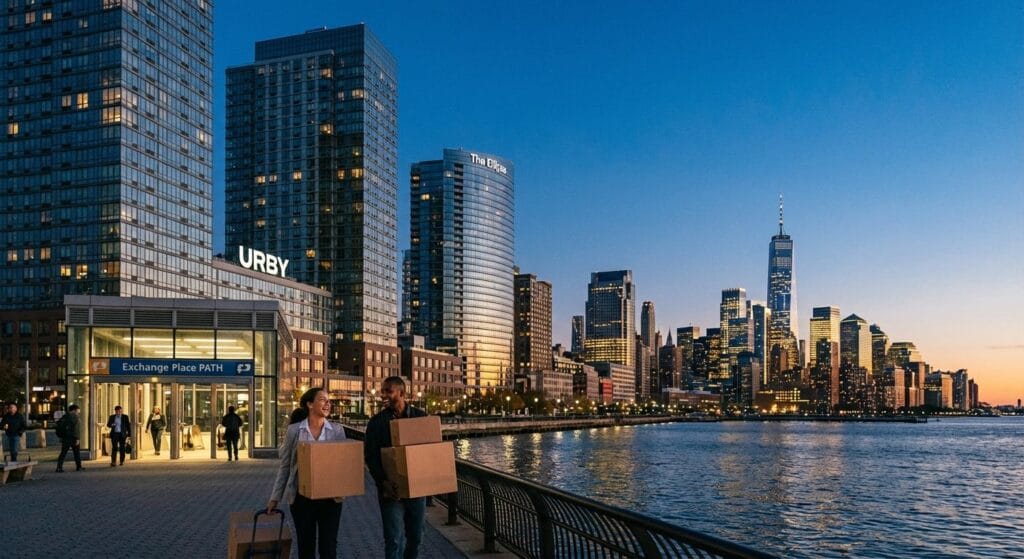
Thirty years ago, the Jersey City waterfront was a stretch of abandoned industrial piers, crumbling warehouses, and contaminated land that most people drove past without a second glance. Today, Goldman Sachs operates its largest office outside of New York City there, and more than 30,000 financial services employees cross the Hudson each morning heading in the opposite direction from the traditional commute — into Jersey City rather than out of it. That reversal tells you almost everything you need to know about what this city has become.
Jersey City is now home to roughly 308,000 residents and growing, making it New Jersey’s second-largest city and one of the fastest-transforming urban environments on the East Coast. For people priced out of Manhattan or Brooklyn but unwilling to sacrifice a city lifestyle, it has emerged as the answer — a genuine urban experience with a PATH train ride to lower Manhattan that takes as little as five minutes from some stations. For those planning a move, our full New Jersey relocation guide provides important state-level context on taxes, licensing requirements, and cost of living that applies to any destination in the state.
Here’s what you need to know at a glance:
Quick Answers
Average move cost (from NYC): $319–$3,400 depending on home size
Median home sale price: ~$710,789
Average rent (1BR): $3,200–$4,400/month (varies significantly by neighborhood)
PATH to lower Manhattan: 5–12 minutes from Exchange Place
Best for: Finance and tech professionals, NYC commuters, urban lifestyle seekers, value-conscious renters priced out of Brooklyn
This guide takes a practical approach to Jersey City — not a promotional one. The city has real advantages and real tradeoffs, and understanding both will help you make a move you won’t regret.
Why People Are Moving to Jersey City
The single most compelling reason people move to Jersey City is straightforward: it is not Manhattan, and that gap has financial implications that compound year after year.
A one-bedroom apartment in Jersey City’s premium Downtown waterfront neighborhood typically runs $3,800–$4,400 per month. That is expensive by almost any standard except Manhattan, where a comparable unit in a doorman building with river views would cost $5,500 or more. For a two-bedroom, the savings become more dramatic — Jersey City averages $4,500–$5,500 for a quality two-bedroom in a high-rise, versus $7,000–$9,000 on the Manhattan side for equivalent finishes and views. Over a year, that gap ranges from $18,000 to $42,000, a sum that changes how people think about the trade-off.
But cost alone does not explain the migration pattern. Jersey City has developed genuine neighborhoods — places with distinct identities, local restaurants, independent coffee shops, and the kind of street life that was conspicuously absent when the city was primarily thought of as a transit corridor. The arts scene in the Mana Contemporary arts complex, the restaurant density along Newark Avenue in the Journal Square and Downtown areas, and the waterfront parks with unobstructed Manhattan skyline views have created a city that people want to live in, not just sleep in.
The employment picture adds another layer. While many Jersey City residents commute to New York, an increasing number work within Hudson County itself. Exchange Place, the city’s financial district, hosts Goldman Sachs, JPMorgan, and Fidelity in towers that rival anything in midtown Manhattan. The emergence of a fintech and tech corridor along the waterfront means that for certain professionals, moving to Jersey City eliminates the commute entirely.
Neighborhoods: Finding Your Fit
Jersey City is not a single place — it is a collection of genuinely different communities separated by geography, price points, and character. The neighborhood you choose will define your daily experience more than almost any other decision you make.
Downtown and the Waterfront
The Downtown waterfront is the city’s flagship neighborhood — the one that appears in real estate advertisements and draws the most attention from Manhattan transplants. Newport, Exchange Place, Paulus Hook, and the broader waterfront corridor offer luxury high-rise living with direct views of the Manhattan skyline and some of the most convenient PATH access in the region. The Exchange Place PATH station is the financial district’s anchor, putting lower Manhattan within five to eight minutes of your door.
Rents here reflect the premium: expect $3,800–$4,400 for a well-appointed one-bedroom and $5,000–$6,500 for two bedrooms in newer towers with amenity packages that include gyms, rooftop decks, and concierge service. Many buildings in this area — especially Newport — are managed by large residential developers who have standardized the application process and building rules, including mandatory Certificate of Insurance requirements from any moving company you hire.
The trade-off for this convenience and lifestyle is density. The waterfront is built almost entirely at high-rise scale, and the street-level experience can feel corporate rather than neighborhood-like, particularly in Newport. It is an excellent choice for those who want a seamless Manhattan-adjacent lifestyle; it is less satisfying for those seeking the texture of a walkable urban neighborhood.
Journal Square
Journal Square occupies a different position in the Jersey City market — the most accessible major transit hub in the city, anchored by a PATH station that connects to 33rd Street in midtown Manhattan via the 33rd Street line as well as to the Newark/Harrison corridor. For commuters whose offices are in midtown rather than lower Manhattan, Journal Square is often the smarter choice.
Rents are meaningfully lower here: median one-bedrooms run around $3,000–$3,200, and two-bedrooms can be found in the $3,500–$4,200 range. The neighborhood is in active transition, with new residential towers rising alongside older commercial blocks, making it one of the most interesting parts of the city to watch. Independent restaurants, a growing bar scene, and the Loew’s Jersey City movie palace — a restored 1929 theater that hosts film events and concerts — give Journal Square a cultural identity that the purely residential waterfront towers cannot replicate.
The Heights
Perched on the Palisades above the waterfront corridor, the Heights is the neighborhood that frequently surprises people who expect a city to be either expensive and polished or affordable and rough. The Heights is something else: genuinely residential, architecturally varied, and among the most undervalued areas in Hudson County.
Rents here average $2,700–$3,305 for one-bedrooms, with family-sized apartments available at prices that make downtown Jersey City look like Manhattan. The neighborhood has a longstanding Hispanic and Latino community that has shaped its restaurant scene, particularly along Central Avenue, where you will find some of the best Colombian, Dominican, and Mexican food in the metropolitan area. For families, the Heights offers scale — actual houses, yards, and street-level life — that is simply not available in the high-rise corridors below.
The commute trade-off is real. The Heights is a significant walk or bus ride from the nearest PATH station, and residents typically rely on light rail connections, buses, or the drive to reach transit. For those who work remotely or in Jersey City itself, this is manageable. For daily Manhattan commuters, the calculus changes.
Greenville
Greenville, in the city’s south, is Jersey City’s most affordable major neighborhood and the one that receives the least coverage in relocation guides written for Manhattan transplants. One-bedroom apartments average around $1,700/month — a figure that is not a typo. The trade-off is distance from transit and from the city’s more developed commercial corridors, but for buyers and renters who prioritize space and cost over commute convenience, Greenville represents genuine value.
The Housing Market and What to Expect
Jersey City’s housing market operates at a pace that surprises buyers accustomed to the more deliberate rhythms of suburban real estate. The median home sale price in 2026 sits at approximately $710,789 — a figure that reflects both the premium attached to Manhattan-adjacent living and the wide range of property types across the city’s neighborhoods.
Condos in new waterfront towers dominate the inventory at the higher end, with one-bedroom condos in Exchange Place and Newport buildings selling in the $600,000–$900,000 range. In contrast, Journal Square and the Heights offer attached row houses and multi-family properties that can be found in the $450,000–$650,000 range, representing genuine purchase opportunities for buyers who want equity rather than rent receipts.
The rental market is competitive across all tiers. Jersey City’s average rent citywide runs approximately $3,164–$3,744 per month for a standard apartment, with significant variation by neighborhood: Downtown/Newport averages $3,828–$4,400, Journal Square runs $3,000–$3,200, The Heights averages $2,700–$3,305, and Greenville sits around $1,700 for a one-bedroom. Vacancy rates remain low enough that quality units in desirable buildings rarely sit on the market more than a few weeks.
The Financial Picture: Taxes, Income, and Cost of Living
For residents moving from New York City, the New Jersey financial picture requires careful analysis rather than assuming savings. New Jersey carries the highest property tax burden in the United States, with an effective rate of approximately 2.23% on assessed value. On a $710,000 home, that translates to annual property tax payments of roughly $15,800 — a number that should be factored explicitly into any purchase decision.
New Jersey’s income tax structure runs from 1.4% to 10.75% across brackets, which is meaningful but generally lower than New York City’s combined state and city income tax burden for most earners. For someone earning $150,000 annually, moving from New York City to Jersey City typically produces a net income tax savings of $7,000–$12,000 per year, depending on the specific income level and deductions. Eliminating New York City’s municipal income tax alone — which ranges up to 3.876% — accounts for most of that difference.
The overall cost of living in Jersey City runs approximately 15–20% above the national average, driven primarily by housing costs. Groceries, transportation, and everyday expenses are roughly comparable to what you would find in any major Northeast city; it is housing that separates Jersey City from the national baseline.
What It Actually Costs to Move Here
Professional moving costs from New York City to Jersey City reflect the short distance but not-so-simple logistics of urban high-rise moves. Expect the following ranges for full-service moves in 2026:
| Home Size | Estimated Moving Cost |
|---|---|
| Studio / 1 Bedroom | $319–$971 |
| 2–3 Bedrooms | $717–$2,280 |
| 4+ Bedrooms | $1,188–$3,400 |
Source: MoveBuddha, Safeway Moving, 2025–2026 market data
These figures cover packing, loading, transport, and unloading for a short-haul NYC-to-Jersey City move. What they do not include are the building-specific logistics that can add time and cost to any Downtown or Newport high-rise move: elevator reservations, Certificate of Insurance requirements, and parking coordination for the moving truck. A well-organized move to a waterfront high-rise typically adds 2–4 hours of coordination overhead compared to a straightforward suburban move.
For those moving from other cities, interstate moves from Boston typically cost $2,500–$5,500; from Philadelphia, $1,500–$3,500; from Washington D.C., $2,000–$4,500. These figures increase with home size and the number of specialty items.
Choosing a Professional Moving Company for Jersey City
Hiring a mover for Jersey City is not the same as hiring one for a suburban destination. The city’s mix of luxury high-rises, older walk-up buildings, tight urban streets, and strict building management policies creates a logistics environment that rewards experience and punishes improvisation.
What You’re Actually Paying For
When you hire a professional moving company for a Jersey City relocation, you are paying for far more than muscle and a truck. A quality mover brings a licensed and insured operation, trained crews who understand how to protect furniture in narrow stairwells and elevator lobbies, and the administrative capacity to produce the documentation that buildings in this city require. The difference between the cheapest quote and a mid-range professional is often not the price of the move itself — it is the cost of a damaged hardwood floor, a claim dispute with no insurance backing, or a building management office that refuses to allow an uninsured crew through the door.
Professional movers also bring equipment that matters in urban environments: floor runners that protect your new building’s lobby, door jamb protectors, furniture pads, and the experience to disassemble and reassemble complex furniture pieces through doorways that were not designed for sectional sofas.
The Estimate Game: Non-Binding, Binding, and Binding Not-to-Exceed
Most Jersey City moves involve one of three types of estimates, and understanding the differences protects you from unpleasant surprises.
A non-binding estimate is the most common type: the mover provides a projected cost based on the inventory you describe, but the final bill is based on actual weight and services rendered. Legitimate movers can charge no more than 110% of a non-binding estimate under federal regulations — meaning you have some protection against dramatic overages, but not complete price certainty.
A binding estimate is a fixed-price commitment: you pay exactly what was quoted regardless of whether the actual weight comes in higher or lower. Binding estimates are ideal for people who need budget certainty and are willing to invest time in a thorough pre-move inventory.
A binding not-to-exceed estimate combines the best of both: you pay the binding price or the actual cost, whichever is lower. This structure is the most favorable for the customer and is what Nelson Westerberg provides as standard practice.
Separating Legitimate Movers from Problems
New Jersey law requires all moving companies operating within the state to register with the NJ Division of Consumer Affairs and carry a valid mover’s license. For any move crossing state lines — including the technically interstate move from New York to New Jersey — companies must hold a USDOT number from the Federal Motor Carrier Safety Administration and be registered with the Surface Transportation Board.
Before hiring any mover for a Jersey City relocation, verify two things: the company’s USDOT number (searchable at safer.fmcsa.dot.gov) and their NJ Division of Consumer Affairs registration. Companies that cannot produce both should not be trusted with your belongings. Additionally, be wary of any company that demands a large cash deposit upfront, refuses to provide a written estimate, or declines to conduct an in-person or video inventory before quoting.
Understanding What’s Protected
Every licensed interstate mover is required by federal law to offer two levels of liability protection. Released value protection is included in your base rate and covers your belongings at $0.60 per pound. On a 50-pound flat-screen television worth $1,500, that means the mover’s maximum liability for a total loss is $30. Released value protection is not a replacement for understanding the actual financial exposure of your move.
Full value protection is the meaningful alternative. Under this coverage, the mover is responsible for repairing, replacing, or paying the current market value of any item lost or damaged in transit. Full value protection costs extra — typically $100–$300 on a standard move — but it is the only coverage structure that actually functions as insurance.
You may also rely on your homeowner’s or renter’s insurance policy, as many policies extend coverage during moves. Check with your insurer before your move date to understand what is and is not covered in transit.
City-Specific Logistics: What Jersey City High-Rises Actually Require
Moving into the Downtown waterfront, Newport, and most newer Jersey City high-rises involves a logistics layer that many first-time New Jersey movers do not anticipate.
Most managed buildings in Jersey City require a Certificate of Insurance (COI) from your moving company before they will allow crews to enter. The COI typically specifies minimum liability coverage of $1,000,000 per occurrence and names the building management company as an additional insured. The building’s leasing or management office will provide you with the exact requirements when you schedule your move, and you should request this documentation at least two weeks before your moving date so your mover has time to file the paperwork.
Elevator reservations are standard in any multi-story building. Most buildings designate specific freight elevator windows — typically two to four hours, often early morning — and require 48–72 hours advance notice to book. Missing or losing your window can mean waiting hours for rescheduling. Experienced urban movers know how to work within these windows efficiently; inexperienced crews often do not.
Truck parking on Jersey City’s waterfront streets requires coordination with building security and sometimes advance notice to the city’s parking authority. Streets like Washington Boulevard and Harborside Promenade have loading zones, but competition for them is real. On a busy end-of-month weekend in Newport, multiple moving trucks may be working the same building simultaneously.
Why Nelson Westerberg for Jersey City
Jersey City’s combination of high-rise logistics, COI requirements, elevator scheduling, and tight urban streets creates a moving environment that rewards companies with genuine local experience. Nelson Westerberg has managed hundreds of moves into Downtown Jersey City, Newport, Journal Square, and the Heights — and that operational history translates directly into smoother move days.
Our crews arrive on move day with all required documentation already filed, elevator windows confirmed, and the equipment needed to protect your building’s lobby floors and elevator panels. We produce binding not-to-exceed estimates, meaning you know your maximum cost before we load the first box. And our licensing — full USDOT compliance and NJ Division of Consumer Affairs registration — means every building management office in the city will let us through the door without a second question.
For comparable destinations in northern New Jersey, our Hoboken moving guide and Newark moving guide cover similar logistics considerations in neighboring cities.
Job Market and Career Opportunities
Jersey City’s employment landscape has become genuinely bi-modal in a way that serves it well. On one side sits the Exchange Place financial district, which has drawn institutional anchors of such scale that it now functions as a genuine financial services hub rather than simply an overflow annex for Manhattan. Goldman Sachs at 30 Hudson Street — the 781-foot tower that commands the Jersey City skyline — represents one of the firm’s largest global offices. JPMorgan Chase, Fidelity Investments, Deutsche Bank, and Pershing (a subsidiary of BNY Mellon) have all established significant operational footprints in the area. The concentration of financial services employment along the waterfront corridor is estimated at over 30,000 positions, a figure that has grown steadily even through the broader hybrid-work transition.
On the other side sits a growing technology and fintech sector that occupies both purpose-built office space along the waterfront and the older commercial building stock in Journal Square and surrounding areas. Jersey City’s lower commercial rents compared to Manhattan — often 40–50% below comparable midtown space — have made it an attractive destination for startups, mid-size technology firms, and fintech companies that want proximity to Wall Street talent without paying Wall Street rents.
The healthcare sector is also a significant employer, anchored by the Jersey City Medical Center (RWJBarnabas Health system) and a network of regional health facilities. For medical professionals, Jersey City’s proximity to the UMDNJ network and multiple major health systems makes it a logical location.
Schools and Family Life
Jersey City’s public school system is managed by the Jersey City Public Schools district, which serves approximately 28,000 students across more than 35 schools. Like many urban districts, quality varies meaningfully by school and program, and families with school-age children should research specific schools rather than relying on district-wide averages.
The district operates several magnet and selective programs that perform at levels comparable to suburban districts. McNair Academic High School consistently ranks among the top public high schools in New Jersey, admission to which is selective and competitive. Several elementary and middle schools in the Downtown corridor have improved significantly as the neighborhood’s demographics have shifted toward dual-income professional households.
Private school options include Saint Peter’s Preparatory School, a Jesuit institution with a strong academic reputation, as well as a number of Catholic elementary schools throughout the city. For families with young children, the concentration of childcare options in the waterfront and Journal Square areas reflects the demographics of the population that has moved in over the past decade.
Jersey City’s playgrounds, parks, and waterfront access give families a quality-of-life proposition that pure urban density might not suggest. Liberty State Park, just south of the city’s waterfront, provides 1,212 acres of open space with direct views of the Statue of Liberty and the New York Harbor — one of the most dramatically situated public parks in the Northeast.
Culture, Food, and Daily Life
Jersey City’s cultural identity has undergone a transformation as significant as its physical one. The city is now among the most ethnically diverse municipalities in the United States, with substantial South Asian, Latino, African American, Filipino, and Middle Eastern communities that have shaped its food scene into something genuinely worth talking about.
Newark Avenue in the Journal Square area is the city’s most concentrated restaurant corridor, with Indian, Bangladeshi, Pakistani, and Middle Eastern restaurants operating at a price point and quality level that would command premium prices in Manhattan. The stretch from Grove Street PATH station toward Journal Square has become a destination dining area, with independent restaurants, cocktail bars, and weekend foot traffic that would have been unimaginable fifteen years ago.
The arts scene, while smaller than Manhattan’s, has found its footing. Mana Contemporary, a 600,000-square-foot arts facility on the edge of the Powerhouse Arts District, has hosted major exhibitions and established Jersey City as a destination for the visual arts community. The broader Powerhouse District has attracted galleries, studios, and creative businesses that complement the neighborhood’s converted industrial architecture.
For daily life logistics, Jersey City is well-served: there are two Whole Foods locations in the city, multiple ACME Markets, and a food hall ecosystem that continues to expand along the waterfront. The Jersey City Medical Center provides Level II trauma care. For entertainment, the proximity to Manhattan means residents are rarely more than a PATH ride from world-class museums, theaters, and concert venues.
The Commute Reality
The commute from Jersey City to Manhattan is the city’s primary selling point, and the numbers behind it justify the marketing. The PATH train — operated by the Port Authority of New York and New Jersey — runs 24 hours a day, seven days a week, with service that varies by line and time of day.
From Exchange Place station, the most centrally located in the financial district, trains reach the World Trade Center in the World Financial Center in approximately 5–8 minutes. From Grove Street, a popular residential neighborhood station, the World Trade Center is 7–10 minutes. From Journal Square, both the downtown/WTC line and the 33rd Street/midtown line operate, putting midtown Manhattan offices within 20–25 minutes of travel time.
The NY Waterway ferry service supplements PATH with direct service from the Jersey City waterfront to midtown and downtown Manhattan terminals. Ferry trips typically take 8–12 minutes and offer a commute experience that is — on a clear morning with Manhattan views at eye level — genuinely difficult to replicate. Ferry passes typically run $30–$36 per day for a round trip without employer subsidy; many financial services firms in the Exchange Place area provide ferry pass benefits.
NJ Transit bus service connects the Heights and Greenville neighborhoods to downtown Jersey City and the Hudson Bergen Light Rail network provides an alternative ground-level transit option connecting major Jersey City nodes to the broader Hudson County corridor including Hoboken to the north.
The realistic total commute time from a Jersey City apartment to a midtown Manhattan office ranges from 25 minutes (from Newport, directly to 33rd Street PATH) to 45 minutes (from the Heights, including light rail and PATH connections). These figures compare favorably to commutes from Brooklyn or Queens neighborhoods at comparable rent levels.
Nelson Westerberg has deep roots in Jersey City. Visit our Jersey City movers page to learn about local moving logistics, neighborhood-specific challenges, pricing, and how we handle moves across the Jersey City metro.
Frequently Asked Questions
How much does it cost to move from New York City to Jersey City?
A professional full-service move from NYC to Jersey City typically costs between $319 and $3,400 depending on home size. A studio or one-bedroom runs $319–$971; a two-to-three bedroom typically costs $717–$2,280; larger homes run $1,188–$3,400. These estimates are for standard moves and do not include elevator reservation fees or any building-imposed move-in charges, which can add $100–$300. The move itself is logistically straightforward given the short distance, but urban high-rise requirements — COI documentation, elevator windows, truck parking — add coordination complexity that experienced movers handle routinely.
What salary do I need to live comfortably in Jersey City?
A single professional renting in Jersey City needs to earn approximately $85,000–$110,000 annually to live comfortably, depending on neighborhood and lifestyle. In Downtown or Newport, where one-bedrooms average $3,800–$4,400/month, comfortable solo living typically requires $100,000 or more. In the Heights or Journal Square, where rents run $2,700–$3,200, the threshold drops to $75,000–$90,000. Couples or roommates can lower the per-person threshold significantly. Remember that New Jersey has no separate city income tax (unlike New York City), which meaningfully increases take-home pay for those moving from the five boroughs.
Is Jersey City safer than comparable New York City neighborhoods?
Jersey City’s crime statistics vary significantly by neighborhood. Downtown, Newport, and the waterfront corridor are considered very safe by urban standards, with crime rates comparable to lower Manhattan and Hoboken. Journal Square and the Heights have higher crime rates than the waterfront but have improved considerably over the past decade. Greenville has historically had higher crime rates than the rest of the city. As with any urban relocation, researching crime statistics for your specific target neighborhood — not just the city overall — is essential.
How do Jersey City property taxes compare to New York City?
New Jersey has the highest property taxes in the United States, with an effective rate averaging approximately 2.23% of assessed value statewide. On a $710,000 Jersey City home, annual property taxes would run approximately $15,800. By comparison, New York City’s effective property tax rate on residential properties is lower on paper (approximately 0.88% for condos) but the overall tax burden for New York City residents includes state and city income taxes that frequently exceed what Jersey City residents pay in combined taxes. The net financial comparison depends heavily on income level and how you weight property ownership versus renting.
What is the difference between Journal Square and Downtown for new residents?
Downtown/Newport offers premium waterfront high-rises with the fastest PATH access to lower Manhattan, newer amenities, and luxury building services — at the cost of the highest rents and a somewhat corporate street-level environment. Journal Square offers older and newer building stock at meaningfully lower rents ($3,000–$3,200 for one-bedrooms versus $3,800–$4,400 Downtown), PATH access to both downtown and midtown Manhattan, and a more organic, neighborhood-like character with diverse restaurants and cultural venues. Professionals whose offices are in midtown typically prefer Journal Square; those working in lower Manhattan’s financial district typically prefer Downtown.
Does Jersey City have good public transportation beyond PATH?
Yes. In addition to PATH, Jersey City is served by the Hudson-Bergen Light Rail (HBLR), which runs north-south through the city connecting key nodes including the Hoboken Terminal, multiple Jersey City stations, Bayonne, and other Hudson County destinations. NJ Transit bus service provides connections throughout the city and region. NY Waterway ferries operate from multiple waterfront terminals. For residents without cars, Jersey City is one of the most transit-accessible communities in New Jersey, with a Walk Score above 85 in the Downtown and Journal Square areas.
Conclusion
Jersey City in 2026 is a city that has completed its transformation from industrial afterthought to genuine destination — and is now navigating the questions that come with success. Housing costs have risen sharply, but the gap with Manhattan remains real and consequential. The PATH train remains among the best mass transit investments in the region. The neighborhoods offer enough variety that almost any lifestyle preference can find a fit somewhere within the city limits.
For those weighing Jersey City against other New Jersey options, our Hoboken guide covers the city immediately to the north — smaller, more expensive, and arguably more socially cohesive. Our Newark guide covers the option that offers the most affordable entry point in the Hudson County region. And our broader New Jersey relocation guide provides the state-level financial and logistical context that applies to any Hudson County destination.
What Jersey City offers that neither of those alternatives fully replicates is scale. It is a real city — diverse, complex, growing, and increasingly confident in its own identity. The waterfront is spectacular. The food is better than people expect. The commute works. And for the right person, at the right budget, it makes more sense than anywhere else on the East Coast.
Data in this guide reflects 2025–2026 market conditions. All figures are estimates based on publicly available market data and should be verified with current listings and local professionals before making relocation decisions.
Related Articles
Cost to Move a 3-Bedroom Home Cross-Country (2026): The Full-Service Price Breakdown

If you’re planning to move a three-bedroom home across the country in 2026, the single most useful number to start with is a range: a full-service, professionally handled move typically runs between $6,500 and $14,500, with a roughly 1,000-mile relocation landing around $8,000 to $11,000. Where your move falls within that band depends on a […]
Read MoreMoving from New Jersey to North Carolina (2026): Leaving the Nation’s Highest Property Taxes
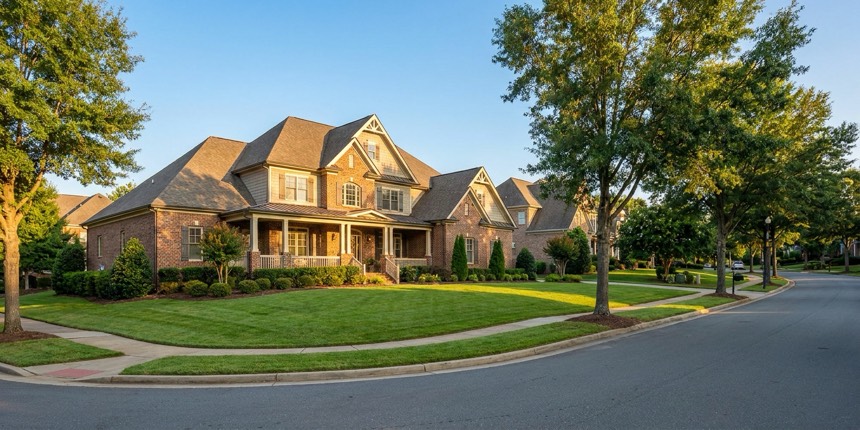
New Jersey has led all fifty states in outbound migration for eight straight years, and once you look at the property-tax bill, it isn’t hard to see why. The Garden State carries the highest effective property-tax rate in the nation — about 2.23%, translating to an average homeowner bill near $9,500 a year — stacked […]
Read More

Table of Contents

Atlas Van Lines, Inc. U.S. DOT No. 125550 (TM & © 2026 AWGI LLC.) | G.P.S.C. 4917 | IL C.C. 4246 | NJPC 00104 | Cal-T 110193
© 2026 Nelson Westerberg, Inc. All Rights Reserved Worldwide.