Moving Guide to Boise, ID (2026): Where the Micron Boom Lands

Quick Answers
- The engine: Micron’s ~$45B Boise expansion is adding 4,000+ direct jobs (many six-figure) and an estimated 17,000 indirect ones
- Idaho income tax: a flat 5.3% — well below California, Oregon, or Washington’s capital-gains reality for high earners
- Median home price: roughly $500K in Boise proper; higher in Eagle, more accessible in Nampa/Caldwell
- Where newcomers land: Boise’s East End and North End, Eagle, Meridian, Harris Ranch, Kuna
- Full-service move cost: varies widely by origin — see the corridor breakdown below
- Best time to move: spring and fall (Boise summers and winters are both movable, but shoulder seasons are easiest)
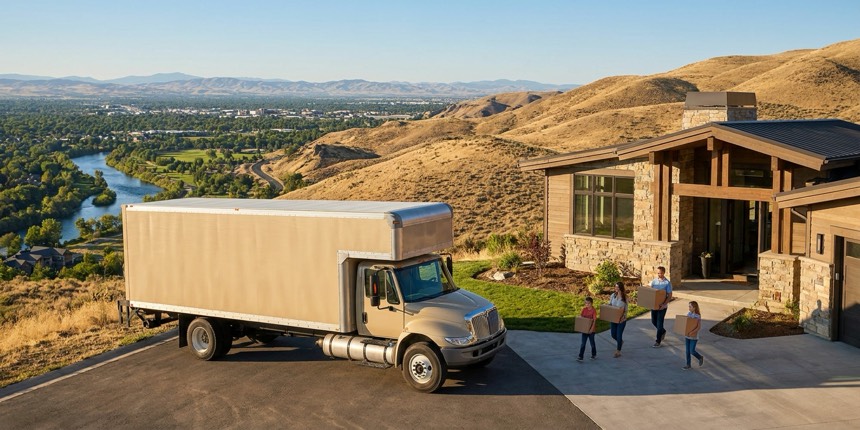
Boise is being reshaped in real time by a single decision. Micron Technology, the semiconductor maker headquartered in the city since 1978, is in the middle of an expansion that will bring its total local investment to roughly $45 billion and add more than 4,000 direct jobs — many of them six-figure engineering and technical roles — plus an estimated 17,000 indirect positions across construction, logistics, and services. A city that spent decades as the Mountain West’s best-kept secret is now one of its fastest-growing metros, and the relocation wave following those jobs is changing what it costs to live here and where newcomers are choosing to land.
This guide is the map for that move. As a spoke of our broader Idaho relocation guide, it goes deep on Boise and the surrounding Treasure Valley: the economy driving the migration, where different newcomers settle, what Idaho’s tax structure actually means for your income, and how to plan a long-distance move to a market that is absorbing new residents faster than almost anywhere in the country.
Why People Are Moving to Boise
The Boise migration is not new — the city has drawn Californians and Pacific Northwest transplants for a decade — but Micron’s expansion has accelerated and reshaped it, pulling in a more corporate, higher-earning cohort alongside the lifestyle movers who have long been drawn to the area.
The Micron Effect and a Diversifying Economy
Micron’s expansion is the headline, and its ripple effects are the real story. Four thousand direct jobs at a single employer, concentrated in high-paying technical roles, pull in not just engineers but the entire ecosystem around a major fab: suppliers, contractors, and the professional-services firms that support a growing corporate base. The company is on track to become the Boise area’s largest private employer, and its footprint is driving demand for exactly the kind of full-service relocation — executives and technical professionals moving from Seattle, the Bay Area, and Southern California — that reshapes a housing market.
Beyond Micron, Boise’s economy has diversified well past its old agricultural and government roots. Healthcare (St. Luke’s and Saint Alphonsus are major systems), a growing technology sector, outdoor-industry companies, and a steady stream of remote workers keeping coastal salaries all contribute. The result is a labor market deep enough that a relocating household increasingly doesn’t need to tie the move to a single employer.
What makes the Micron expansion different from a typical corporate relocation is its permanence and scale. Semiconductor fabrication plants are multi-decade, multi-billion-dollar commitments — the company isn’t leasing office space it can walk away from, it’s pouring foundations for facilities meant to run for a generation. That permanence is why the surrounding market is repricing: employers, suppliers, and service firms are making long-term bets on the Valley, and the housing stock is being built and priced for a larger, higher-earning population than Boise had five years ago. For a relocating household, the practical implication is that the growth isn’t a bubble tied to one hiring cycle; it’s a structural shift in what kind of city Boise is becoming. The flip side is that the bargain-Boise era is ending, and buyers arriving now are paying prices that reflect the new reality rather than the old secret.
Idaho’s Tax Structure
Idaho levies a flat 5.3% income tax — higher than a no-income-tax state, but meaningfully lower than the top rates in California (13.3%) or Oregon (close to 10%), and simpler than a graduated system. For a household relocating from the Bay Area or Seattle, the combination of a moderate flat income tax, property taxes that remain reasonable by coastal standards, and no local income taxes adds up to a materially lighter overall burden — without Idaho being a “tax haven” in the Texas or Nevada sense. It’s a moderate-tax state that feels like relief to anyone arriving from the coast.
Lifestyle and the Outdoors
The other half of the Boise story is lifestyle, and it’s genuine rather than marketing. The Boise River runs through downtown with a greenbelt path along it; the foothills rise directly behind the city for hiking and mountain biking; Bogus Basin ski area is a 45-minute drive from downtown; and the rivers, lakes, and vast wilderness of central Idaho — including the Sawtooths around Stanley — are within easy reach for a weekend. For families and professionals leaving denser, more expensive metros, Boise offers a mid-size city with a walkable, revitalized downtown and immediate access to the outdoors — the combination that has driven the migration for years and that Micron’s paychecks now make attainable for a larger group. Few American cities of this size put wilderness, a real downtown, and a major-employer job market this close together, and that rare combination is the deeper reason the relocation wave shows no sign of slowing.
Who’s Moving to Boise
The Treasure Valley migration isn’t one kind of person, and understanding the segments clarifies where you’ll fit.
Micron and tech transplants are the fastest-growing group — engineers, technical staff, and the managers relocating to staff the expansion, arriving largely from other semiconductor and tech hubs. They tend toward Eagle, the foothills, and Harris Ranch, and they’re reshaping the top of the housing market.
Remote coastal professionals keep a Seattle, Bay Area, or Los Angeles salary and trade a cramped, expensive footprint for space and the outdoors. For them, Boise is arithmetic plus lifestyle: the same paycheck, a fraction of the housing cost, and trails out the back door.
Families move for schools, safety, and a pace that lets children grow up outdoors. They concentrate in Meridian and the newer master-planned communities, where price, quality, and schools balance best.
Retirees and near-retirees are drawn by the moderate tax structure, the four-season climate, and a city small enough to navigate but large enough to offer real healthcare and culture.
Entrepreneurs and small-business owners increasingly relocate here for the lighter cost of doing business and the growing professional ecosystem around Micron and healthcare.
Knowing which of these you are shapes both the neighborhood and the timing — the Micron-driven top of the market moves on a different clock than the value frontier in Nampa and Kuna.
Where to Live in Boise and the Treasure Valley
The Treasure Valley is really a cluster of communities, each with a distinct character and price point. Choosing among them is the central decision of a Boise move, and it hinges on whether you prioritize proximity to downtown, top schools, new construction, or value.
Boise Proper — East End, North End, and the Highlands
The North End is Boise’s most characterful neighborhood — tree-lined streets, historic bungalows and Craftsman homes, walkable to the downtown core and Hyde Park’s shops and cafés. It draws newcomers who want established character and walkability and are willing to pay a premium for it. The East End and the Highlands, rising into the foothills, offer newer and larger homes with quick access to the greenbelt and foothills trails — a favorite of professionals who want the outdoors at their doorstep. These are among the most coveted addresses in the city for the tech influx precisely because they pair proximity to downtown with a trailhead at the end of the street, and inventory in them is tight; buyers often wait for the right listing rather than finding one on demand. Depot Bench and the Boise Bench, on the plateau south of downtown, offer a more attainable entry into the city proper with solid mid-century homes and city views. Harris Ranch, a newer master-planned area in the southeast foothills near the coming Micron growth, has become a landing zone for the tech influx, with modern construction and planned amenities.
Eagle — The Executive Suburb
Eagle, just northwest of Boise, is where the highest-earning transplants increasingly land. It offers spacious lots, gated communities, upscale new construction, and top-rated schools, with a small, polished downtown of its own. For an executive relocating from a coastal tech hub who wants space and privacy without a long commute to the Micron campus or downtown, Eagle is the default choice — and its home prices reflect that demand. The area along the Boise River and up into the foothills north of town has drawn a wave of high-end construction — acreage estates, custom homes, and the “quiet luxury” aesthetic that Bay Area and Seattle money tends to favor. Eagle’s appeal is that it delivers a genuinely upscale enclave feel while keeping a working small-town core, and its schools consistently rank at the top of the Valley. The trade-off is price and, increasingly, competition for the best lots; buyers targeting Eagle should arrive pre-approved and ready to move.
Meridian — Family Growth and Value
Meridian, between Boise and Nampa, has been one of the fastest-growing cities in the country and is the heart of the Treasure Valley’s family migration. It offers newer master-planned communities, strong schools, and more house per dollar than Boise proper or Eagle, with the trade-off of a more suburban, car-oriented feel. For families relocating on a Micron or healthcare salary, Meridian frequently offers the best balance of quality, schools, and price. Its growth has brought the amenities to match — a large regional mall, a dense retail and dining corridor along Eagle Road, and new parks and recreation infrastructure keeping pace with the rooftops. The eastern side of Meridian, closer to the Micron campus and downtown Boise, commands a premium for the shorter commute, while the western and southern edges offer newer construction at more accessible prices. For a household that wants a turnkey newer home, good schools, and a predictable suburban rhythm, Meridian is the Valley’s center of gravity — and the reason it keeps topping national growth rankings.
Nampa, Caldwell, and Kuna — The Value Frontier
Further out, Nampa and Caldwell offer the Valley’s most accessible prices, drawing buyers priced out of Boise and Eagle who are willing to trade commute time for square footage. Nampa, the Valley’s second-largest city, has its own revitalizing downtown and a growing employment base, so it’s increasingly a destination in its own right rather than just a bedroom community; Caldwell anchors the wine country of the Sunnyslope district and appeals to buyers wanting acreage. Kuna, to the south, is a fast-growing small town that appeals to families wanting newer homes and a rural-edge feel with quick access to the Snake River. These communities are where much of the Valley’s new construction is concentrated, and where the indirect-job workforce — the construction, logistics, and service roles Micron’s expansion is creating — increasingly settles. For a buyer whose work doesn’t require a daily Boise commute, they offer the most home for the money in the entire region.
Downtown Boise and Daily Life
One reason Boise punches above its size is a downtown that actually functions as a downtown. The core is genuinely walkable, anchored by BoDo (the Boise District) with its restaurants, breweries, and the historic Egyptian Theatre, and by 8th Street’s pedestrian dining stretch. The food scene has matured well beyond what a city this size would suggest, fueled by an influx of coastal transplants and a strong local-agriculture base — the Capital City Public Market on Saturdays is a fixture. Just north, the Hyde Park neighborhood in the North End offers a village-within-the-city feel, with cafés and pubs a short walk from historic homes.
The Boise River greenbelt is the spine of daily life: roughly 25 miles of tree-lined path along the river, used for commuting by bike, running, and summer float trips from Barber Park down to Ann Morrison. Boise State University brings energy, sports, and a steady cultural calendar to the south bank. For a household leaving a larger city, the surprise is how much of a big-city daily life — dining, culture, walkability — Boise delivers without the cost or the congestion.
Getting Around the Treasure Valley
Boise is a car-oriented metro, and most newcomers will drive for daily life, but distances are short and traffic is light by coastal standards — a cross-town trip that would take an hour in Seattle or Los Angeles takes fifteen to twenty minutes here. That compression is one of the quiet quality-of-life upgrades transplants cite most.
Two commute considerations matter for a Boise move. First, the Micron campus sits in southeast Boise, and the expansion is driving demand — and planning attention — for the road and housing infrastructure around it; buyers working there increasingly weigh Harris Ranch, southeast Boise, and east Meridian for the shorter drive. Second, Boise Airport (BOI) is close to downtown and expanding its route map, though it still offers fewer nonstops than the major hubs transplants leave, so factor connection times into travel home. Public transit exists (ValleyRide buses) but is limited; plan on a car per working adult.
The Cost of Living in Boise
Boise’s cost of living tells a two-part story: dramatically cheaper than the coastal metros most transplants leave, but no longer the bargain it was before the growth wave. Median home prices sit around $500,000 in Boise proper, climbing well past that in Eagle’s gated communities and the foothills, and settling into the $400,000s in Meridian and lower still in Nampa and Caldwell. For a household selling a $1.2 million Bay Area home or a $900,000 Seattle one, even Eagle’s premium tier feels like relief — but for a local or a mover from a lower-cost region, the run-up of recent years is real.
Beyond housing, the picture is favorable. Idaho’s flat 5.3% income tax, reasonable property taxes, and the absence of any local income tax keep the overall burden well below California, Oregon, or Washington’s high-cost corridors. Groceries, dining, and services run near or slightly below national averages. Utilities are moderate, with summer cooling and winter heating both manageable in the high-desert climate. The one line that has moved sharply is housing; nearly everything else remains a genuine step down in cost from the coast. For remote workers keeping a coastal salary, that gap is the entire financial case for the move, and it remains compelling even after the recent price growth.
Moving to Boise: Costs by Corridor
Because Boise draws from several regions, the cost of the move depends heavily on where you’re starting. The city is a long-haul destination from most major origins, which puts these moves firmly in professional full-service territory rather than a rental truck — especially for the executive and technical relocations Micron is driving.
Typical Full-Service Move Costs by Origin
| Origin | Approx. distance | 3BR full-service (off-peak) |
|---|---|---|
| Seattle | ~500 miles | $6,500–$11,000 |
| Bay Area / Northern California | ~650 miles | $8,000–$13,500 |
| Los Angeles / Southern California | ~850 miles | $9,500–$15,500 |
| Denver | ~830 miles | $9,000–$14,500 |
| Chicago / Midwest | ~1,700 miles | $12,000–$18,000 |
Full-service estimates for moves into the Treasure Valley, mid-2026. Final pricing depends on exact weight, access, and season.
What Drives Your Price
Weight and distance are the two biggest factors. Because most Boise moves are long-haul, decluttering before the move has a real effect on the bill — and it’s an especially good idea for households leaving larger coastal homes for a right-sized Idaho one.
Time of year swings the price 20–30%. Peak season (May–September) is both pricier and busier; Boise’s shoulder seasons (spring and fall) are the sweet spot for both cost and weather.
Services layer on: full packing, custom crating for high-value items, and vehicle shipping ($700–$1,400 from West Coast origins) are the common additions.
Additional Budget
Beyond the move itself, plan for vehicle shipping if you’re not driving, travel to Idaho, utility and service setup, Idaho license and registration (within 90 days), and a contingency buffer of $1,500–$3,000 for the unexpected.
Planning Your Boise Move: Timeline
For most origins, a Boise move is a multi-hundred-to-multi-thousand-mile relocation with a delivery window rather than a fixed date. Plan backward from move day.
8 weeks out. Get in-home or virtual surveys and book your carrier — earlier for a summer move. Begin narrowing Treasure Valley communities and, if buying, get pre-approved with a lender who knows the local market, which has moved fast.
6 weeks out. Lock the date. Begin the declutter in earnest — on a long-haul move it pays for itself. Start packing what you rarely use.
4 weeks out. Notify employer, banks, insurers, and subscriptions. Book vehicle shipping. Research Idaho license and registration requirements.
2 weeks out. Confirm all move details with your carrier. Schedule utility shutoff at your origin and connection in Idaho. Finalize travel.
Move week. Pack a personal-essentials set you keep with you. Supervise the load and confirm the inventory sheet before the truck departs.
Schools and Family Life
For relocating families, schools are often the deciding factor in choosing a community. The West Ada School District, covering Meridian and parts of the Valley, is Idaho’s largest and includes a number of highly rated schools; Boise School District serves the city proper; and Eagle’s schools are among the most sought-after in the region. Private and charter options have grown alongside the population, including well-regarded independent schools in Boise and Eagle and a strong network of public charters that families increasingly weigh alongside their neighborhood assignment. Beyond academics, the Valley’s family appeal rests on safety, the outdoors, and a pace that lets kids grow up with rivers and foothills at hand — a large part of why families are choosing Boise over pricier, denser alternatives.
Adjusting to Life in Boise
Moving to Boise means adapting to real differences, most of which transplants count as gains.
Climate and the Outdoors
Boise has four distinct seasons: warm, dry summers (comfortable by Southwest standards, with low humidity), crisp autumns, cold winters with some snow but a relatively mild valley floor, and green springs. It’s a high-desert climate softened by the river and the foothills. For transplants from the coast, the dryness and the real winter are the main adjustments; the payoff is immediate access to skiing, hiking, rafting, and biking that would be a destination trip from most cities.
Pace, Culture, and Growth
Boise runs at a friendlier, slower pace than the coastal metros most transplants leave, with a strong sense of community and an outdoors-first culture. The one genuine tension newcomers should understand is growth itself: the rapid influx has strained housing and infrastructure and generated some local ambivalence about the pace of change. Arriving with awareness of that — and investing in the community rather than treating Boise as a cheaper version of the city you left — goes a long way.
What Transplants Miss and Love
Newcomers most often miss the specific food and cultural density of a larger city and, for some, the ocean. They’re most often surprised by how quickly the outdoors becomes part of daily life, how far a coastal income stretches, and how walkable and livable the downtown core is for a city Boise’s size.
Administrative Checklist: Moving to Idaho
Establishing Idaho residency has real value, so handle these promptly.
Driver’s License
Idaho requires a new license within 90 days of establishing residency. Bring proof of identity, Social Security number, and two proofs of Idaho residency. Fee varies by license class and duration.
Vehicle Registration
Register your vehicle within 90 days. Idaho requires proof of identity, current title or registration, and payment of registration fees; some counties in the Treasure Valley require an emissions test. Budget for registration and any county fees.
The Rest
- Update your address with USPS
- Update banks, credit cards, and investment accounts
- Update auto and homeowner’s/renter’s insurance to Idaho policies
- Register to vote in Idaho
- Establish new physicians and transfer prescriptions
Frequently Asked Questions
How much does it cost to move to Boise?
It depends heavily on your origin, because Boise is a long-haul destination from most major cities. A full-service 3-bedroom move runs roughly $6,500–$11,000 from Seattle, $8,000–$13,500 from the Bay Area, $9,500–$15,500 from Southern California, and $12,000–$18,000 from the Midwest, depending on weight, season, and services. Peak summer season adds 20–30%, and vehicle shipping from the West Coast adds $700–$1,400 per car.
Is Boise a good place to move in 2026?
For many households, yes. Micron’s ~$45B expansion is adding thousands of high-paying jobs and diversifying the economy, Idaho’s flat 5.3% income tax is well below coastal rates, and the outdoor lifestyle and walkable downtown are genuine draws. The main caution is that rapid growth has pushed up home prices and strained infrastructure, so it’s no longer the bargain it was five years ago — though it remains far more affordable than the coastal metros most transplants leave.
Where do most newcomers to Boise live?
It depends on priorities. Boise’s North End and East End offer character and walkability; the Highlands and Harris Ranch offer newer foothills homes near the outdoors and the Micron growth; Eagle is the executive suburb with larger lots and top schools; Meridian is the family-growth center with the best balance of price and quality; and Nampa, Caldwell, and Kuna offer the Valley’s most accessible prices.
What is the cost of living in Boise?
Boise’s cost of living has risen with its growth but remains below coastal-metro levels. Median home prices sit around $500,000 in Boise proper, higher in Eagle and more accessible in Nampa and Caldwell. Idaho’s flat 5.3% income tax and reasonable property taxes keep the overall burden well below California, Oregon, or the high-cost Pacific Northwest.
What’s the best time of year to move to Boise?
Spring and fall are the sweet spot — moving rates are lower than peak summer, and the weather is easiest for a move. Summer is peak season (pricier and busier), and while Boise winters are relatively mild on the valley floor, snow and ice can complicate a move-in. Book six to eight weeks ahead for any summer date.
How is the job market in Boise?
Strong and diversifying. Micron’s expansion is the headline, adding 4,000+ direct jobs and an estimated 17,000 indirect ones, but healthcare (St. Luke’s, Saint Alphonsus), a growing technology sector, and a steady inflow of remote workers keeping coastal salaries all contribute. The market is deep enough that many households no longer tie the move to a single employer.
Planning Your Move
Boise in 2026 is a city in the middle of a transformation — Micron’s investment is reshaping its economy, its housing market, and the profile of who is moving here. For the household relocating to take one of those jobs, or drawn by the tax structure and the outdoors, the opportunity is real, and so is the value of arriving with a clear picture of where to land and what the move will take.
For the long-haul relocation into the Treasure Valley, the details matter — the honest per-pound cost of the distance, the vehicle shipping, the careful handling of the pieces that made your last home yours. A trusted partner like Nelson Westerberg handles moves into Boise with crews who understand exactly what a long-distance move-out and a Treasure Valley move-in each require.
Related Articles
Specialty Moving: Pianos, Fine Art & High-Value Items (2026)
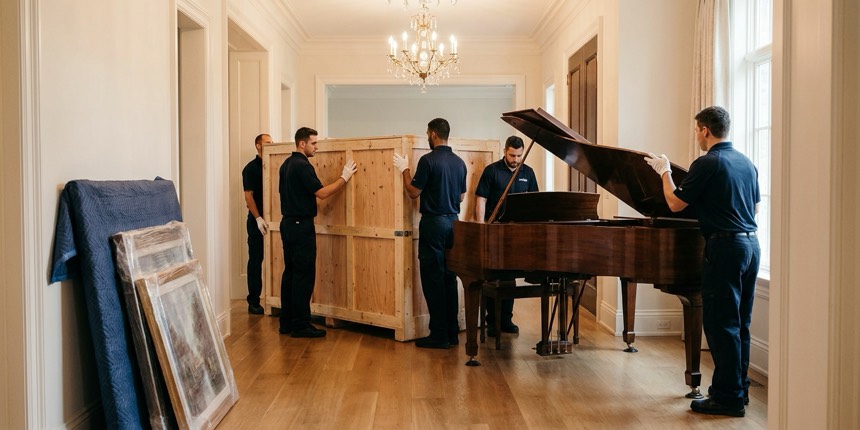
Quick Answers Specialty moving covers the pieces a standard move can’t safely handle: pianos, fine art, antiques, sculpture, wine collections, chandeliers, and other high-value or fragile items. What makes it different: custom-built crates, climate-conscious transport, specialized equipment and trained crews, condition documentation, and proper valuation coverage — applied as standard, not as surprises. The risk […]
Read MoreMilitary PCS Moves: The Complete 2026 Guide

Quick Answers PCS = Permanent Change of Station — a government-ordered relocation, run through your installation’s transportation office and the Defense Personal Property System (DPS/MilMove). Two main paths: a government-arranged HHG move (a carrier ships your household goods at no cost to you, up to your weight allowance) or a PPM/DITY (you move yourself and […]
Read More

Table of Contents

Atlas Van Lines, Inc. U.S. DOT No. 125550 (TM & © 2026 AWGI LLC.) | G.P.S.C. 4917 | IL C.C. 4246 | NJPC 00104 | Cal-T 110193
© 2026 Nelson Westerberg, Inc. All Rights Reserved Worldwide.